Grow · overwinter potted oleanders cool bright shelter
Overwinter Potted Oleanders in a Cool, Bright Shelter
Give an established potted oleander cool winter light, careful watering and room for its retained flower clusters. Check shelter conditions, pests and safe access before the cold settles in.
Published Last updated
In this guide
- Set a cool, bright winter environment
- Prepare room for the whole shrub and control access
- Identify the flower structures before tidying
- Make pruning a deliberate size decision
- Check moisture often and water only when needed
- Inspect the canopy and distinguish a problem from slow growth
- Return it to outdoor light gradually in spring
- Steps
Set a cool, bright winter environment
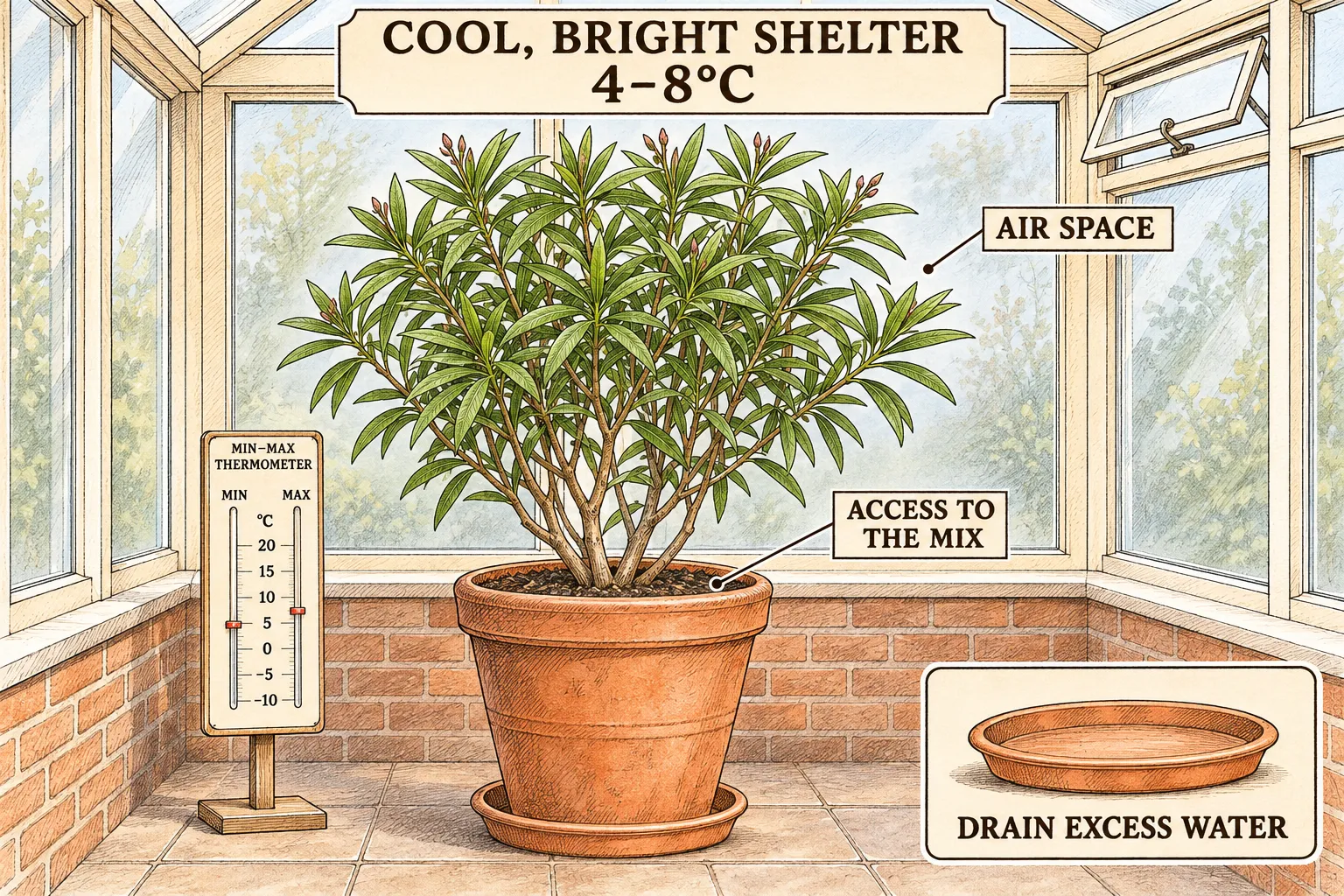
Keep an established potted oleander in a bright, ventilated, frost-free place through a cold winter. The Bavarian Garden Academy recommends 4–8°C, approximately 39–46°F, for overwintering, with as much light as possible. Check the compost regularly and water according to its condition. Preserve healthy shoot tips and unopened flower clusters when bringing the shrub inside; trimming every branch to fit a doorway can remove useful growth for the next flowering season.
By late November, an oleander in a cold region should have a dependable winter station, whether it moved indoors weeks ago or is only now leaving a mild patio. Use local weather to complete that move before damaging cold reaches the pot. The date is a prompt to check the arrangement, not a universal first-frost deadline. An already sheltered plant needs attention to actual night temperatures and moisture just as much as one still waiting outside.
Treat the 4–8°C range as a horticultural guide for cool winter holding, not a promise of survival at a particular outdoor minimum. Published hardiness descriptions vary with climate and cultivar. The RHS lists oleander as H3 for relatively mild UK conditions, while NC State cautions about cold damage and recommends indoor containers in cold climates. Neither statement establishes that a small exposed pot will remain safe through prolonged freezing. The cool shelter route keeps that test out of the winter plan.
Oleander remains evergreen. Its winter care differs from storing a leafless tuber in a dark cupboard. The RHS specifies full light and good ventilation under glass. A cool conservatory, bright frost-free porch or appropriately managed greenhouse can supply those conditions, but the name of the building proves little. Inspect the actual position occupied by the foliage and pot. A dim rear corner of a sunny room may give the shrub a very different environment from the window beside it.
Prepare room for the whole shrub and control access
Confirm Nerium oleander on the label and retain any cultivar name. NC State describes narrow, leathery leaves arranged opposite one another or in whorls, with flower clusters at the shoot ends. A plant sold under a loose common name needs identification before its care is assigned. Keep the established root ball intact during a routine move. A recently rooted cutting, damaged root system or newly lifted garden plant has additional establishment needs.
Measure the widest branches as well as the pot before moving it. Keep the full shrub clear of the doorframe and reserve enough space to reach its soil surface. A suitable trolley and lifting help can make a heavy tub manageable; support the container itself. Plan the route so branches pass through the opening with their tips and bark intact. A plant that fits only after every shoot has been shortened needs a different space decision.
Choose a position inaccessible to children and pets. Oleander is highly toxic if eaten, and NC State identifies both fresh and dry material as poisonous. The RHS also warns against ingestion and harmful smoke from burning it. Wear gloves when handling or pruning, collect fallen leaves and cuttings, and keep that material out of animal access. The winter position should be a controlled growing space, with inspection still possible and foliage clear of busy circulation routes.
Set a minimum–maximum thermometer near the plant and read it after cold nights and sunny afternoons. This is a practical way to test whether the proposed shelter actually stays within the intended regime. Keep leaves clear of cold glazing and direct heater output, and leave room for air to circulate through the canopy. If the space repeatedly freezes, arrange a more dependable frost-free location. Extra light or an occasional warm afternoon cannot correct an unsuitable overnight minimum.
Identify the flower structures before tidying
Look closely at the end of each shoot before taking secateurs to it. An unopened inflorescence is a branched cluster of buds, each held on its small stalk. Some buds may already show flower colour. The Bavarian Garden Academy explains that inflorescences still unopened in autumn can continue developing the following year. Their presence is a reason to preserve a sound terminal cluster when the plant goes into winter shelter, even if it contributed little to the summer display.
A faded flower is different from that intact cluster. Brown, collapsed petals may remain around a spent bloom, while other buds on the same branching structure remain sound. Inspect at close range and remove only loose spent material that can be separated cleanly. Cutting off the whole shoot tip because one flower has browned removes everything carried above the cut. The visible position of each bud matters more than a general instruction to tidy the plant.
Long paired seed follicles are another structure again. NC State describes the fruit as a pair of slender pods that eventually split to release seeds. Those elongated pods are not unopened flowers. Recognising them prevents a winter inspection from confusing fruit development with the flower clusters being retained. The comparison below shows separate examples; one shoot need not carry all three stages together. Keep the plant label and a photograph of its autumn tips if the remaining structures are difficult to interpret.
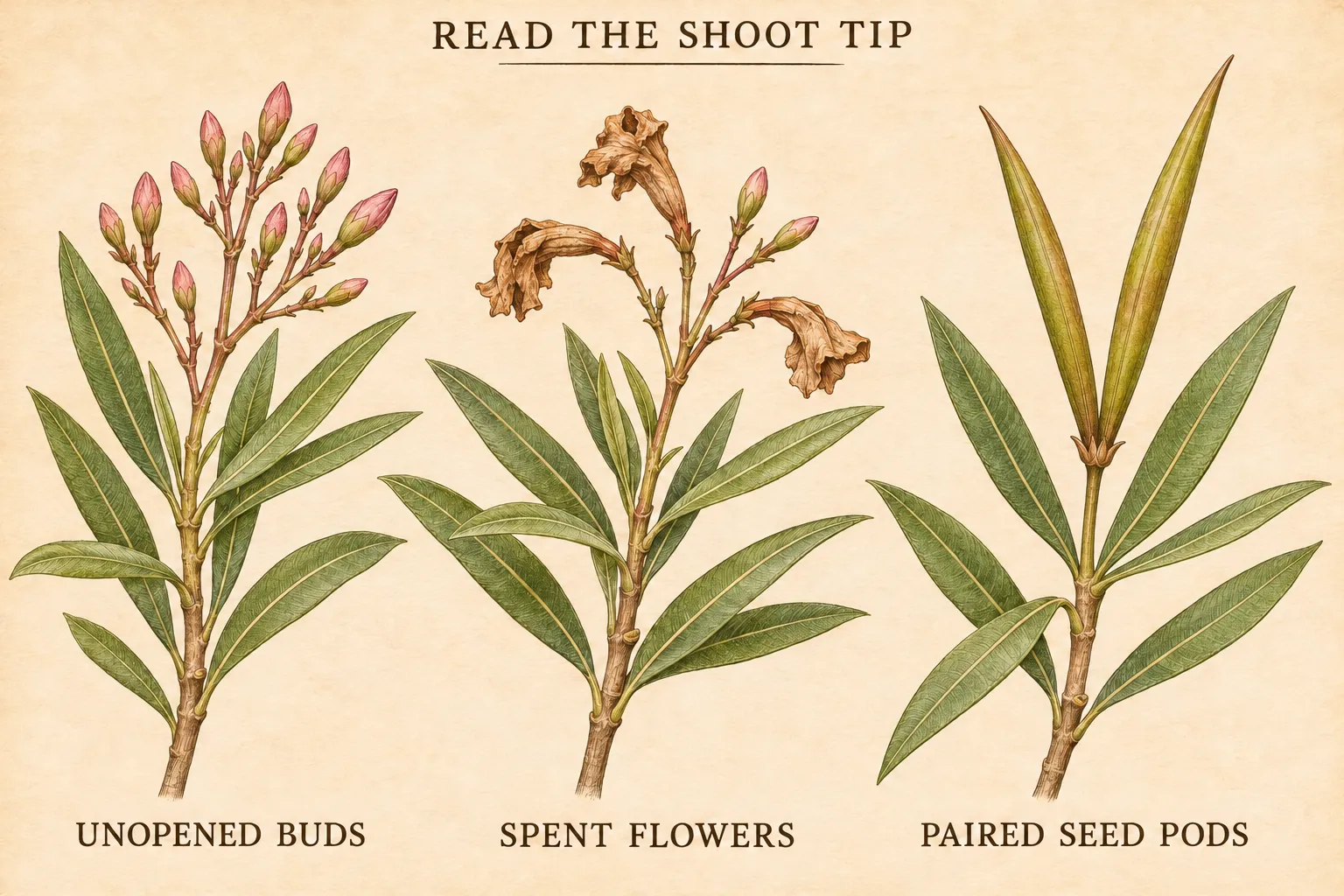
Preservation is not a guarantee of a particular flowering date. Light during overwintering influences flower formation in the Bavarian guidance, and the next growing season still has to provide suitable conditions. A cool, bright shrub retaining healthy tips is therefore a reasonable objective. Forcing flowers in a warm winter room is a different task. Let the plant keep its useful structure while managing the environment that supports it.
Make pruning a deliberate size decision
Routine winter preparation can leave a healthy, suitably sized oleander largely intact. The Bavarian Garden Academy says pruning is not always necessary and cautions against simply shortening all shoots on an oversized plant. Its alternative for an older shrub is occasional selective thinning of the longest, oldest shoots, carried back into older wood after flowering or before winter storage. That is a chosen renewal cut affecting particular branches, not a haircut across every terminal cluster.
NC State likewise warns that pruning after early autumn can remove the next season’s flower buds. The RHS permits restrictive pruning under glass in late winter and notes that oleander tolerates hard pruning. These recommendations describe different objectives. The ability to survive a substantial cut does not mean that cutting is required for ordinary overwintering or that the next bloom will be unchanged. If size control is necessary, accept the flowering trade-off and plan it around the shrub’s condition and available space.
For a manageable plant going into shelter now, first remove detached debris and assess broken or clearly dead growth. Keep sound flower-bearing tips where they fit. If a branch blocks the only workable route, choose a specific cut with the retained framework in view, using gloves and collecting the removed material immediately. Leave a large renovation for a planned pruning session. A hurried all-round reduction at the garage door is a poor way to decide the future shape of a long-lived shrub.
Cold-damaged branches need a separate assessment. NC State places pruning of frost-damaged and dead wood after winter. Keep uncertain firm stems until their condition can be judged more clearly, while obtaining local advice promptly for progressive decay or structural failure. Record which tips were already injured before the move. That distinction will help when assessing whether later changes came from earlier exposure, handling or conditions inside the winter shelter.
Check moisture often and water only when needed
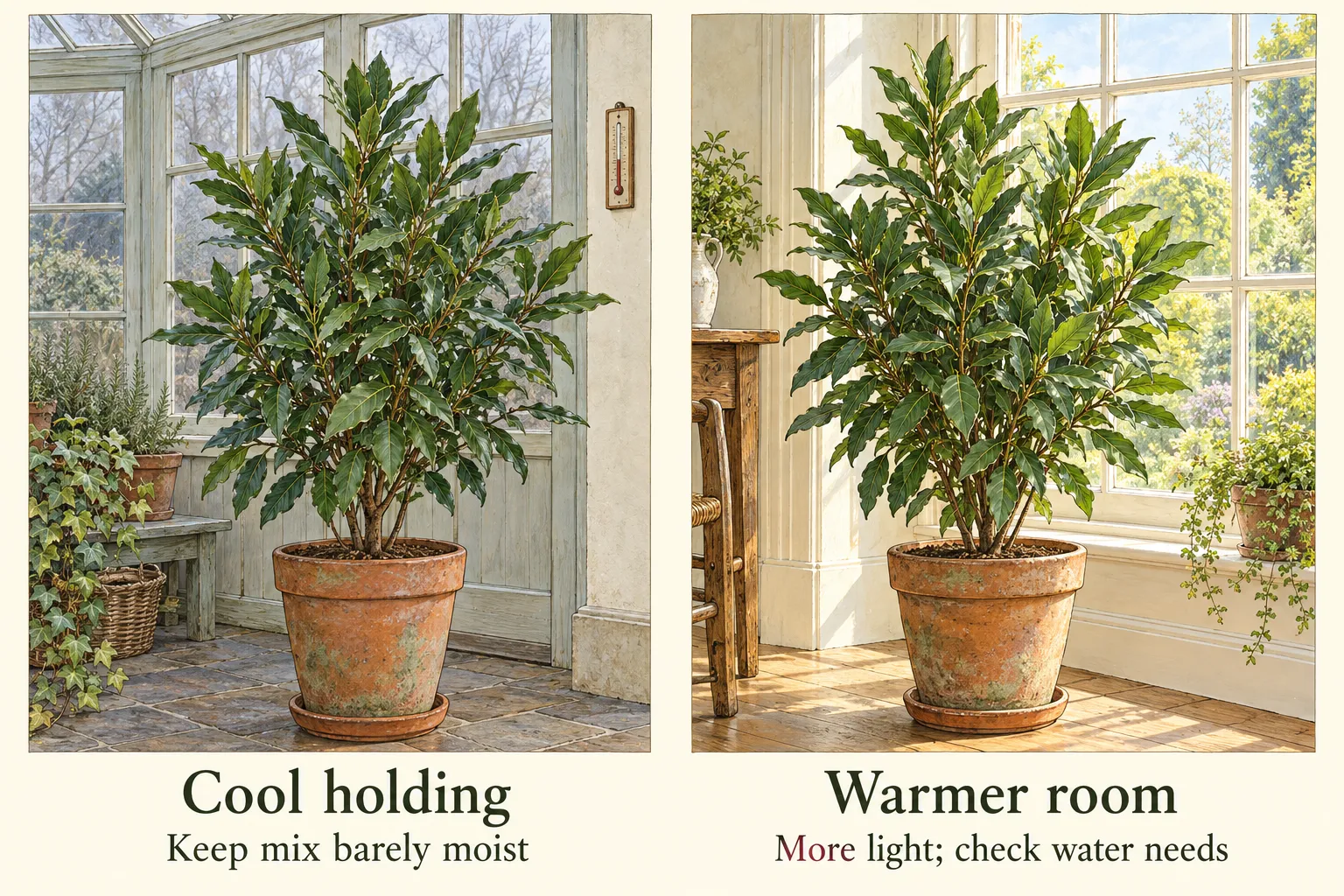
Change the summer watering routine as soon as the plant enters cool shelter. Oleander can be a thirsty container shrub during hot weather, but that history does not set its winter interval. The Bavarian Garden Academy recommends checking water need once or twice a week. At a cool 4–6°C, it reports that watering every two to three weeks may be sufficient. The first interval is for inspection; the second is an example of use under specified cool conditions.
Check accessible potting mix below the immediate surface and compare the weight of a small enough pot as it drains and dries. Leave a still-wet root ball alone and investigate collected runoff beneath it. When water is needed, apply it to the mix and allow the excess to escape. Keep drainage holes and the tray accessible. The aim is to meet the living root system’s reduced demand, with neither persistent saturation nor a neglected, desiccated root ball.
A decorative outer container can hide water after an otherwise careful application. Lift out or inspect the inner pot where practical, and empty trapped runoff. If a large tub cannot be lifted, arrange access to the drainage route before placing it for winter. A wet surface by itself gives incomplete information about the whole root ball, but recurring standing water is a clear fault to correct. Keep the pot’s original planting level while resolving the drainage problem.
Reassess after a change in temperature or light. The Bavarian guidance explicitly links brighter, warmer quarters with higher water use. A pot at 5°C during a dull week may dry slowly, while the same greenhouse can warm markedly in sunshine. Keep checking the mix when that happens; the previous watering date is only background information. Conversely, extra water cannot compensate for a warm, dim corner producing poor growth. Correct the placement and temperature together.
Keep routine feeding out of the cool winter maintenance cycle. The Bavarian schedule concentrates fertilizer in April through late August, when the plant is growing strongly. A resting shrub does not need to be pushed into summer extension merely because its leaves remain green. If a plant begins growing strongly under quite different, warmer conditions, reconsider its whole care regime. For the cool shelter method, maintain useful light and measured moisture while keeping major repotting separate from the ordinary move.
Inspect the canopy and distinguish a problem from slow growth
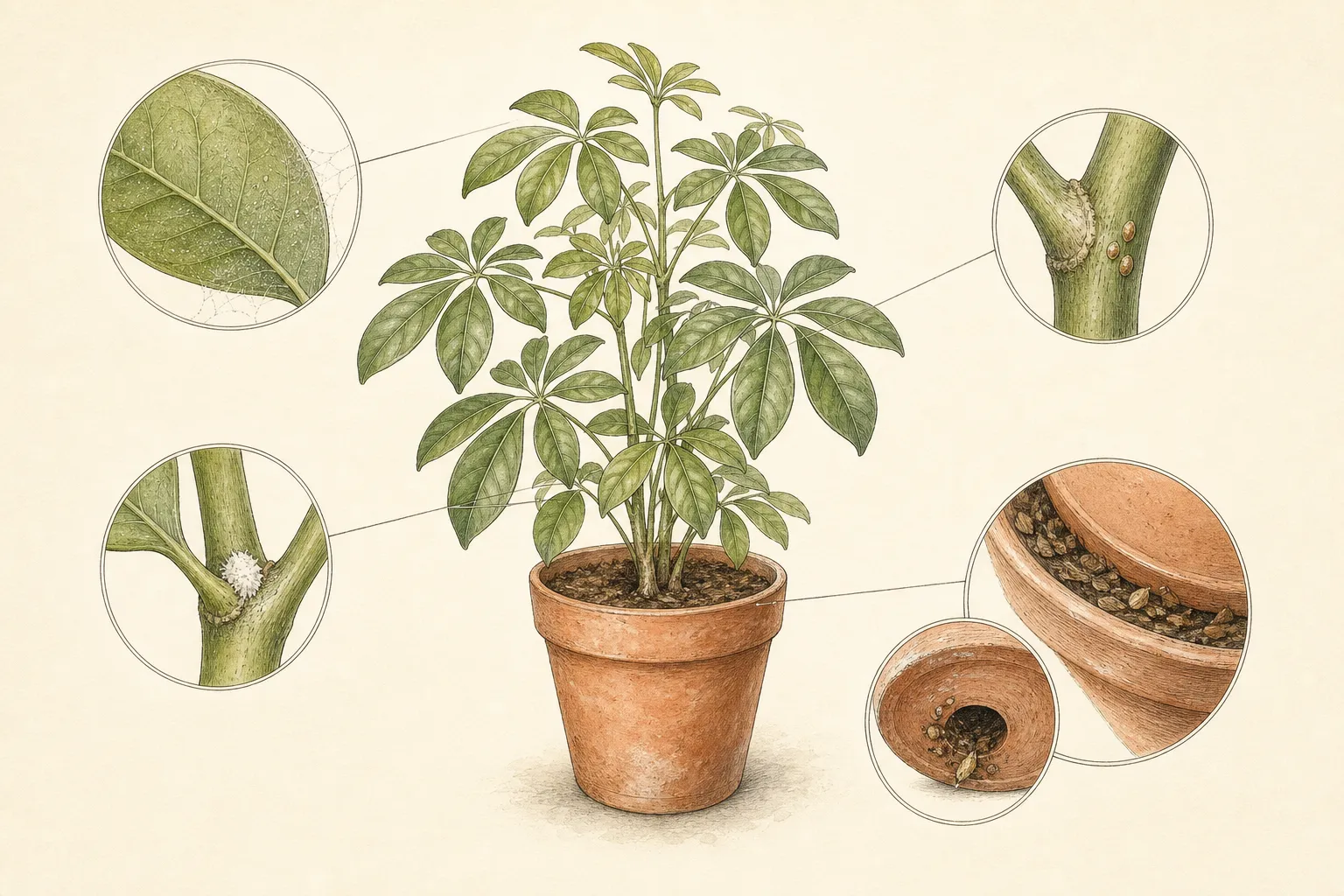
Inspect leaf undersides, shoot tips and branching points before the plant joins other sheltered containers, then revisit them during moisture checks. The RHS lists scale insects, mealybugs and glasshouse red spider mite among oleander’s possible problems under glass. NC State also lists aphids and scale. A compact-looking crown can conceal affected inner growth, so look through the branches as well as across the outer silhouette. Keep a suspect plant apart from the rest of the collection while the cause is identified.
Sticky deposits deserve closer inspection. The Bavarian account notes that aphids feeding on tender shoots and flowers produce honeydew, which may support sooty mould. Sticky leaves alone still require examination of the plant; they are a clue to investigate, not a complete treatment prescription. Photograph the affected shoot and check whether the change is spreading. Use identified, locally appropriate advice for any treatment.
Use the shelter readings and root moisture alongside leaf appearance. A plant that is quiet at cool temperatures is doing something different from one whose leaves are deteriorating while the pot stays wet or whose new shoots are extending in weak light. Check the nearest practical cause first: accumulated runoff, a freezing overnight minimum, a blocked bright position or visible pests. Several conditions can act together. An isolated brown leaf cannot establish which one is responsible.
Keep the space ventilated in suitable weather while maintaining frost-free conditions. The RHS and Bavarian guidance both call for air exchange. Open the available ventilation when conditions permit and close it before the temperature falls too far. Retain clear access to the pot and thermometer as other winter plants are added. A working station can become unsuitable if a taller neighbour blocks the light or a crowded row makes the oleander impossible to inspect.
Return it to outdoor light gradually in spring
Use local frost conditions and the plant’s growth to decide when the winter station can be retired. The Bavarian Garden Academy gives a regional outdoor season beginning around mid-April, but that is not a universal release date. A shrub showing soft new growth in a warmer shelter has different exposure from one kept steadily cool. Keep a return-to-shelter option while nights remain uncertain and assess winter damage before carrying out substantial pruning.
Introduce stronger outdoor light in stages. The Bavarian guidance specifies several days in partial shade when oleanders leave winter quarters, because an abrupt move can scorch the foliage. Start in a sheltered position, then work toward the sunny growing-season site. Check moisture as moving air and stronger light increase demand. A plant that needed little water in a cool room can resume much greater use outdoors; the winter interval ends when those conditions change.
Review the retained shoot tips as the shrub resumes growth. Keep track of unopened clusters that continue developing and branches deliberately removed for size control. A sparse bloom after hard pruning has a different history from a shrub that kept its terminals but spent winter in poor light. That comparison helps choose the next season’s size and shelter plan. Reserve enough winter space for the framework you intend to keep, with access to its leaves, root ball and fallen material.
Steps
- Level
- moderate
- Time
- About 30 minutes to prepare a manageable pot, followed by regular winter checks
- Tools
- Minimum–maximum thermometer, Gloves, Secateurs for necessary damaged-branch cuts, Watering can with a controlled spout, Suitable trolley or lifting help for a heavy tub
- Materials
- Bright, ventilated, frost-free winter space, Accessible drainage tray, Container for collecting fallen leaves and cuttings
- 1Confirm the plant and reserve its winter space
Identify Nerium oleander and keep the cultivar label. Measure the container, branch spread and route into shelter. Choose bright frost-free space that can be ventilated and monitored near the Bavarian 4–8°C guide. Keep the plant and its fallen material inaccessible to children and pets, while leaving the pot and canopy reachable for care.
- 2Inspect the tips before moving or trimming
Wear gloves and check leaves, stems and terminal clusters. Distinguish unopened buds from collapsed spent petals and long paired seed pods. Preserve sound buds and healthy shoots that fit the space. Collect loose debris and any necessary cuttings. Give an oversized plant a considered selective-pruning plan that preserves the chosen framework.
- 3Place the intact pot and record shelter conditions
Move the shrub with the container supported, protecting its branches through the doorway. Set it in useful light, clear of cold glass and direct heater output. Confirm that excess water can leave the pot and tray. Read night minima and sunny-day maxima near the plant, then correct a freezing or persistently warm, dim station.
- 4Use moisture checks to decide each watering
Check once or twice weekly, assessing the mix and any collected runoff. Water when needed and let excess drain. Treat a two-to-three-week watering interval at 4–6°C as a cool-condition example, not a fixed calendar. Recheck sooner after increased warmth or light. Keep summer feeding separate from this cool winter holding routine.
- 5Maintain access and plan the spring transition
Inspect the canopy during water checks and separate a plant with suspected pests until identified. Ventilate in suitable conditions while keeping the shelter frost free. When local spring conditions permit, introduce outdoor light through several days of partial shade and retain a cold-weather fallback. Reassess pruning and watering as growth and exposure change.
Related reading
Sources
- Oleander – Pflegetipps. Bavarian State Institute for Viticulture and Horticulture. Source record · Accessed 2026-11-07.
- Nerium oleander L.. Royal Horticultural Society. Source record · Accessed 2026-11-07.
- Nerium oleander. NC State Extension. Source record · Accessed 2026-11-07.
- Oleander. ASPCA. Source record · Accessed 2026-11-07.
- UCD Toxic Plant Garden: Oleander. UC Davis School of Veterinary Medicine. Source record · Accessed 2026-11-07.