Grow · overwinter potted aeoniums uk
Overwinter Potted Aeoniums in a Bright UK Winter Shelter
Move established potted aeoniums into bright, frost-free UK winter shelter, balance cool conditions with water, and interpret leaf loss before changing care.
Published Last updated
In this guide
- Bring the pot into light and reliable frost protection
- Identify the aeonium and the growth you need to preserve
- Compare shelters by their nighttime conditions
- Give rosettes light and space at suitable temperatures
- Check the pot before setting a winter watering routine
- Adjust water to cool holding or continuing growth
- Read leaf position before deciding the plant is failing
- Move back outdoors gradually when cold risk has passed
- Steps
Bring the pot into light and reliable frost protection
Move potted aeoniums out of cold autumn weather into a bright, cool, frost-free place, keeping their leaves exposed to light and their pots able to drain. A greenhouse is useful only if it actually stays frost-free. A dark shed may exclude rain but fails the light requirement. Choose and check the shelter before the first damaging night makes the decision urgent.
Both Wisconsin and NC State Extension advise bringing aeoniums inside before nighttime temperatures fall below 40°F, about 4°C. Use that as a conservative moving cue, not as a tested survival threshold for every cultivar. In a UK garden, a forecast approaching that range is a reason to have the pots under cover already. Leafy rosettes and wet container roots should not be left outside while you investigate how much frost a plant might tolerate.
The winter objective is a sound plant that retains its structure, with water matched to the light and temperature available. Very dry, cool greenhouse holding and a warmer indoor growing position demand different attention. Neither the word succulent nor a date in November tells you precisely how often to water. Read the plant and its pot together, starting with a shelter that meets its needs.
Identify the aeonium and the growth you need to preserve
This approach is aimed chiefly at established, branching ornamental aeoniums such as the familiar Aeonium arboreum-type cultivars. Their leaf rosettes sit on increasingly bare, woody stems, with side branches carrying additional heads. Wisconsin notes that nursery naming can be confused and many plants sold under A. arboreum are hybrids. Keep the cultivar label; appearance alone cannot establish a precise species identity or cold tolerance.
An aeonium rosette is a spiral of fleshy leaves, often broad and spoon-shaped. Green, dark purple and variegated selections can all be grown in pots, but leaf color alone is a poor measure of winter success. Wisconsin describes greener new growth on dark-leaved 'Zwartkop' types and notes that light affects coloration. A change from near-black to greener foliage needs to be considered alongside the shape and firmness of the new growth.
The genus also includes low, flat-rosetted plants, so an arboreum-style illustration cannot describe every aeonium. Wisconsin singles out the flat A. tabuliforme as needing protection from hot sun. Preserve any species-specific light instruction when choosing a winter position. The general requirement is strong usable light, with the particular plant's needs still taking precedence over the most exposed window or bench.
Keep healthy rosettes and stems intact during the move. A long bare stem with old leaf scars can be normal architecture in an aging aeonium. Cutting every stem back to make it fit on a crowded shelf changes a simple relocation into propagation and recovery work. Choose a space that holds the existing plant, and leave planned reshaping for a suitable growing period.
Compare shelters by their nighttime conditions
Plant Heritage's National Collection notes recommend a cool, frost-free environment with good air circulation for UK aeoniums, favoring a greenhouse. A bright conservatory or suitable porch may offer the same useful combination. The name of the building is less important than the temperature at the plant, the available daylight and the way air moves around the rosettes.
Wisconsin gives 50°F, about 10°C, as a cool winter holding temperature with restricted water. That is a useful reference for a bright porch or conservatory; it is not a minimum hardiness rating. Ottershaw Cacti describes a different specialist approach: very dry plants in a frost-free greenhouse at temperatures above about 3°C, with growth deliberately restricted. That colder method has less room for error and depends on the dry, protected conditions described by the grower.
For a home collection, choose the reliably frost-free option you can monitor. Put a minimum–maximum thermometer near the plants and read the overnight low, especially after clear cold nights. A pleasant midday greenhouse temperature says little about what happens before dawn. If the shelter is approaching freezing, move the pots to a safer bright location before the next cold period; an assumed frost-free label is insufficient.
An unheated greenhouse or cold frame can still freeze. Wrapping a pot does not establish protection for the exposed rosettes, and keeping the compost dry does not turn a tender aeonium into a hardy outdoor plant. Have a backup position ready before a forecast cold spell. For a large collection, the number of plants you can protect should determine what stays in the summer display.
Give rosettes light and space at suitable temperatures
Use a very bright position beneath clear glazing or near a bright window. Wisconsin and NC State both emphasize light for indoor aeoniums. Keep the plant out of the shade cast by shelves, neighboring pots or stored objects. Place the smaller pots where taller branching specimens will not cover their rosettes, and leave enough clearance to see the centers of all the plants.
Set the pots so leaves remain clear of the glazing and of adjacent rosettes. The bench illustration shows those relationships, not a prescribed distance between plants. Space lets you inspect the foliage, remove fallen leaves and maintain the air circulation recommended by Plant Heritage. A dense cluster against a cold pane is harder to manage than a smaller group with its foliage visible.
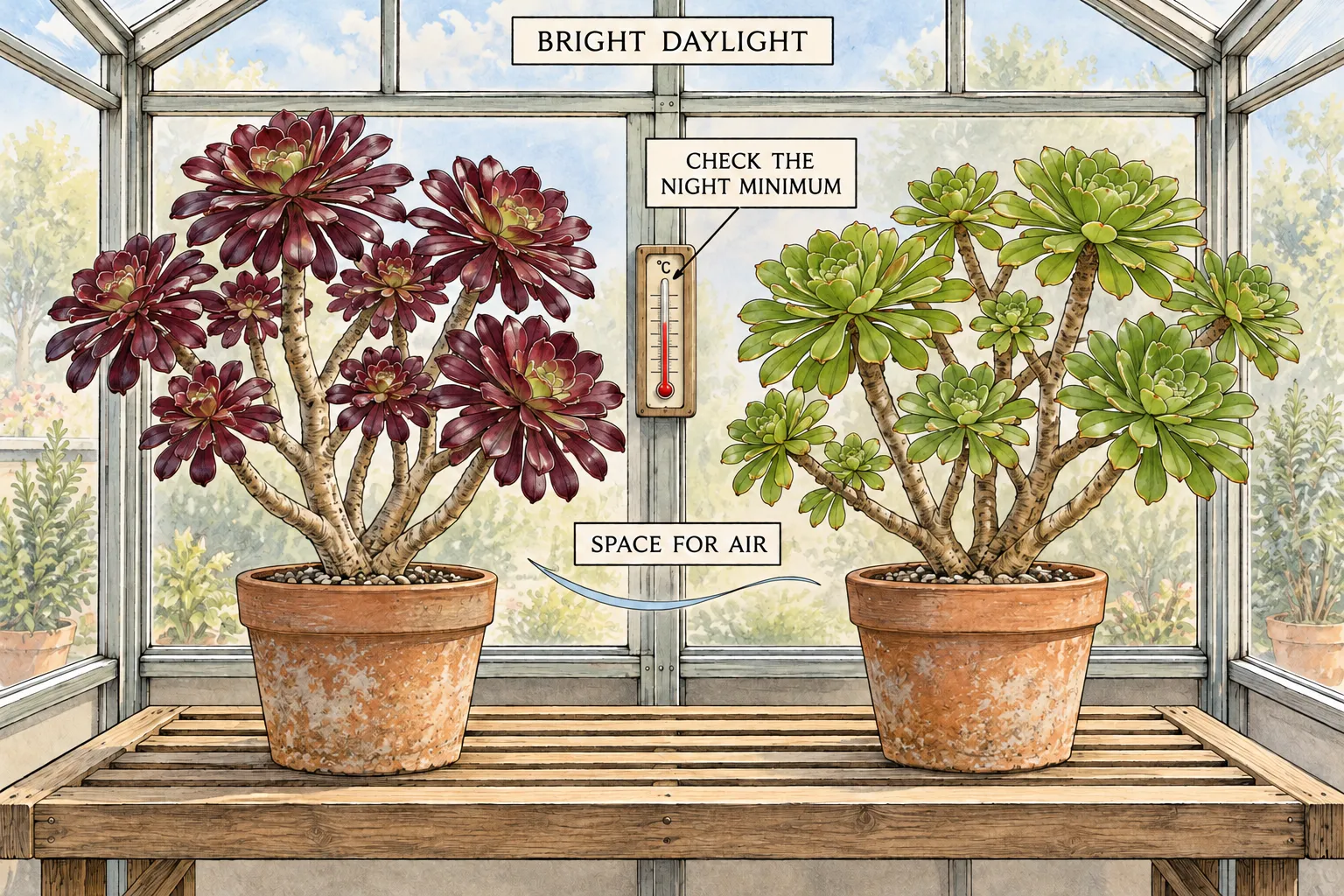
Ottershaw warns that warmth and water can encourage stretched growth when British winter light is weak. Adding heat to a dim room therefore does not solve the problem. If a plant is producing increasingly loose, elongated new growth, improve the light and review whether the position is unnecessarily warm. The desired result is a compact living rosette, not rapid extension at any cost.
Keep ventilation appropriate to the weather. A sheltered space still needs air exchange, but opening it to freezing air contradicts frost protection. Check warm sunny spells as well as cold nights, especially in a small glazed enclosure. Choose conditions you can maintain through those changes; a bright sheltered bench is useful because you can inspect and adjust it, not because glass alone supplies every requirement.
Check the pot before setting a winter watering routine
Bring an established container into shelter with its root system intact. Remove a decorative outer cover long enough to check for trapped water and confirm that the drainage holes are usable. A pot that has been catching autumn rain may still be wet when it arrives under glass. Its first indoor watering should wait for the medium to dry appropriately, not follow automatically from the move.
Aeoniums need a porous, freely draining growing medium. Wisconsin recommends a cactus or high-porosity mix and describes mixing ordinary potting medium with an equal volume of perlite or pumice to increase porosity. That is a useful option when repotting is genuinely needed; it is not a reason to disturb every sound plant just before winter. A layer of decorative grit on top also cannot tell you how wet the mix below remains.
Check moisture beneath that surface and compare the weight of a manageable pot as it dries. Use more than the appearance of the top dressing. A small terracotta pot may dry differently from a large plastic one, and the newly sheltered container will no longer receive the same rainfall or air movement as it did outside. Learn the behavior of each pot before giving the whole collection one watering day.
If the medium stays saturated or the plant is deteriorating, investigate the drainage and root condition. Routine holding assumes a sound plant in a usable pot. Wisconsin recommends repotting pot-bound aeoniums when new growth begins, into a slightly larger container. Save elective repotting for that opportunity; a suspected root problem calls for assessment of the particular plant. Seek horticultural advice if stems continue to soften or collapse.
Adjust water to cool holding or continuing growth
Allow the growing medium to dry thoroughly between waterings. Both extension guides recommend restricted water over winter, enough to limit damaging foliage shriveling. In a cool, bright holding space, water use can be very low, so repeated watering of a still-moist pot extends the wet period. Make the decision from the root zone and the living rosette. A fixed weekly interval may miss changes in both.
Ottershaw's cold, dry greenhouse method aims to suppress growth and accepts some drooping or withering of outer leaves while the centers remain sound and compact. A warmer house can produce a different response: the plant may continue trying to grow and lose leaves if the available water and light do not suit that activity. Those are descriptions of cultivated conditions, not evidence that every aeonium must enter the same winter dormancy.
For a dry pot with firm stems and increasing dehydration, give enough water to relieve that drying, let any surplus escape and empty the receiving saucer. Then allow another dry-down before repeating. An exact volume or interval would depend on the pot and shelter. A plant held near 10°C and one growing beside a warm window should not be watered automatically as a pair simply because they share a genus.
If the pot remains wet, hold back additional water while checking drainage, light and temperature. Leaf loss is not permission to keep soaking a succulent whose roots are already saturated. NC State identifies overwatering as a cause of root rot. A damp pot with softening tissue needs closer attention, while a dry pot with sound centers presents a different problem. Extra fertilizer cannot resolve that distinction.
Read leaf position before deciding the plant is failing
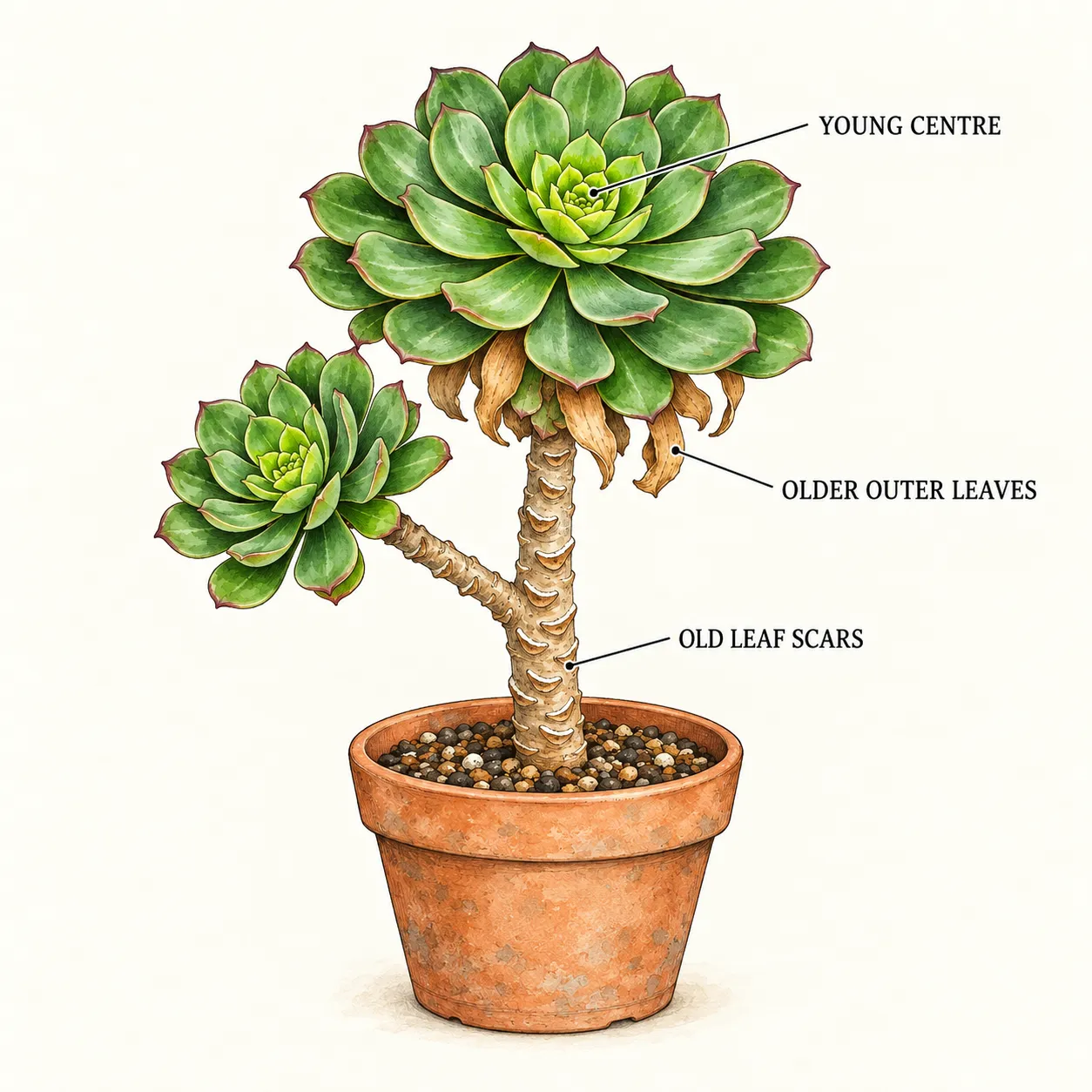
Aeoniums naturally shed older leaves as new leaves form. Wisconsin explains how this leaves a rosette at the end of an increasingly bare stem. A few dry lower leaves and old leaf scars can therefore occur on a healthy plant. The botanical drawing identifies the center, older outer leaves and scarred stem so you can describe where a change is happening. Fallen leaves have to be interpreted in that context.
Look at the young center and the stem supporting it, then at the potting medium. Firm central growth with a few dry outer leaves is different from a soft collapsing center or progressive stem deterioration. The drawing illustrates leaf position and aging; it cannot prove that a particular plant's roots are healthy. Increasing loss still deserves a moisture and shelter check even when some basal shedding is expected.
Check for pests when moving the pots and during winter inspections. NC State lists mealybugs, aphids, spider mites and scale among insects to monitor. Look around leaf bases and stems, and keep a suspect plant separate while identification is resolved. Removing dead loose leaves helps you see those areas, but tearing away firmly attached living leaves creates needless damage.
Flowering introduces another distinction. Aeonium rosettes generally die after flowering; a branching plant can continue through its other rosettes. A single-headed plant has fewer options. If a mature head has flowered and then declines, changing the winter watering may not reverse that life-cycle event. Identify which rosette flowered and whether healthy side branches remain before treating the whole plant as a cold or watering failure.
Move back outdoors gradually when cold risk has passed
Keep the plant sheltered until local frost risk has passed and nights are suitable for a return outdoors. A single warm spring afternoon is insufficient evidence that the summer position is ready. Continue checking the overnight temperature during the transition, with the protected location available if a cold spell returns.
Acclimate the plant gradually to stronger outdoor light. Wisconsin and NC State both advise a staged return because foliage grown indoors can scorch after an abrupt move into full sun. Begin with a sheltered outdoor position and shorter exposure, then increase light and time outside as the plant adjusts. Retain special sun protection for species that need it, including flat-rosetted types.
Reassess watering as outdoor conditions change. A pot that dried slowly under winter glass may behave differently in sun and moving air. When active growth and suitable weather return, Wisconsin recommends thorough watering followed by drying between applications. The plant's new growth also provides a sensible time to consider necessary repotting or later reshaping.
Compare the emerging rosettes with the winter record. Greener color alone does not establish failure, but stretched new growth suggests the shelter's light and warmth were poorly balanced. Choose a brighter or cooler position for the following winter if that was the limiting condition. The useful result is an aeonium that returns with sound roots and living heads, with its next move planned before autumn rain and cold become urgent.
Steps
- Level
- moderate
- Time
- About 30 minutes to prepare a few pots; checks throughout winter
- Tools
- Minimum–maximum thermometer, Small watering can, Hand lens for inspecting leaf bases
- Materials
- Established potted aeoniums in freely draining containers, Bright, frost-free shelter with air circulation, Dry saucers or trays that can be emptied, Cultivar labels
- 1Choose and measure the shelter
Select a bright greenhouse, porch, conservatory or suitable indoor position that will remain frost-free. Put a minimum–maximum thermometer near the plants and check the overnight reading. Use about 10°C as a practical cool-holding reference, not a species hardiness limit. Arrange a safer bright backup location if the usual shelter may approach freezing during a cold spell.
- 2Bring established pots in before cold arrives
Move the plants before nighttime temperatures fall below about 4°C, the conservative cue given by the extension sources. Keep the existing root systems intact. Check leaf bases and stems for pests, retain cultivar labels and separate suspicious plants for identification. Lift each nursery pot from any decorative cover and empty trapped rainwater before placing it in shelter.
- 3Arrange rosettes for light and inspection
Place taller branching plants where they will not shade the smaller ones. Leave rosettes clear of the glass and each other, with access to see their centers and check the potting medium. Keep air circulating under suitable weather conditions while retaining frost protection. Recheck the arrangement when sunshine warms the enclosure or a cold night is forecast.
- 4Learn each pot's dry-down
Check below any surface grit and compare the weight of a manageable container. A rain-soaked pot needs time to dry before another watering. Record whether the rosette is compact and firm or continuing to extend in warmth. Use those observations together with the medium's condition; the appearance of one fallen leaf is insufficient to choose a watering interval.
- 5Water cautiously and watch the response
When the medium is dry and the plant needs water, apply enough to relieve dehydration, allow free drainage and empty the saucer. Let the medium dry again before repeating. Hold water from an already wet pot and investigate continuing tissue decline. Read older outer leaves separately from the growing center, and account for a rosette that has finished flowering.
- 6Plan the spring return
Wait for suitable nights and the end of local frost risk before reintroducing outdoor conditions. Increase exposure to stronger light gradually, keeping the protected position available if cold returns. Adjust watering as growth and dry-down change. Consider necessary repotting when new growth begins, and retain notes about the winter position so the next autumn move starts with a better arrangement.
Related reading
Sources
- Aeonium. University of Wisconsin–Madison Extension. Source record · Accessed 2026-11-01.
- Aeonium (Aeonium, Tree Houseleek). NC State Extension. Source record · Accessed 2026-11-01.
- Aeonium spp. & cvs.: Cultivation Notes. Plant Heritage. Source record · Accessed 2026-11-01.
- Aeonium – Winter Care. Ottershaw Cacti. Source record · Accessed 2026-11-01.