Grow · mound hybrid tea roses winter cold climates
Mound In-Ground Hybrid Tea Roses for Cold Winters
Protect the lower canes and graft of established hybrid tea roses with a temporary soil mound, then add loose insulation and remove it carefully in spring.
Published Last updated
In this guide
- Cover the lower canes after the rose enters its winter rest
- Confirm that this is the rose that needs a mound
- Prepare the bed and materials before the cold-weather window
- Tie the canes and build a measured soil mound
- Add the loose covering and keep the arrangement stable
- Inspect the covering when weather moves it
- Remove both layers in spring and restore the original grade
- Steps
Cover the lower canes after the rose enters its winter rest
Protect an established hybrid tea bush rose in a cold-winter garden by bringing soil to its base, then adding loose insulating material over the mound. The soil protects the lower canes and the vulnerable graft region; the outer layer adds winter insulation. Keep the rose rooted at its existing depth. This is a temporary seasonal covering that must be removed in spring, with the original ground level restored.
For an Iowa example, Iowa State recommends covering the bottom 10–12 inches of the canes with soil, followed by 1–2 feet of loosely packed straw or leaves. Those are two different layers with different measurements. A shallow scatter of decorative mulch supplies neither the soil mound nor the full loose covering described in that method. Begin by identifying what is being protected and where each layer will sit.
Early November is a useful time to obtain materials and inspect the bed. Installation follows local winter conditions. Iowa State begins its routine around mid-November, while Chicago Botanic Garden waits until late November, when the ground has frozen. These are regional examples, not competing dates to average. Prepare beforehand so the eventual cold-weather job is possible with stored, workable soil and a rose whose growth has slowed into winter rest.
Confirm that this is the rose that needs a mound
Find the cultivar label and distinguish a hybrid tea bush from a hardy landscape rose, a climber or a standard trained on a tall stem. Iowa State groups most hybrid teas, grandifloras and floribundas among modern roses requiring protection in its climate. Many shrub, species and old garden roses are reliably hardy there and require much less preparation. A rose's flower color or size is insufficient to assign the same winter treatment to the whole bed.
Locate the graft union if the rose is grafted. It is the swollen junction between the rootstock and the named flowering variety, usually near the base of a bush rose. K-State explains that loss of this junction can mean loss of the desirable rose even if the rootstock survives. Use the planting record and a gentle surface inspection; excavation through established roots is unnecessary just to produce a better photograph of a buried union.
An own-root rose lacks that graft junction, but its cultivar can still be vulnerable to winter damage. Preserve its crown and lower living canes according to regional guidance for that rose. Keep this distinction on the label for spring, when low new shoots must be interpreted correctly. A shoot emerging from an own-root plant is not automatically an unwanted rootstock shoot simply because it begins close to the ground.
Standards and climbers need separate plans. A standard's graft may be high above ground, where a small base mound cannot protect it. A tender climber may need its long flowering framework protected along much more of its length. Iowa State provides different methods for those forms; this upright bush-rose mound is not a substitute. For plants still in containers, follow the separate [container rose winter guide](/grow/protect-container-roses-through-winter/), because exposed pot roots add another major vulnerability.
Prepare the bed and materials before the cold-weather window
Clear fallen rose leaves and accumulated debris from the base before adding the mound. Iowa State identifies removal of diseased debris as a useful way to reduce problems the following season. K-State specifically advises removing infected leaves from both plant and soil and discarding them. Work gently around the basal canes and use a separate collection bag for visibly diseased material, so it is not incorporated into the winter covering.
Check soil moisture while the ground is still workable. K-State stresses adequate moisture for hybrid teas entering winter. If the root zone is dry, water appropriately and allow the soil to drain before enclosure. A wet depression that holds standing water needs attention to its water source and drainage; a mound over the stem base cannot correct a saturated root system. Observe the bed after rain, including runoff from paving or nearby roofs.
Obtain the mounding soil from elsewhere. K-State warns that scraping soil from around the rose damages its tender roots and recommends bringing garden soil from another area or purchasing topsoil. Keep the existing root zone level and covered. Digging a circular trench beside the rose to build a central hill trades protected lower canes for exposed roots, which defeats the purpose of the winter preparation.
Keep the reserved soil workable until needed, using covered storage or bagged material where appropriate. Set aside straw or clean leaves for the separate loose layer, and prepare wire fencing if wind is likely to scatter it. Measure the rose's footprint before cutting a cylinder so the cage can stand around the canes comfortably. Have enough access to place soil by hand or scoop at the centre, then return to remove it in spring.
Retain a reference for the original ground level. A photograph showing a nearby fixed bed edge or a small labelled marker outside the root crown is useful. This records the seasonal addition, not a new planting depth. If the rose was initially planted at an unsuitable depth, that is a separate assessment; winter hilling is not the moment to lift or sink an established plant. The [bare-root rose planting guide](/grow/plant-bare-root-roses/) explains why permanent union depth depends on the planting system.
Tie the canes and build a measured soil mound
Gather the canes loosely with soft twine to make room for working and reduce whipping in wind, following Iowa State's method. Keep their natural spacing reasonably open and use ties that can be found and released later. A long cane should move toward the group with gentle support; forcing a stiff cane against the others can split it near the base. Put the fastening where it holds the framework securely while leaving access for the soil.
Reserve the main pruning for spring in this Iowa-based routine. Iowa State specifically warns against the extensive autumn pruning often needed to fit roses into small foam cones. K-State's regional routine does include reducing hybrid tea canes to about 24 inches, illustrating a genuine difference in practice. That height is not an extra step to add automatically to the Iowa mound. Retain sound canes, tie them for stability and deal selectively with a clearly broken or hazardous stem.
Add the brought-in soil gradually around the lower canes. In the Iowa example, cover their bottom 10–12 inches, approximately 25–30 cm. Measure the rise of the soil mound from the existing ground level beside the plant, and check that the low graft region is included. The number describes lower-cane coverage, not 12 inches of additional soil above every possible graft location. An unusually high union or a different plant form needs a specific local assessment.
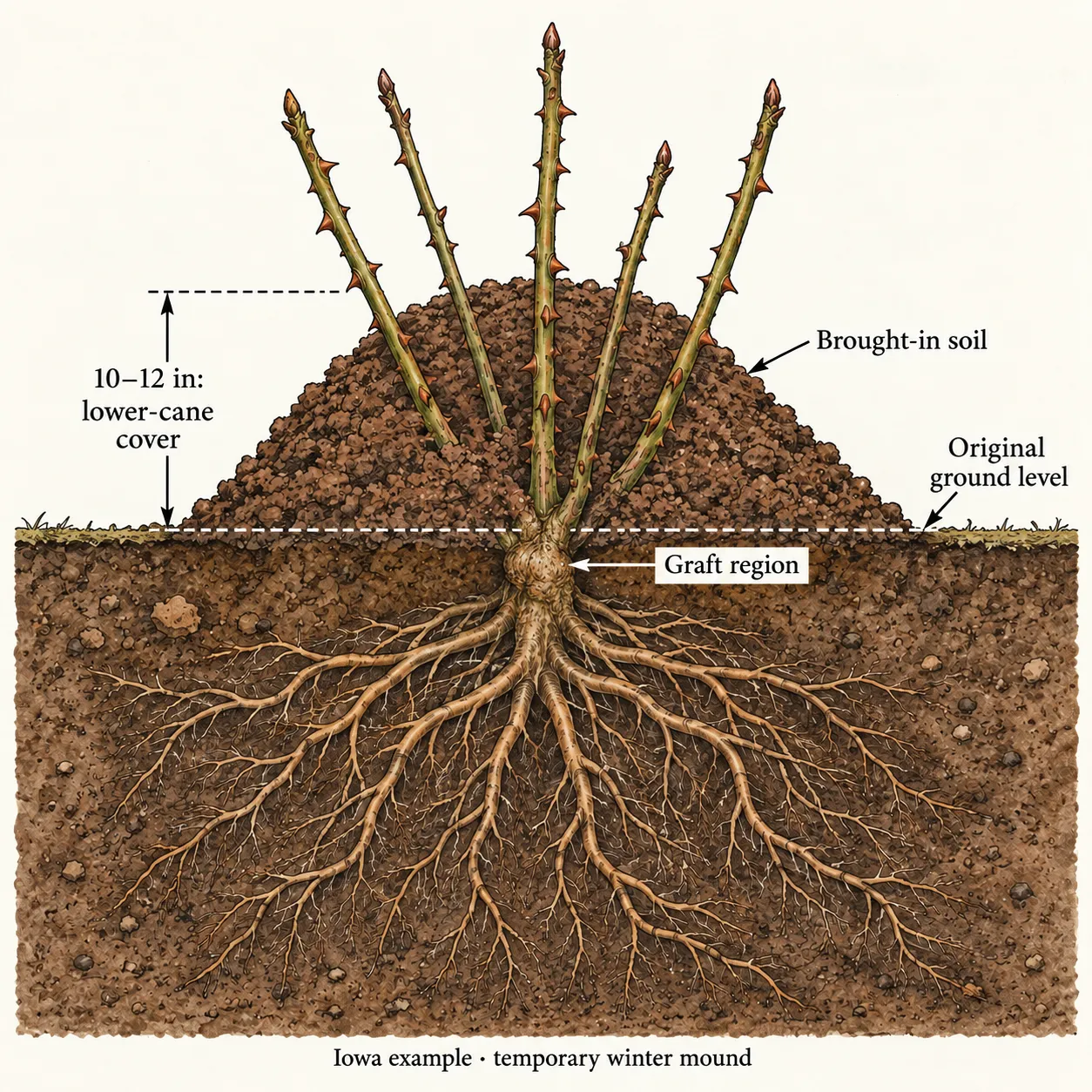
Build a broad, stable mound around the centre, allowing soil to settle among the basal canes. Leave the surrounding garden grade intact. Keep the established root system undisturbed while raising only the temporary soil level around its canes. Keep tools from striking the canes as the space fills. Step back and check the whole base, including the far side that is easy to miss while working from a path.
K-State recommends a smaller 6–8 inch mound for hybrid teas in Johnson County, Kansas. It supports the same principle of protecting the graft with imported soil, but the depth belongs to that regional routine. Use the method recommended for your conditions and keep its measurements together. Choosing the smallest number from one source and the earliest date from another does not produce a tested local system.
Add the loose covering and keep the arrangement stable
After forming the soil mound, add the outer insulating material specified by the chosen method. Iowa State describes 1–2 feet, approximately 30–60 cm, of loosely packed straw or leaves over the mound. This is an organic covering above the soil, not a second instruction to raise the mineral-soil level another two feet. Preserve the difference when checking the finished height or explaining the job to someone helping in the garden.
Wire fencing can hold the loose material in place, as Iowa State recommends. Fit it around the rose and mound, secure it against wind and keep sharp cut ends clear of canes and the access route. Add the insulation gently so it occupies the available space. A dense wet mat has a different structure from loose straw. Keep the cultivar label outside the covering or on a visible marker so the plant remains identifiable through winter.
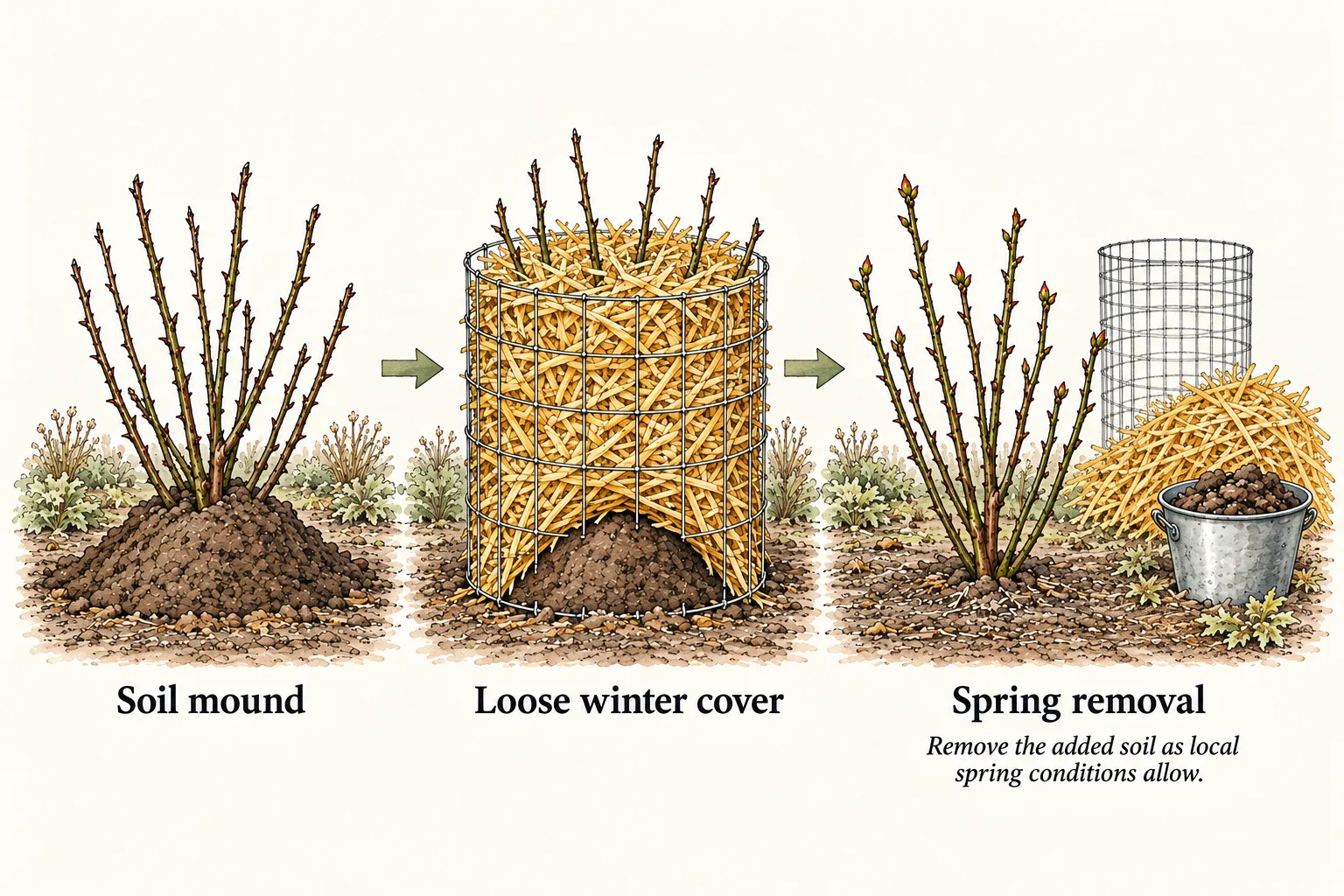
Iowa State also allows a small amount of soil over the straw or leaves to hold it down. A wire enclosure offers easier visual access and reduces the need to add more soil above the loose layer. Choose a retention method that suits the wind and garden layout. The objective is to keep the insulation in place through ordinary weather, while still being able to remove it separately from the mound when spring arrives.
Leave foam cones out of this method. Iowa State notes two problems: fitting a large rose can require substantial pruning, and sunshine can warm the enclosed space enough to create damaging temperature swings. A winter rose needs protection through cold and changing weather; forcing it into a small warmed enclosure works against that purpose. Keep the soil mound and loose organic layer distinct and visible in your record of the finished arrangement.
Inspect the covering when weather moves it
Check after strong wind or a substantial thaw to see whether the outer material has shifted. A bare patch on one side of the mound can expose lower canes even when the other side looks well covered. Restore displaced loose insulation while preserving the established soil hill. If water has washed soil away, identify the runoff route and replenish the missing mound with reserved soil. Repeated washout calls for correcting the source of flowing water.
Inspect the cage and ties at the same time. Fencing should hold the mulch, not rub repeatedly against a cane. Move a loose edge away from the plant and secure it from outside the root crown. Release a fastening that is pulling a stem sideways, then retie it gently. Keep the work limited to restoring the winter arrangement; a brief mild spell is not a reason to remove the whole mound or begin the final spring pruning.
Keep any new observations specific. Note exposed graft tissue, displaced soil, a broken cane or persistent standing water. A dark cane tip seen above the insulation does not reveal the condition of every protected bud below it. Leave the major survival assessment for the spring removal and growth check unless there is clear ongoing damage needing attention. A label, one photograph and the date of the disturbance make that later assessment easier than relying on memory.
Remove both layers in spring and restore the original grade
Make spring removal part of the plan from the beginning. K-State removes its soil mulch just before growth starts. Iowa State's general winter guide uses the thawed ground as a cue, while its more specific removal advice gives late March or early April in southern Iowa and mid-April farther north. Chicago Botanic Garden begins uncovering in April. Follow the local thaw and growth stage; these dates describe regional windows, not a single national deadline.
Remove the loose straw or leaves first so the soil mound and canes are visible. Release the wire enclosure and ties carefully, keeping emerging buds clear of snagged material. Then remove the added soil gently. Chicago recommends carefully hosing away mounded soil and keeping sharp tools away from the rose base. Where drainage or access makes water removal impractical, use a similarly gentle hand method, preserving the canes and original soil surface.
Move the surplus soil elsewhere in the garden or to suitable low areas clear of the crown, following K-State's advice to prevent permanent burial. Repeated annual mounding should not gradually raise the bed around the rose. Compare the result with the autumn grade reference. Clear only the winter addition; exposing established roots in an attempt to make the graft fully visible creates a new problem at the start of growth.
Assess the canes after uncovering. Iowa State describes live wood as green with plump healthy buds and dead wood as light to dark brown. Remove confirmed dead wood and shape the rose according to its flowering habit and local spring practice. Use the [rose pruning guide](/grow/when-how-prune-roses/) for the cutting sequence. Keep uncertain basal growth identified by its origin relative to the graft; surviving rootstock alone may not be the named hybrid tea you planted.
Finally, resume water and seasonal feeding as growth and local guidance require. Record whether the mound stayed intact, whether the graft and lower canes survived, and how much of the upper framework was lost. Protection can preserve a useful base while some tips still die back. If the same cultivar repeatedly suffers severe loss despite a sound method, a hardier rose or a better site may be a more practical long-term choice than increasing the covering indefinitely.
Steps
- Level
- moderate
- Time
- About 30 minutes per bush, plus seasonal checks and spring removal
- Tools
- Gardening gloves, Soft twine, Ruler or tape measure, Bucket and small soil scoop, Tool for cutting and securing wire fencing where used
- Materials
- Workable garden soil brought from elsewhere or suitable bagged topsoil, Clean straw or leaves for a loose outer covering, Wire fencing to retain insulation if needed, Visible cultivar label, Collection bag for diseased debris
- 1Identify the bush and choose the local method
Confirm the cultivar, bush habit and whether the plant is grafted or own-root. Locate the low graft region from the plant or planting record. Choose a regional winter-protection routine and note its application and spring-removal conditions. Use a separate method for standards, climbers and plants whose roots remain in exposed pots.
- 2Prepare the site and reserve soil
Collect fallen and infected rose leaves before the base is covered. Check root-zone moisture and correct obvious standing runoff. Obtain soil from another garden area or a bag, preserving the soil over the rose's existing roots. Keep it workable until the installation window and record the original ground level beside the plant.
- 3Secure the canes and form the mound
When local late-fall conditions call for protection, tie the canes loosely to limit wind movement. Preserve sound framework for the spring assessment. Add soil around the base, covering the bottom 10–12 inches of canes for the Iowa method. Check the graft region and both sides of the mound while leaving surrounding garden grade unchanged.
- 4Place and retain the loose outer layer
Add the separate straw or leaf covering over the soil mound. Iowa's method uses 1–2 feet of loosely packed material. Secure it with suitable wire fencing or the source's light soil weighting option. Keep fastenings clear of canes, the label visible and the enclosure accessible for checks. Leave small foam cones out of this arrangement.
- 5Repair disturbance during winter
After wind or a major thaw, look for shifted insulation, washed soil and rubbing fencing. Restore the affected layer with suitable material and secure loose edges. Investigate repeated runoff before rebuilding the same washed mound. Keep the plant covered through its winter rest, reserving substantial pruning and removal for the appropriate spring conditions.
- 6Uncover and assess in spring
Follow local thaw and growth cues to remove the loose layer, release ties and gently clear the added soil. Restore the original grade and move surplus soil clear of the crown. Inspect living buds and cane tissue, remove confirmed dead wood and resume seasonal care. Record the survival of the named rose above its graft.
Related reading
Sources
- How to Overwinter Roses. Iowa State University Extension. Source record · Accessed 2026-10-25.
- Winter Care for Hybrid Tea and Shrub Roses. Kansas State University Extension, Johnson County. Source record · Accessed 2026-10-25.
- Roses Care Checklist. Chicago Botanic Garden. Source record · Accessed 2026-10-25.
- When should I remove soil placed around hybrid tea roses in fall?. Iowa State University Extension. Source record · Accessed 2026-10-25.