Plant problems · late frost flower damage
Diagnose Late-Frost Flower Damage Before Removing Growth
Distinguish a lost flower display from dead framework, compare buds across exposure, and wait for living shoots before pruning frost-marked ornamentals.
Published Last updated
In this guide
Reconstruct the freeze event
Record the forecast, measured low and duration below freezing. A brief frost and prolonged freeze are not equivalent. Schedule the work when weather has warmed enough for injury to declare itself and living buds to resume. Confirm the choice by inspecting water-soaked tissue, blackened buds, exposure pattern, live lower buds and the direction of new growth. The safe finish is reached when the lost display is documented while viable framework and recovery shoots remain.
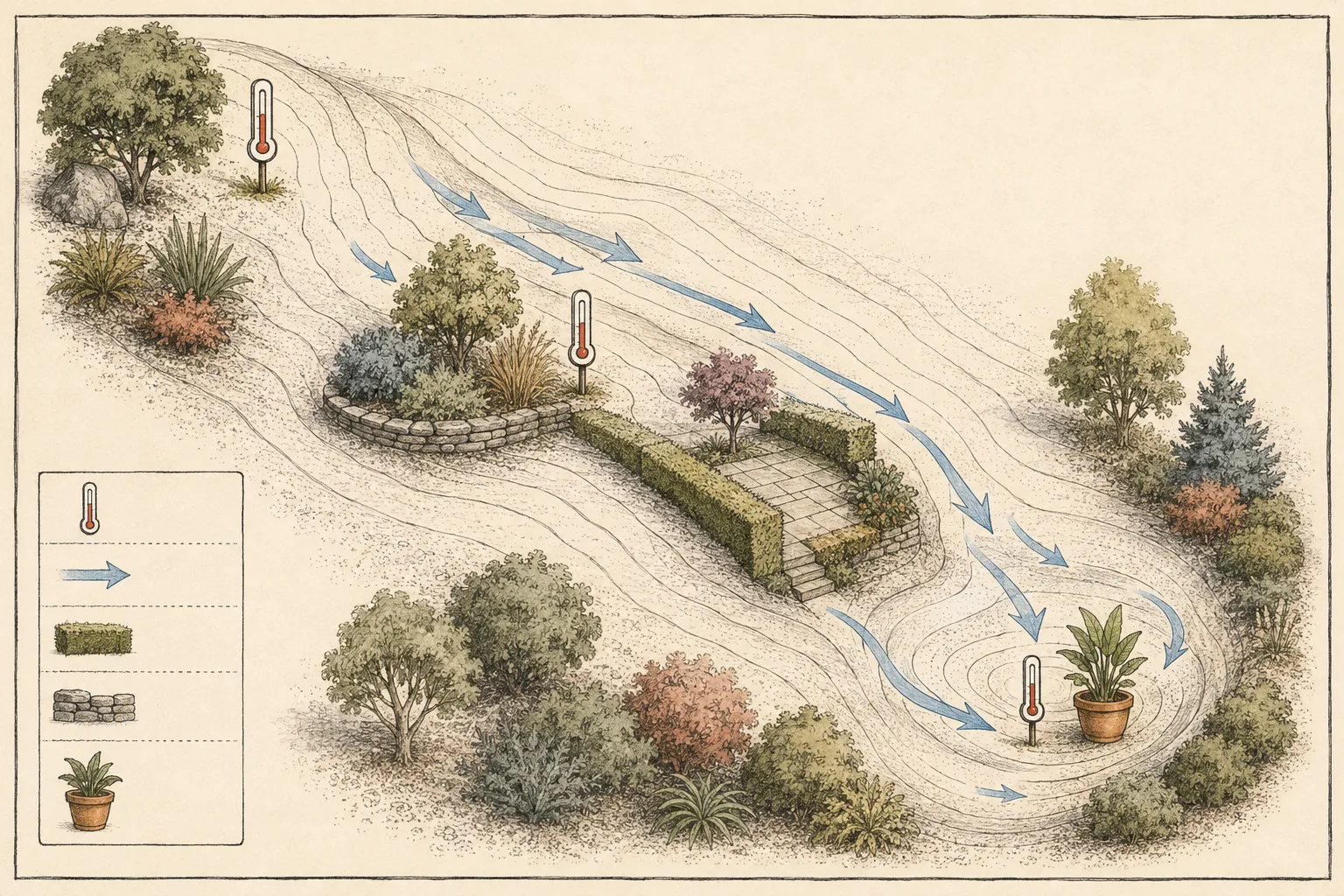
Map cold-air pockets, open sky and protective walls. Damage often follows microclimate more closely than property lines.
Note each plant’s bud stage during the event. Open petals and soft expanding shoots are generally more exposed. In this case, success means the lost display is documented while viable framework and recovery shoots remain. Let the next inspection test whether the lost display is documented while viable framework and recovery shoots remain; the workday shows only the starting condition.
Reconstruct the event before diagnosing the plant. Record the minimum temperature, duration, wind, cloud cover, and whether the site is a low cold-air pocket. Developmental stage matters: dormant buds tolerate more cold than swelling buds or open flowers. Compare exposed flowers with closed buds and sheltered tissue on the same plant. Iowa State notes that colder temperatures, longer exposure, and more advanced bloom increase injury. A pattern that does not align with the freeze needs another explanation.
Distinguish radiation frost from a broader advective freeze when reviewing the site. On a clear calm night, cold air can pool in low ground and create sharp differences over a short distance; wind during a regional freeze can expose the whole garden. Covers and elevation help differently in those events. Use a thermometer placed near the flowers if future monitoring is needed, because an airport reading or average last-frost date may not represent a sheltered wall or hollow in the yard.
A freeze may also vary vertically. Flowers near the ground can be colder in pooled air, while blooms beside a warmed wall may open earlier and become vulnerable sooner. Map height and distance from structures when the injury appears layered.
Read tissue soon, then again later
Fresh injury may look translucent, limp or water-soaked before turning brown. Photograph it without pruning.
Compare protected interior buds and lower shoots with exposed tips. A control shows whether the whole plant was affected. Map water-soaked tissue, blackened buds, exposure, viable lower buds, and the direction of replacement growth. Delay cosmetic pruning, fertilizer, and replacement until buds or crowns show their response.
Watch whether the boundary remains static. Progression after mild weather may indicate disease or root stress. The finished work must allow the lost display is documented while viable framework and recovery shoots remain. Weather and new growth can clarify water-soaked tissue, blackened buds, exposure pattern, live lower buds and the direction of new growth during a measured pause.
Frost injury can look water-soaked or translucent soon after thaw, then turn tan, brown, or black. Examine again after one or two warm days because some tissue recovers while truly killed cells collapse. Photograph boundaries and keep one undisturbed reference. Herbicide injury, root stress, and disease can overlap, but they often progress or affect tissue ages differently. Odor, expanding lesions, or continuing wilt after warm weather returns is not the expected static endpoint of a single frost.
Flower centers may be damaged even when petals open normally. On fruiting ornamentals, darkened reproductive tissue can end fruit set while the blossom looks briefly acceptable. On display shrubs, petal browning may be the only loss. Cut open a few representative buds, not every bud on the plant. Compare stages: tight buds, swelling buds, and open flowers often show different survival. That within-plant comparison is stronger evidence than damage on two different cultivars with different cold tolerance.
Let frozen tissue thaw naturally before judging its color or firmness. Let it thaw naturally out of direct handling, then inspect. Rubbing ice or pouring warm water over frozen flowers adds mechanical or thermal injury and obscures the original frost pattern.
Tag several representative shoots, and leave the rest of the plant undisturbed. Their recovery supplies a consistent comparison while the remaining buds and stems stay undisturbed.
Separate flower loss from stem death
Open a few representative buds to inspect internal color and firmness. Open only a few representative buds and retain the rest for recovery. Separate seasonal timing from cosmetic urgency. The useful window is when weather has warmed enough for injury to declare itself and living buds to resume.
Test lower buds and stem tissue when tips blacken. Living cambium can support replacement shoots. Compare that setting with water-soaked tissue, blackened buds, exposure pattern, live lower buds and the direction of new growth.
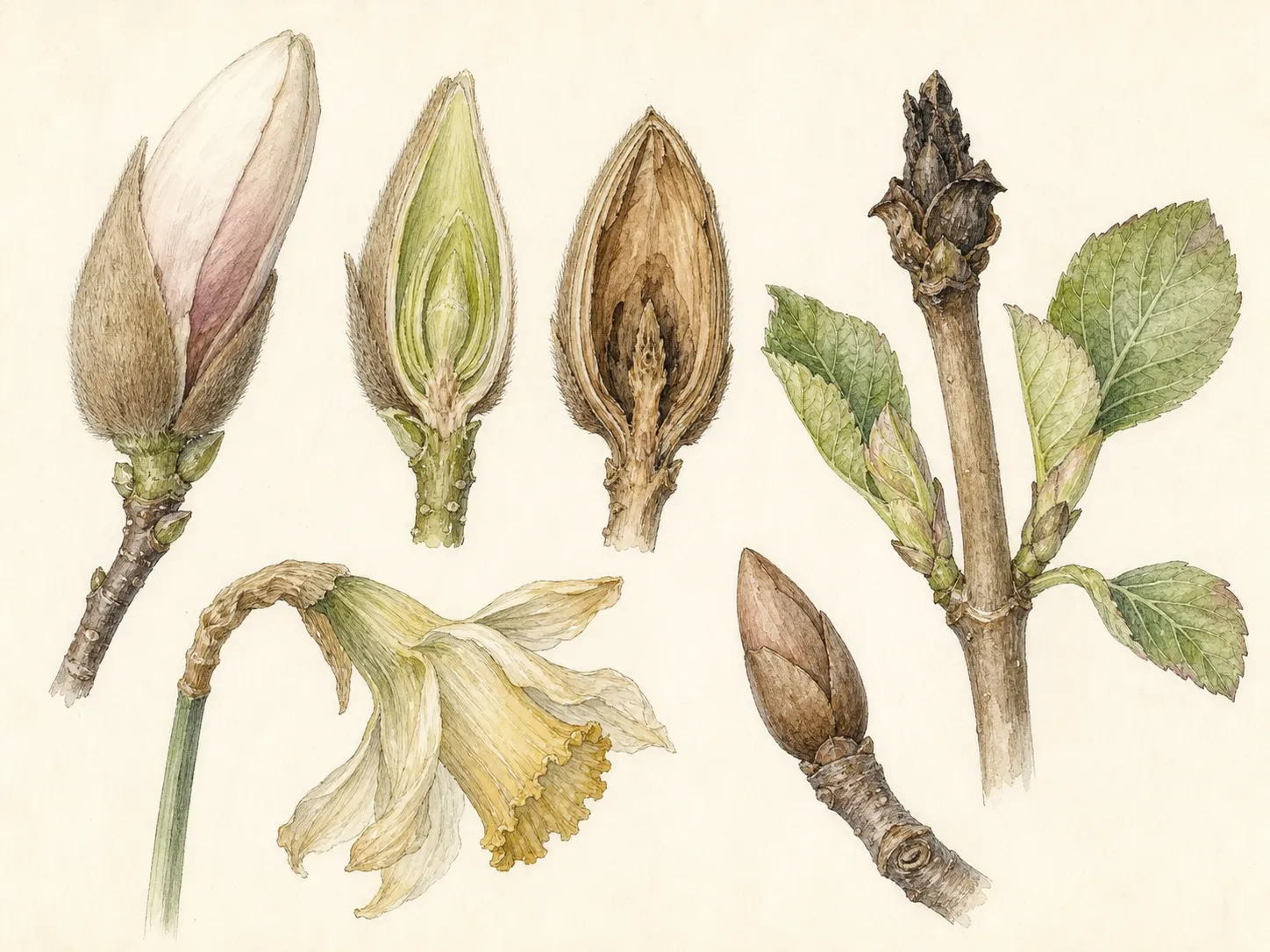
Accept that this year’s flowers may be lost while the plant remains structurally sound. Recovery and display are separate outcomes. Stop once the lost display is documented while viable framework and recovery shoots remain.
Losing flowers is not the same as losing the plant. Magnolia petals may brown while branch buds and stems remain alive; a fruit tree can lose the current crop without structural death. Inspect several lower buds and make only a small cambium check where needed. Wait for swelling or replacement shoots. Retain the crown below confirmed tip injury. The objective is to preserve living nodes that can redirect growth, even though the present season's display cannot be restored.
New shoots contain more water and are less acclimated than older wood, so their collapse can stop at a lower node. Secondary or dormant buds may then redirect growth. Wait until those buds move before choosing the cut. A branch that stays flexible and green beneath the bark should remain, even if its first leaves were lost. Conversely, dry brittle tissue above a living side shoot can be removed once the boundary is stable. Make each cut at a living bud or branch union, leaving unequal lengths when survival differs.
Mark surviving lower buds with removable ties so the later pruning cut follows verified recovery points and preserves the plant's natural branching direction.
Let time reveal the living boundary
Delay broad pruning until buds below the injury swell or shoots emerge. Immediate cuts can remove viable nodes. Use the freeze date, growth stage, and exposure pattern to frame the diagnosis. Open flowers can be lost while older stems, lower buds, bulbs, or perennial crowns remain capable of recovery.
Keep ordinary moisture appropriate to soil and weather. Water only when the root zone shows a need. Record water-soaked tissue, blackened buds, exposure pattern, live lower buds and the direction of new growth before the work begins.
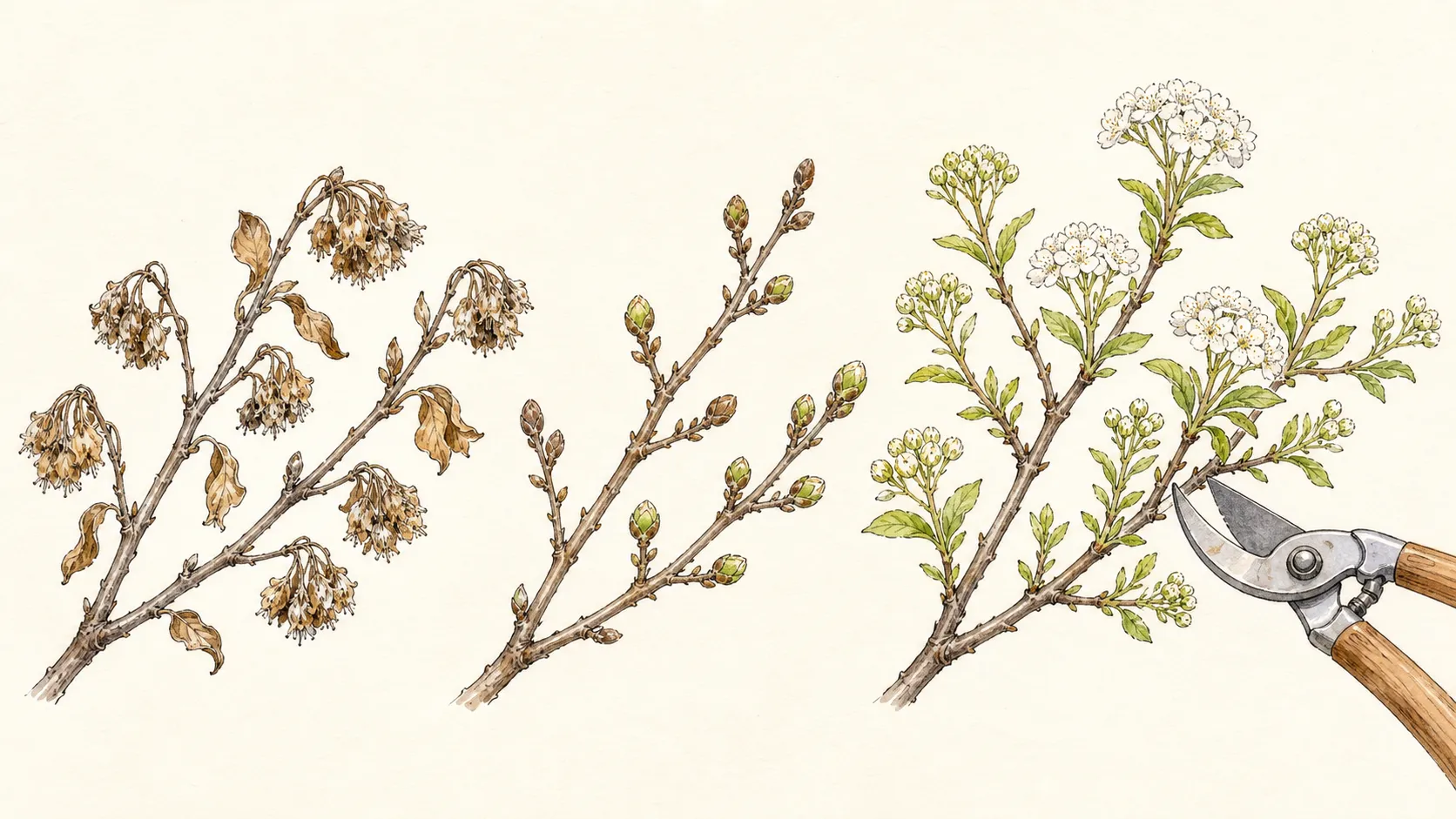
Avoid automatic fertilizer. Root function and living buds, not nutrient force, govern the first recovery. Account for bud stage, cold-air drainage, cover, species hardiness and duration of freezing change severity.
Time reveals where viable tissue ends. Woody tips may take two or three weeks to declare death, while healthy lower buds begin extension. Delay pruning until that contrast is clear, then mark dead tips before leaves hide them. Supply ordinary water during dry weather and withhold rescue fertilizer, which cannot revive frozen cells and may force soft growth. If the plant was recently installed, check root-ball moisture and planting depth because establishment stress can intensify the post-frost response.
Recovery timing varies with temperature after the event. Warm weather can reveal dead boundaries quickly, while a cool spring delays bud movement and makes living shoots appear inactive. Compare with undamaged plants of the same species and exposure before declaring failure. Tag a few representative stems for viability checks and leave the remaining framework undisturbed.
Check herbaceous crowns and bulbs
Blackened top growth may end above an intact perennial crown. Mark the plant and wait for basal shoots. Let swelling buds and replacement shoots reveal the living boundary before pruning. The season's flowers may be gone, but retaining viable nodes and green leaves protects next year's structure and stored reserves.
Bulb flowers can collapse while leaves continue feeding the bulb. Preserve green foliage. Use water-soaked tissue, blackened buds, exposure pattern, live lower buds and the direction of new growth to decide whether the task is corrective, preventive, or unnecessary. That distinction controls timing and scale.
Tender annuals with complete crown collapse may need replacement after the weather settles. Confirm there is no sound base first. Inspect perennial crowns and spring bulbs separately from tender annuals. Firm crowns and green bulb foliage often recover; complete soft collapse after the weather settles can justify replacement.
Herbaceous perennials often retain protected crown buds after top growth collapses. Keep the crown visible, firm, and free from waterlogging while waiting for basal shoots. Spring bulbs may show white or tan leaf tips yet keep useful green tissue; leave those leaves until natural death. Tender annuals with complete soft collapse can be replaced after frost risk settles, but cool-season annuals may recover. Separate each growth form before deciding that one cleanup method applies to the whole bed.
Perennial recovery draws on stored roots, crowns, rhizomes, bulbs, or tubers, but those organs also fail when saturated or physically damaged. Check firmness and drainage without excavating the whole plant. Mark the crown and wait through the normal emergence window for that species. A hosta or fern can replace damaged leaves from below, while a warm-season annual may have no protected reserve. The decision therefore follows growth form and tissue condition, not the dramatic appearance of the dead top.
Prune only confirmed dead portions
Follow dead shoots to healthy buds or branch unions and make clean cuts. Leave no long dry stubs.
Remove soft collapsed annual tissue after diagnosis and when conditions allow drying. Avoid trampling wet beds.
Retain a same-angle photograph of the original pattern. It helps evaluate the pruning and future protection. Include water-soaked tissue, blackened buds, exposure pattern, live lower buds and the direction of new growth.
Once death is confirmed, cut woody tips back to a live bud or branch union and remove collapsed herbaceous tops without injuring replacement shoots. Deadhead damaged flowers for appearance only after the pattern is documented. Sanitize tools when disease remains possible. Avoid broad pruning of spring-flowering shrubs because surviving buds may still open and future buds depend on species-specific growth. Continued lesions, root collapse, or new damage outside the frost pattern belongs with a diagnostic service, not repeated weather cleanup.
The cut location affects future form. On a woody shrub, follow the dead tip down to a living outward-facing bud or a sound side branch and preserve the branch collar. On a perennial, wait until basal growth shows where dry stems detach cleanly. Spring bulbs need no cosmetic leaf trimming while green tissue remains. Dispose of collapsed flowers and shoots only when they no longer protect or feed the plant. If blackening continues below the original injury after pruning, stop; frost is no longer a sufficient explanation and the advancing boundary should be sampled.
Turn the damage map into design evidence
Move repeated frost-sensitive display away from persistent cold pockets where practical. Placement can reduce annual emergency work. Track water-soaked tissue, blackened buds, exposure pattern, live lower buds and the direction of new growth.
Choose later-blooming or locally proven cultivars for exposed positions. Hardiness zone alone does not describe bud timing.
Record which covers and sheltered positions worked. Use the evidence to prioritize the next forecast.
Use the map to reduce future exposure. Cold air settles in low pockets, and walls can advance budbreak by warming plants before regional danger has passed. Move repeat-sensitive displays to a better microclimate where practical, choose later-blooming or locally proven cultivars, and keep portable annual containers movable. Covers must extend to the ground, avoid crushing flowers, and be removed or ventilated after the freeze. Record which protection worked; average frost dates are planning tools, while short-range forecasts govern each event.
Forecast protection should target the smallest valuable area. Water soil normally before the event if it is dry, secure a breathable cover above flowers, extend it to the ground, and remove it after temperatures recover. Support covers above petals and reserve overhead irrigation for crop-specific expert protocols. Move containers to shelter when possible. Afterward, label protected and unprotected plants so the garden supplies its own microclimate evidence for the next forecast.
Use three review dates. On the first warm day, map water-soaked flowers, blackened tips, sheltered buds, and firm crowns without pruning. One to two weeks later, look for swelling lower buds, basal shoots, continued lesions, or whole-plant decline. After the normal spring flush, mark tissue that is dry and truly dead, then make selective cuts. This sequence separates a lost display from structural death and exposes problems that continue after frost. Keep ordinary moisture through dry weather, but add fertilizer or pesticide only for a measured deficiency or confirmed diagnosis. The recovery map also identifies low pockets and early-warming walls for future plant placement.
Diagnosis
Open flowers become limp, translucent and then brown while leaves or stems remain firm. Frosted petals and reproductive tissues often look water-soaked first, then become tan or brown. The injury can be confined to flowers while leaves and woody framework stay green.
- Check
- Match the injury to the freeze date and compare open flowers with protected buds on the same plant. Compare open flowers, closed buds, and sheltered tissue on the same plant, then align the differences with the recorded minimum temperature and duration of the freeze.
- Cause
- Ice formation injured exposed flower tissue at its most sensitive developmental stage without killing the framework. Exposed flowers were at a sensitive developmental stage when ice damaged their cells. The plant's permanent framework may remain healthy despite loss of the current display.
- Action
- Remove spent damaged flowers for appearance only after assessment, preserve green leaves and accept the season’s reduced display. Remove collapsed flowers only after documenting the pattern and confirming green foliage beneath them. Accept reduced bloom this season and maintain ordinary water, while withholding rescue fertilizer.
Tender shoot tips blacken, but lower buds and older stem tissue stay green. The newest shoot tip is least acclimated and may blacken while lower buds remain viable. Injury commonly follows the coldest exposure or a low pocket, not advancing randomly.
- Check
- Inspect several lower buds and a minimal cambium sample, then wait for swelling or replacement shoots. Inspect several lower buds and make only a tiny bark scratch where woody survival is uncertain. Wait for bud swelling because one green sample does not define an entire branch.
- Cause
- The newest succulent growth froze while acclimated older wood retained living buds and cambium. A rapid freeze killed succulent new extension growth, while acclimated older stem tissue and lower buds survived and can redirect later growth.
- Action
- Wait for new growth to define the boundary, then prune dead tips to sound buds or unions and maintain ordinary aftercare. Wait until replacement growth defines dead tips, then cut back to a sound bud or branch union. Avoid broad shearing, which removes surviving buds and obscures the plant's natural recovery.
A perennial’s new top growth collapses while crown tissue remains firm at soil level. A perennial can lose all visible spring shoots yet retain a firm crown and dormant replacement buds. White or tan leaf tips can coexist with a sound underground bulb.
- Check
- Keep the crown visible, check firmness and drainage, and watch for basal regrowth before lifting or replacing. Keep mulch off the crown, test crown firmness, and watch for basal shoots. On bulbs, retain every green leaf segment because it can still replenish storage tissue.
- Cause
- Cold killed emerged foliage, but stored reserves and protected crown buds survived below. Cold killed emerged leaves or shoots above an insulated crown or bulb. Stored reserves can produce replacement growth once soil and air temperatures recover.
- Action
- Protect the crown from further disturbance, manage moisture from evidence and trim dead top growth after replacement shoots emerge. Protect the firm crown from trampling and manage moisture according to the species. Trim dead herbaceous tops after basal shoots appear, while leaving green bulb foliage until natural death.
Buds, shoots or foliage continue darkening beyond the original exposure pattern after warmer weather returns. Continued darkening, expanding lesions, odor, or root-zone collapse after warm weather returns is not the expected static pattern of one frost event.
- Check
- Examine lesions, root-zone moisture and distribution; submit a sample if symptoms progress or signs of disease appear. Map whether symptoms cross exposure boundaries and examine roots, stems, and lesions. Submit representative living-to-damaged tissue when the pattern progresses or disease signs appear.
- Cause
- A pathogen, saturated roots or another stress is continuing after the frost and was mistaken for static weather injury. Saturated roots, a pathogen, herbicide exposure, or another stress overlapped the freeze and continued causing injury after the original cold pattern should have stopped.
- Action
- Obtain a diagnosis, correct root-zone problems and follow cause-specific sanitation or treatment, and pause pruning until the continuing cause is diagnosed. Pause weather-based pruning and obtain a diagnosis. Correct drainage, sanitation, or another confirmed cause and use pesticides only when the diagnosis, local rules, and product label support them. Keep pesticide and fertilizer decisions separate from freeze cleanup; neither is justified unless a confirmed cause or measured deficiency calls for it.
Related reading
Sources
- Frost and Cold Damage on Flowers. University of Maryland Extension. Source record · Accessed 2026-08-30.
- Winter Damage on Landscape Plants. University of Maryland Extension. Source record · Accessed 2026-08-30.
- May 1, 2026 Landscape and Nursery IPM Report. University of Maryland Extension. Source record · Accessed 2026-08-30.
- Cold and Freeze Damage to Garden Plants. Iowa State University Extension and Outreach. Source record · Accessed 2026-08-30.
- Weather Injury on Our Plants. University of Illinois Extension. Source record · Accessed 2026-08-30.