Plant problems · azalea lace bug
Diagnose Azalea Lace Bug From Both Sides of the Leaf
Pair pale stippling on the upper leaf with adults, nymphs, cast skins, and varnish-like spots beneath, then scale management to plant stress and active feeding.
Published Last updated
In this guide
- Pair the upper and lower surfaces before naming the pest
- Pair new stippling with evidence beneath the leaf
- Separate stippling from scorch, mites, and nutrient patterns
- Map sun exposure and plant stress
- Decide whether the injury is active and consequential
- Correct exposure and water stress around the shrub
- Use least-disruptive direct controls first
- Prune only for plant structure and access
- Build a recurrence record before replacing the plant
- Inspect eggs and early stages without overstating field certainty
- Protect natural enemies and non-target insects
- Use replacement as a site-design decision
- Close each inspection with a written prediction
- Diagnosis
Pair the upper and lower surfaces before naming the pest
Azalea lace bugs feed from the lower leaf surface and remove cell contents, leaving pale yellow or white stippling visible above. Turn the same leaf over. Adults have lace-patterned wings, nymphs are darker and spiny, and black varnish-like fecal spots or cast skins may remain beneath. Photograph both sides of one numbered leaf so the top symptom is not accidentally paired with insects from a different sample.
Use only a few representative specimens for identification. A single clear adult and the characteristic lower-surface evidence are more readable than a cluster. Inspect young and mature leaves in sunny and shaded sectors, plus apparently healthy tissue. Stippling can remain after insects leave, so active management depends on finding living stages or fresh evidence, not on the continued visibility of old pale tissue.
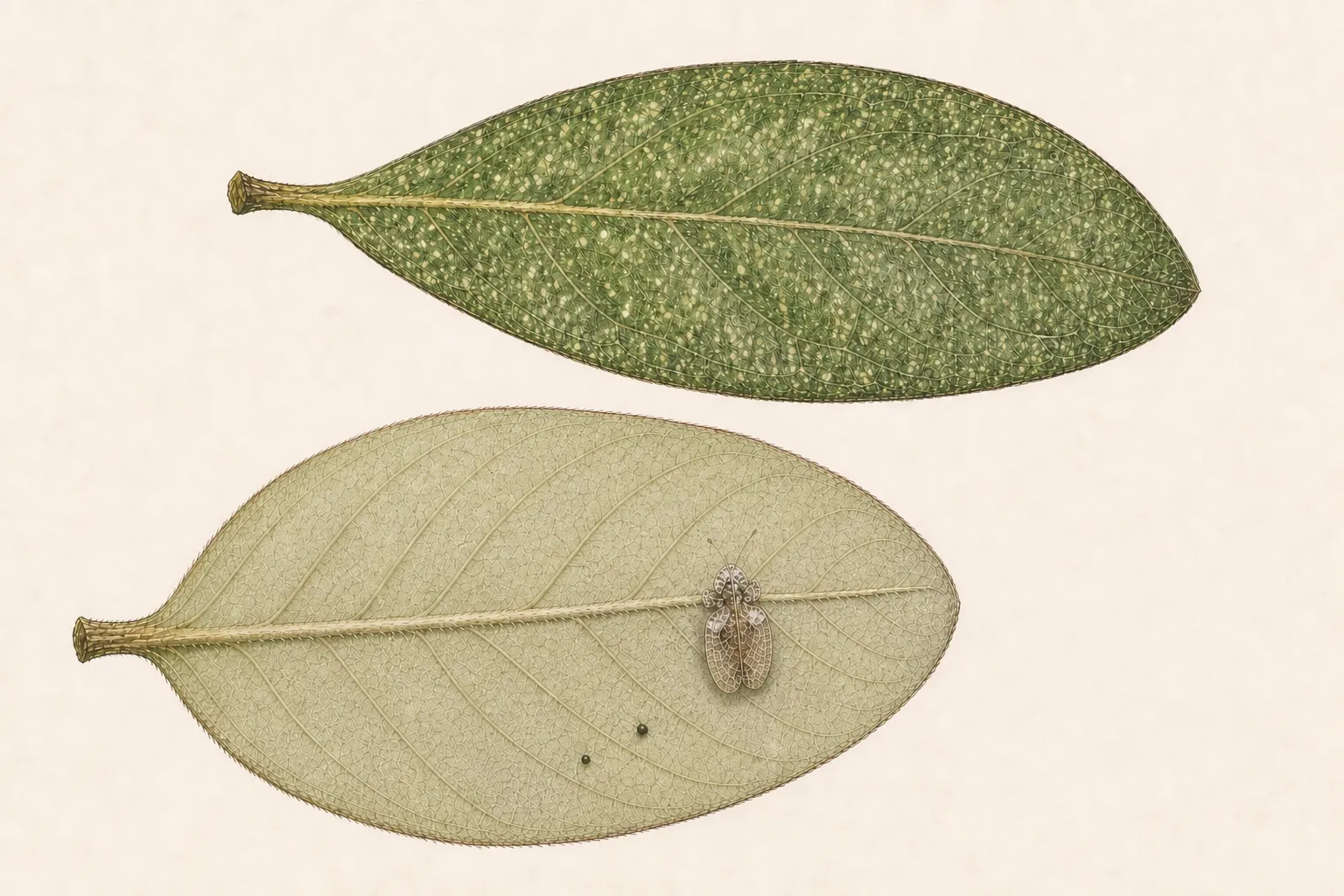
Preserve a fresh attached leaf when the pattern is ambiguous. Do not wash, spray, or strip the whole shrub before the record is made. A local Extension office or plant clinic can work more effectively from paired surfaces, a whole-shrub photograph, and the canopy location than from a bag of detached bleached leaves whose orientation and site are unknown.
Pair new stippling with evidence beneath the leaf
Inspect both leaf surfaces and confirm active stages before attributing stippling to lace bugs. Old damaged leaves cannot show whether feeding is continuing. Compare marked clean foliage, exposure and root-zone condition over the next checks. When underside evidence is absent or another pattern dominates, follow the alternative diagnosis instead of repeating a treatment on appearance alone.
Separate stippling from scorch, mites, and nutrient patterns
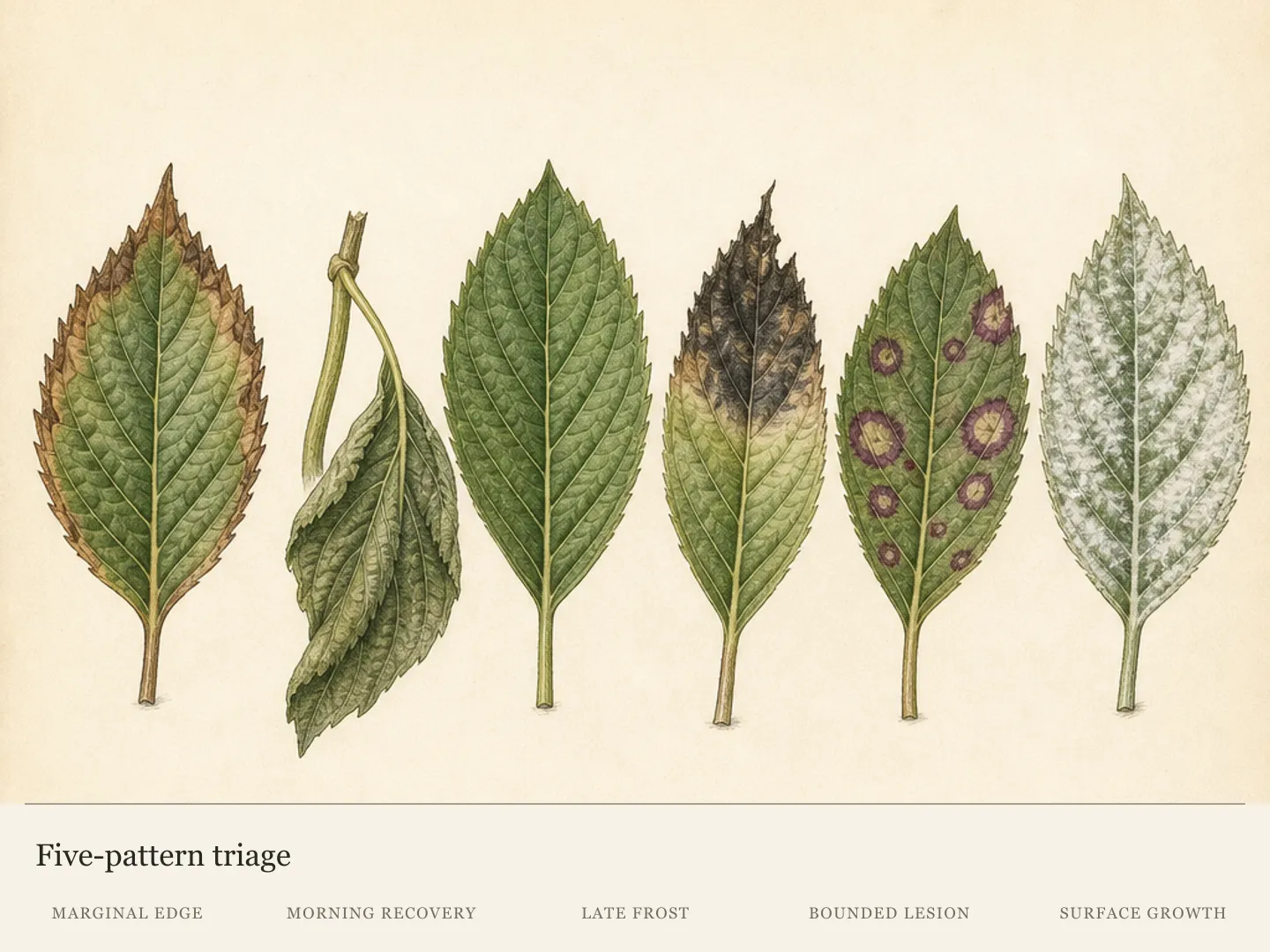
Leaf scorch usually produces dry brown margins or patches associated with heat, wind, drought, or root stress. Lace bug feeding creates many pale points that can merge into a silvery or bleached area while veins may remain more visible. Severe cases can later brown, so inspect the freshest transition tissue and lower surface. The oldest worst leaf may combine feeding, sun, and normal senescence.
Spider mites also cause stippling and may leave fine webbing, eggs, mites, or cast skins. Tap a branch over white paper and inspect with magnification, then compare the underside. Lace bug adults and their dark fecal spotting are different evidence. Do not use the broad word stippling to choose a product; it describes a feeding effect shared by more than one pest.
Nutrient or pH-related chlorosis often follows veins or the distribution of newer versus older leaves and lacks insects beneath. Herbicide injury can distort growth, and powdery mildew produces surface growth rather than punctate feeding. Record which leaves and canopy sectors are affected. A patterned shrub-level problem requires soil, root, or exposure review even if one lace bug happens to be present.
Map sun exposure and plant stress
Azalea lace bug damage is often more severe on plants in hot sunny sites than on appropriately shaded azaleas. Map the shrub into exposed and sheltered sectors. Compare upper-leaf stippling, lower-surface evidence, and live insect activity in each. This gradient can support a site correction, but it does not prove that shade alone will remove a current population.
Check root-zone moisture, mulch, planting depth, drainage, and competition. A stressed azalea loses tolerance and may show scorch or poor growth alongside feeding. Probe below mulch rather than watering from the leaf color. Keep mulch away from stems and the root flare. Persistent saturation and severe drought can both weaken fine roots; repeated surface sprinkling does not establish which condition exists.
Review recent changes: tree removal, reflective pavement, new irrigation, pruning of a shade companion, or construction near roots. A shrub that tolerated a site for years may now receive harsher afternoon exposure. Temporary shade can protect a newly exposed plant while a long-term plan is made. Do not abruptly move a large stressed azalea in midsummer solely because lace bugs are present.
Decide whether the injury is active and consequential
Mark several shoots with old stippled leaves and one clean flush. Inspect the lower surfaces weekly for nymphs, adults, eggs, new dark spotting, and expanding damage. Existing stippling will not turn green, so use new leaves as the verdict. A shrub with cosmetic old injury and no active stages needs monitoring, not an escalating sequence of treatments.
Measure consequence separately from appearance. Count the share of the canopy affected, note reduced extension or leaf drop, and compare flowering and vigor with prior seasons. A few bleached leaves on an established shrub are different from broad feeding on a newly planted azalea. Use this assessment to choose observation, physical removal, horticultural oil or soap guidance, or a locally recommended registered option.
Check season and life stage. Management is generally more effective against younger active stages and before the canopy is broadly damaged. Timing varies by climate and generations, so rely on current local Extension alerts rather than a fixed national date. A treatment aimed at absent adults or old eggs cannot be judged from the color of last month’s leaves.
Correct exposure and water stress around the shrub
Restore appropriate dappled shade where feasible using site design, not a dense cover that blocks air. A temporary shade panel can reduce harsh afternoon exposure without touching foliage. Long-term, consider a compatible small tree, relocation during a suitable dormant or cool season, or replacing a chronically exposed plant with a shrub suited to the site. Preserve enough light for flowering and airflow.
Water slowly through the root zone when soil evidence shows need. Avoid shallow daily wetting that leaves deeper roots dry, and avoid keeping the crown saturated. A broad organic mulch can moderate moisture and temperature when kept at a conservative depth and away from stems. The corrective goal is a stable root environment that improves tolerance, not a watering routine intended to wash every insect away.
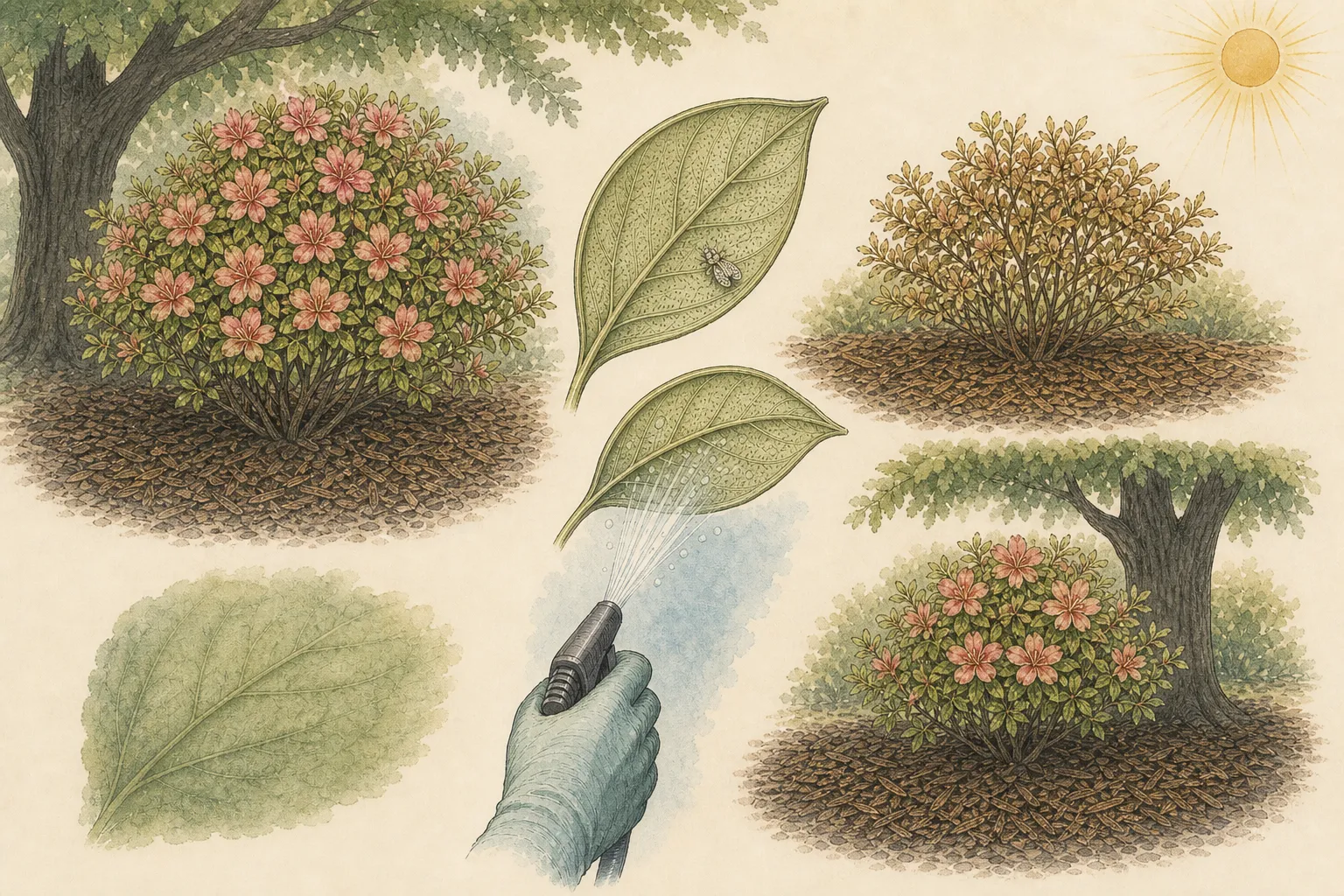
A firm water spray directed to leaf undersides can dislodge some lace bugs from a manageable shrub, but it requires access and repeat inspection. Use enough force to move insects without shredding leaves, and allow foliage to dry. This is a physical tactic, not a guaranteed eradication method. Combine it with site care and monitoring of new growth.
Use least-disruptive direct controls first
On a small shrub, remove the most heavily infested leaves only when ample healthy foliage remains, or use directed water on lower surfaces. Do not strip the canopy in pursuit of clean leaves. Lace bugs feed beneath, so any contact material must reach that surface to work. Coverage claims and plant safety belong to the product label and current local guidance.
Horticultural oils and insecticidal soaps may be recommended for active stages when applied correctly, but they can injure stressed foliage or plants treated in unsuitable heat and light. Confirm that the target is present, test or follow label precautions, reach leaf undersides, and protect pollinators and non-target organisms. A home mixture is not interchangeable with a labeled product.
Systemic insecticides carry different environmental and pollinator implications, especially on flowering shrubs. Do not choose one merely because lower-surface coverage is difficult. Consult local Extension recommendations, consider flowering status and nearby water, and follow the label. The goal is a proportionate response to measured injury, not permanent insecticide in every azalea root zone.
Prune only for plant structure and access
Azaleas form flower buds according to species and season, so broad summer pruning can remove future bloom. Remove dead, broken, or clearly diseased wood and modestly open external crowding only when appropriate. Do not shear the entire shrub to make underside spraying easier. Shearing creates dense outer growth that can reduce inspection access later.
Begin around the shrub. Move temporary objects, restrain competing groundcovers, and correct branches from neighboring plants that press into the canopy. These changes can improve air and access without sacrificing azalea wood. If selective thinning is needed, identify the plant and flowering cycle, then remove a small number of stems at their origin rather than cutting every shoot to one surface.
Clean tools after suspect tissue and collect clippings. Pruning does not remove eggs embedded in remaining leaves or adults arriving later, so continue the marked-leaf check. Judge structural work by healthier new growth and improved inspection, not by an immediate reduction in the old stippling pattern.
Build a recurrence record before replacing the plant
Record first active stage, affected sectors, exposure, control used, and the condition of untreated new growth. Review the shrub the following spring and summer. One late cosmetic episode may need no permanent change. Early recurring broad injury in a hot site supports stronger site redesign or a less susceptible selection recommended for the region.
Do not replace an azalea while the alternative diagnosis remains unresolved. Chlorosis from pH, root disease, poor drainage, and herbicide injury will follow into a new plant if the site remains unchanged. Use soil or diagnostic testing for the question at hand, and correct root-zone conditions before investing in another acid-loving shrub.
When replacement is justified, choose a plant whose mature size, light tolerance, and pest susceptibility fit the position. Diversify repeated azalea masses so one pest does not affect every shrub equally. The successful endpoint is not an insect-free botanical plate. It is a vigorous readable planting in which new leaves remain functional and management stays targeted.
Inspect eggs and early stages without overstating field certainty
Lace bug eggs may be inserted into lower leaf tissue and covered with dark material, but they are difficult to confirm without magnification and experience. Photograph suspect areas and compare with verified adults, nymphs, and fresh fecal spots. Do not call every dark lower-surface point an egg; scale, residue, fungal fruiting bodies, and debris can look similar.
Use a hand lens to inspect the same marked leaves as weather warms and new growth expands. Early nymph detection can improve timing of direct controls. Keep the count modest and representative. A few clearly documented stages on several leaves are more useful than scraping the entire underside and losing their arrangement.
When identification affects pesticide timing or a high-value collection, submit fresh leaves to a local diagnostic service. Include the upper-surface pair and exact collection date. Laboratory or expert confirmation narrows treatment and prevents a dark speck from becoming the basis for a whole-property spray.
Protect natural enemies and non-target insects
Predators and parasitoids can contribute to lace bug regulation, though they may not prevent visible injury on a susceptible sun-stressed azalea. Avoid broad persistent insecticide use that removes these organisms without a measured need. Observe the lower surface for varied insect life and seek identification rather than treating every small moving form as a pest stage.
If a contact product is justified, direct it to the target lower surface and avoid open flowers and drift. Treat the smallest necessary group under the label. Keep an untreated comparison shoot when practical. The plan should reduce active feeding while preserving the garden community that supports longer-term balance.
Do not introduce purchased predators casually into an outdoor landscape. Species, climate, timing, and pesticide history determine whether releases are appropriate. Habitat, plant vigor, targeted action, and product restraint are more reliable general steps for a home garden.
Use replacement as a site-design decision
When severe early injury returns on the same hot exposed shrubs, compare the cost of repeated treatment with relocation or replacement. Choose a plant suited to the actual light, soil, drainage, and mature space. Another azalea may fit after shade is restored; a different shrub may be better where the exposure cannot change.
Remove the old plant in a suitable season and inspect roots and planting depth. Correct compacted soil, buried flare, and drainage before replanting. Keep the diagnosis record because a new plant can reveal whether lace bug pressure, root stress, or both drove the previous decline.
Diversify repeated foundation plantings. A mixture of site-suitable shrubs can preserve structure and bloom when one host has a pest year. Keep mature spacing and access. Replacement succeeds when it lowers recurring intervention without sacrificing the design role the shrub was meant to serve.
Close each inspection with a written prediction
After every paired-leaf check, write what should happen next if the current diagnosis is right. Active lace bugs should produce new lower-surface evidence or stippling on previously clean leaves. Old inactive injury should remain visible but stop expanding. Scorch should follow exposure and weather rather than live stages. The prediction makes the next visit a test instead of another search for alarming leaves.
Keep one clean shoot untreated when plant value and pressure allow, and compare it with any managed sector. Record leaf age because old pale tissue cannot respond like new growth. If both sectors remain clean, avoid claiming a product caused the result without accounting for declining seasonal activity.
Close or change the route when the prediction fails. A diagnosis that requires every new observation to be explained away is not useful. Preserve the leaf pairs and take them to local expertise before adding another control.
Diagnosis
Azalea leaves show fine pale stippling above, while the paired underside has one or more lace-winged adults or dark spiny nymphs, cast skins, and black varnish-like fecal spots.
- Check
- Number leaves from exposed, shaded, young, mature, affected, and clean sectors. Photograph both sides of each leaf, confirm the adult or nymph features and dark spots, and map new feeding weekly. Pair live-stage evidence with the progression of stippling on previously clean foliage.
- Cause
- Azalea lace bugs are actively feeding from the lower surface. Hot sunny exposure and plant stress may increase visible injury and reduce the shrub’s tolerance.
- Action
- Improve appropriate dappled shade and root-zone care, then use directed water or a locally recommended labeled contact option against active stages when injury warrants it. Reach leaf undersides, protect pollinators, and avoid stripping the shrub. Judge success on marked new leaves.
Leaf margins and exposed patches turn dry brown after heat or wind, but the underside lacks lace bugs, cast skins, and characteristic dark spotting on repeated paired inspections.
- Check
- Compare exposed and sheltered sectors, examine the dry boundary, review recent heat, wind, shade removal, and irrigation, and probe below mulch. Preserve a fresh sample if scorch and stippling overlap. New injury should follow exposure rather than fresh lower-surface insect activity.
- Cause
- Environmental scorch or water-balance failure is damaging exposed tissue. The absence of lower-surface pest evidence weakens a lace bug diagnosis even if one old stippled leaf exists elsewhere.
- Action
- Close the lace bug route for the affected tissue. Restore slow root-zone water only when soil is dry, protect abruptly exposed plants from harsh afternoon conditions, preserve functioning leaves, and follow a scorch diagnosis. Existing brown tissue will not recover.
Fine stippling occurs with webbing, tiny moving mites, eggs, or cast skins visible under magnification, while lace-winged adults and varnish-like spots are absent.
- Check
- Tap foliage over white paper and inspect undersides with magnification for mites, eggs, webbing, and cast skins. Retain a specimen or macro photograph for local confirmation before applying a lace-bug-specific plan or broad insecticide.
- Cause
- Spider mites or another tiny feeder is producing stippling. Webbing and mite stages require a different management route from lace bugs.
- Action
- Follow a mite-specific local recommendation based on confirmed stages, weather, and plant condition. Avoid broad treatments that can disrupt predators or stress the azalea. Recheck the same leaf pairs and mite sampling points to judge whether new stippling has slowed.
New leaves yellow between green veins or the pattern follows leaf age and whole-shrub growth, with no active feeding evidence beneath; the site has an uncertain pH, root, or drainage history.
- Check
- Map which leaves yellow first, inspect planting depth, drainage, roots, and mulch, and use an appropriate laboratory soil or diagnostic test. Keep one paired leaf inspection in the record, but do not let isolated insect evidence override the wider patterned decline.
- Cause
- Nutrient availability, pH, root function, planting depth, or drainage is driving chlorosis and weak growth. A chance insect observation is not enough to explain the shrub-level pattern.
- Action
- Correct the measured pH, root, drainage, or planting problem under laboratory and local guidance. Do not add acidifier, iron, fertilizer, or insecticide from leaf color alone. Reassess new growth and repeat underside checks only as one part of the wider plant evaluation.
Old stippling remains visible, but marked clean shoots develop normally and repeated underside checks find no active stages or fresh fecal spotting.
- Check
- Mark a clean shoot and inspect weekly at the same time for live stages, new dark spots, and expanding stippling. If new leaves stay normal through the risk period, continue observation and cultural care rather than treating old bleached foliage.
- Cause
- The infestation is no longer active or remains below a consequential level. Old injured tissue cannot recover and should not be used alone to justify repeated treatment.
- Action
- Tolerate old cosmetic injury, retain the photographs, and continue periodic underside checks during likely activity. Avoid repeated sprays, severe pruning, or replacement. Escalate only if active stages return, clean shoots become stippled, or plant vigor declines.
Several azaleas in the same hot exposed planting develop severe stippling early each season despite repeated direct controls, while shaded or differently sited plants remain substantially healthier.
- Check
- Compare affected and healthier plantings for cultivar, exposure, planting depth, drainage, root condition, first active-stage date, and new-leaf injury. Retain treatment and weather records over more than one season. Inspect the removed plant’s root system if replacement proceeds.
- Cause
- Recurring lace bug pressure is interacting with chronic site stress and host susceptibility. Repeated treatment may suppress active stages temporarily but cannot make an exposed, poorly rooted, or unsuitable planting resilient.
- Action
- Restore appropriate shade and root-zone conditions where feasible, or replace during a suitable season with a less susceptible locally recommended azalea or another shrub fitted to the site. Diversify the planting, preserve mature spacing and access, and continue targeted monitoring rather than carrying the previous spray routine onto every new plant.
Related reading


Sources
- Azaleas and Rhododendrons: Identify and Manage Problems. University of Maryland Extension. Source record · Accessed 2026-08-19.
- Arthropod Pests of Rhododendron. NC State Extension. Source record · Accessed 2026-08-19.
- Azalea Lace Bug. University of Georgia Cooperative Extension. Source record · Accessed 2026-08-19.