Grow · late frost ornamental protection
Protect Emerging Ornamentals from a Forecast Late Frost
Prioritize tender buds, trap stored ground warmth with a supported cover, move containers, and uncover promptly after the freeze risk passes.
Published Last updated
In this guide
- Translate the forecast into plant risk
- Choose protection from the plant stage and the site's exposure
- Choose what deserves protection
- Use the ground as part of the protection system
- Build a complete temporary canopy
- Handle containers as exposed root systems
- Remove or vent after sunrise
- Record which protection worked
- Steps
Translate the forecast into plant risk
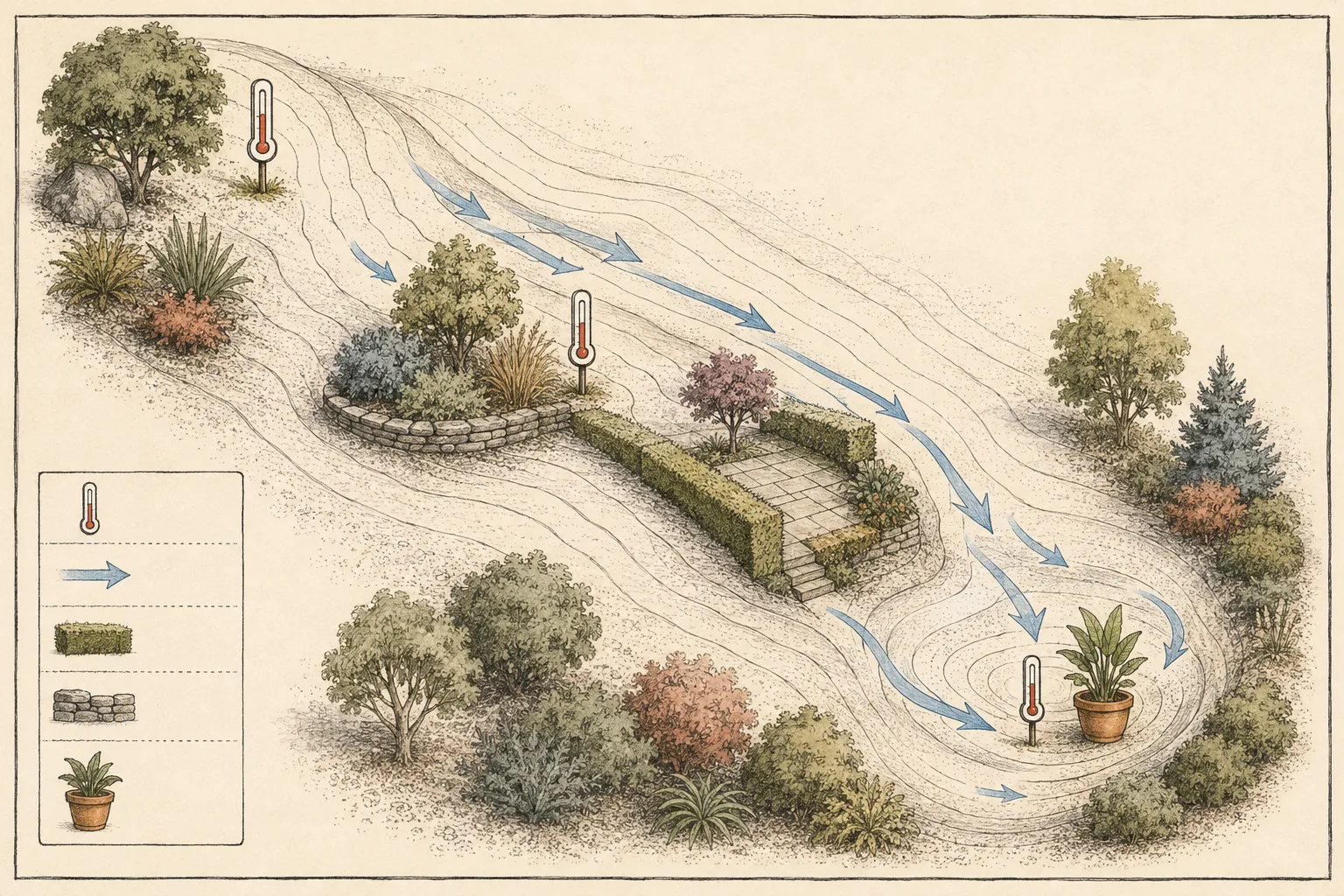
A late-frost plan begins with the point forecast nearest the garden, then corrects it with the site's own cold pockets. Forecast air temperature is not a guarantee for every flower bed. Low ground, still courtyards, the downhill side of a wall, and open lawn edges can cool differently, so place the most tender buds on a written priority list before dusk and give low-priority dormant crowns no cover.
Read the forecast low together with wind, cloud cover, duration, and timing. A clear calm radiational frost can be moderated by trapping heat released from soil; a windy, deep advective freeze can strip heat from a cover and exceed the protection it offers. If the predicted cold is below the material's rating or lasts for many hours, move portable plants to a frost-free place; one thin sheet lacks sufficient protection.
Plant stage matters as much as species hardiness. A dormant crown may tolerate cold that blackens an opening magnolia flower, hydrangea shoot, tender annual, or newly hardened transplant. University of Maryland Extension notes that many emerging perennial and bulb leaves are normally cold tolerant, while young buds and blossoms are the parts often lost in a late spring freeze. Protect the vulnerable tissue, not the calendar date.
Mark the likely coldest hour and the safe morning removal window. Install supports while there is light, before wind rises or frost forms. The endpoint is simple: a secure breathable canopy reaches the ground without crushing flowers, and someone knows when to open it. Last-minute improvisation around brittle new shoots causes more damage than a forecast that was read early.
Treat the climatological last-frost date as a probability. It describes probability from past weather, while the current point forecast describes the approaching event. Keep both in view: the historical date helps decide when tender plants normally go out, and the immediate forecast decides whether already-emerged tissue needs temporary protection tonight.
Choose protection from the plant stage and the site's exposure
Use the local forecast with the bed's cold pockets to decide which emerging plants need temporary protection. Move suitable portable plants first, then install supported covers where needed without pressing them onto tender growth. Reopen or vent as conditions change. Let thawed tissue reveal the injury boundary before treating every damaged-looking shoot as a pruning target.
Choose what deserves protection
Rank plants by consequence, portability, and actual stage. First move small containers, hanging baskets, recently purchased warm-season plants, and irreplaceable tender specimens. Next protect open blossoms and soft new shoots on otherwise hardy ornamentals. Established dormant perennials and cold-tolerant bulb leaves usually need less intervention than a greenhouse-grown plant already pushed into tender growth.
Use the label and local hardiness guidance to separate a hardy species from a tender cultivar or forced plant. A flowering hydrangea sold under cover, for example, may carry soft growth not acclimated to the outdoor site. Use the label, plant stage, and acclimation history to judge readiness. If identity is uncertain, choose relocation or a supported cloth cover as the reversible action.
Protecting every square foot can dilute the work. Reserve the best frost cloth and the most stable frames for buds that determine this year's bloom, new grafts, young shoots, and plants with no replacement growth below the expected injury. A mature perennial with unopened shoots may outgrow superficial damage, while one night can erase the entire flower display of a shrub whose buds are already exposed.
Decide what will remain uncovered as a useful reference. One hardy, low-priority plant in a similar exposure can help interpret the event without sacrificing a prized specimen. Use the same species and developmental stage for any protection comparison. Record stage and exposure before the freeze so ordinary spring color differences are not misread as protection failure afterward.
Flower value is not the only priority. Protect a young graft, a newly divided perennial with little root reserve, or a tender stem needed to establish the plant even when it carries no visible bud. Conversely, accepting the loss of a few outer blossoms may be reasonable on a healthy established shrub whose woody framework is fully hardy.
Use the ground as part of the protection system
A fabric cover works by slowing heat loss from the plant and soil; it does not create a warm room. Drape it to the ground so the covered soil is inside the protected volume. A cloth tied tightly around stems like a bouquet excludes much of that stored ground heat and leaves the lower plant exposed. Use a canopy footprint wide enough to include the root-zone surface beneath the vulnerable shoots.
If soil is dry, water the root zone earlier in the day only when normal irrigation is appropriate and there is time for foliage and paths to dry. Professional design and continuous application are prerequisites for freeze-protection irrigation. Commercial frost-protection irrigation depends on continuous application rates, equipment, and expert management; stopping at the wrong time can increase ice injury and create hazardous surfaces.
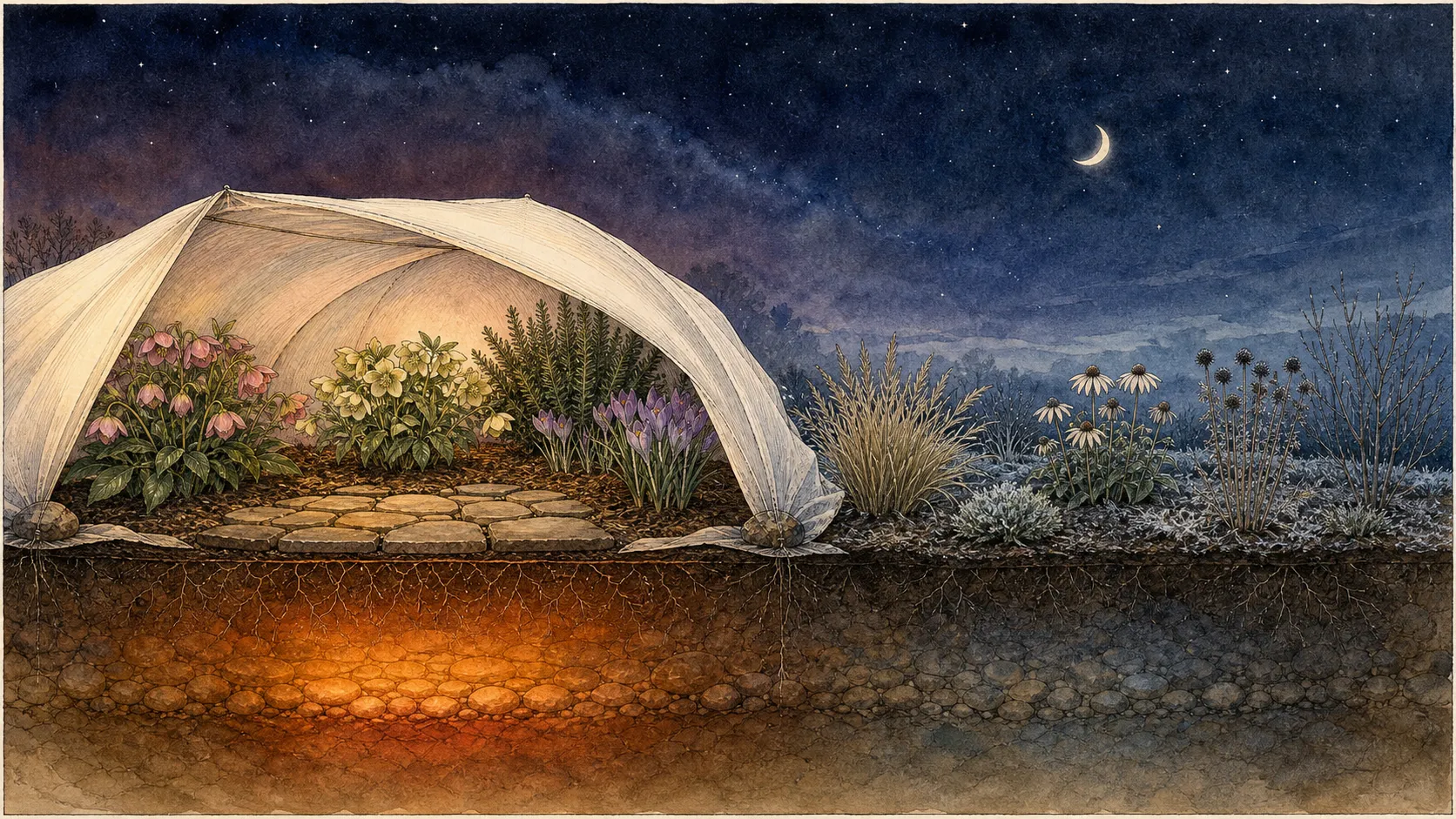
Choose breathable frost cloth, row-cover fabric, or a clean sheet for short overnight use. Different weights provide different protection and light transmission; University of Minnesota Extension notes that the heaviest row covers can protect into roughly the 20°F range but block substantial light and can overheat plants by day. The product rating, installation, wind, and actual low all limit performance.
Keep plastic from touching foliage. A rigid plastic cloche can work when it is vented and anchored, but a loose plastic sheet pressed against leaves provides poor insulation at contact points and can trap damaging daytime heat. If plastic is the weatherproof outer layer, place breathable material beneath it and maintain an air gap, then remove or vent the assembly promptly after sunrise.
Match cover weight to the expected cold and the plant beneath it. Lightweight insect mesh transmits ample light but adds little frost protection; heavy fabric insulates more but becomes a short-duration tool because it shades and overheats. A product without a temperature rating should not be assigned one from appearance alone.
Build a complete temporary canopy
Set hoops, stakes, crates, or stable chairs high enough that cloth will not rest on blossoms when it sags with dew. Push supports firmly into soil and pad sharp edges that could tear fabric. Test the frame with a gentle sideways pull; a structure that falls onto the plant during the coldest hour is not protection.
Drape the cover without stretching it tight, then close every ground edge with boards, stones, clips, pins, or soil appropriate to the material. Leave enough slack for wind movement without abrasion. Gathered open corners leak stored heat. At the same time, keep weights off crowns and emerging shoots, and preserve a clear path so no one trips over anchors in darkness.
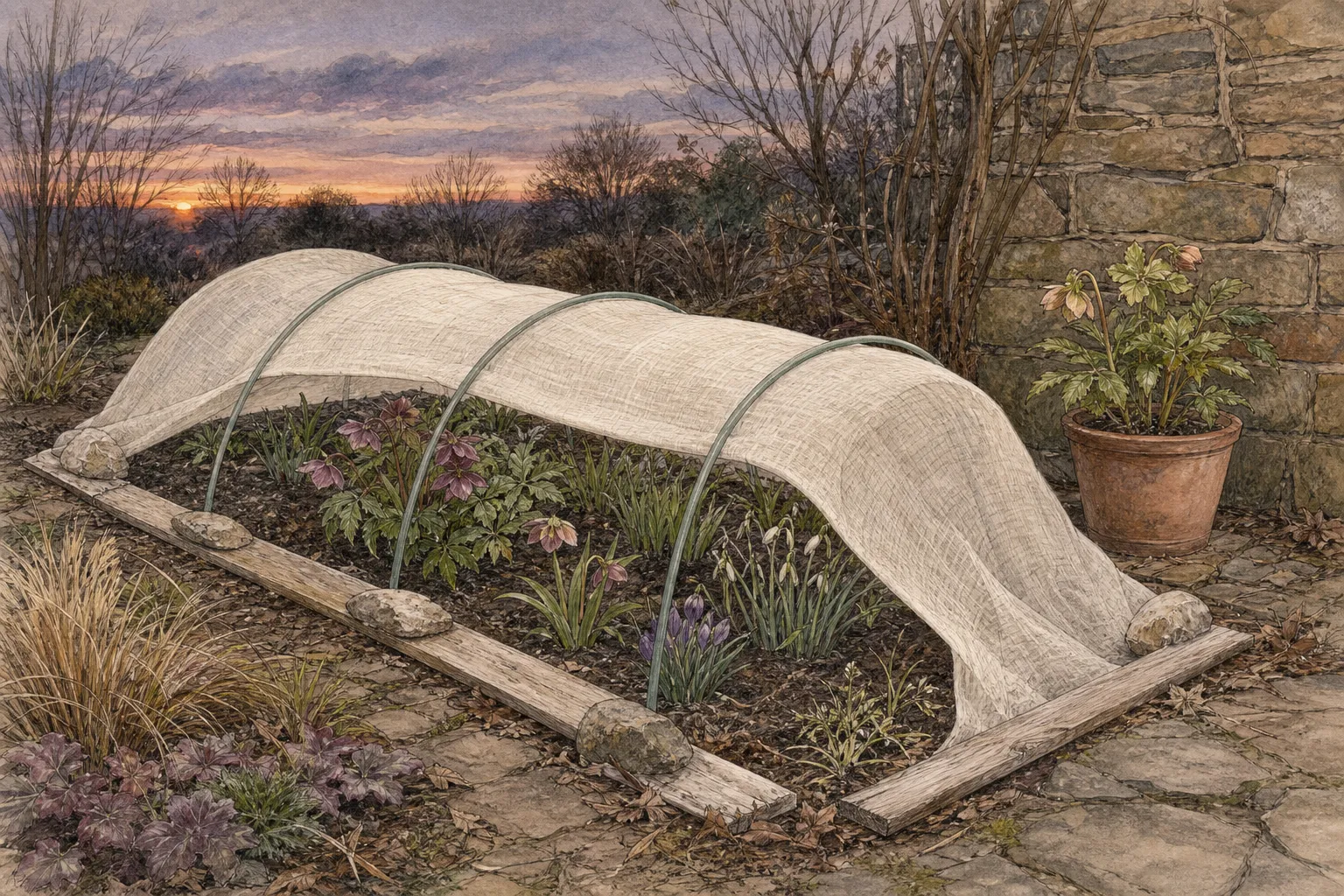
Finish before dusk and inspect once from outside. Open flames, fuel heaters, and improvised electrical devices create unacceptable fire and electrical hazards beneath cloth. Hot lamps can scorch fabric and plants, and extension cords on wet ground introduce shock and trip hazards. When the forecast exceeds passive-cover capability, the safer choice is a frost-free building for portable plants and acceptance of limited bloom loss outdoors.
Label or photograph anchor positions before darkness. Boards and stones that are obvious during installation can disappear under fabric and become hazards during a midnight wind check. If precipitation is forecast, account for the extra weight of wet cloth and the possibility of snow; add support or choose a different method before the load reaches the flowers.
Handle containers as exposed root systems
Container roots experience colder swings than roots buffered by surrounding ground. Move manageable pots into an unheated garage, enclosed porch, cold frame, or other frost-free location before covering beds. A short overnight stay needs cold protection more than decorative placement; return plants to useful light promptly after the event.
For pots that must remain outside, group them in a sheltered position out of wind and away from roof runoff. Insulate container sides with dry, noncombustible material and cover the grouped canopy to the ground. Drain saucers so roots are not left in cold water. Use stable frames to keep heavy wet blankets off flexible stems and secure tall groups against overturning.
Large planters may be too heavy to move safely. Treat them as exposed root systems: protect the pot wall as well as top growth, check that drainage remains open, and use mechanical help or a second person for every heavy lift. A tender specimen in an oversized container may need a permanent seasonal strategy, not a new lifting improvisation for every forecast frost.
A wall can reduce wind and release some stored daytime heat, but an overhang may also leave a pot dry. Check moisture before grouping containers and water only if the root ball needs it. Wrapping a bone-dry pot does not correct drought, while saturating a cold pot creates another stress and makes it harder to lift safely.
Remove or vent after sunrise
Open or remove covers after the air has risen safely above freezing and sunlight begins warming the enclosure. Transparent and heavy covers can heat rapidly even on a cool morning. University of Minnesota guidance repeatedly vents cloches, frames, and supported covers on bright days; the same principle applies after a frost night. Dry reusable fabric completely before storage to prevent mildew and frozen folds.
Return moved containers gradually to their normal exposure. A plant held in a garage overnight can usually go back out after the risk passes, but several protected days may reduce light acclimation. Place it first in shelter if sun or wind is strong. Recheck the next forecast before dismantling a frame that may be needed again, while keeping daytime covers open.
Wait for frozen tissue to thaw before judging injury. Water-soaked, limp growth that later turns black or brown is typical freeze damage. Wait for clear healthy-tissue boundaries before trimming discolored tips. Maryland Extension advises removing limited top damage after it is apparent, while severe injury in a tender annual may justify replacement. Established perennials often outgrow superficial leaf damage.
Keep post-freeze watering ordinary. Injured leaves can lose function, but cold wet roots require normal drainage and measured irrigation. Check the actual root zone, maintain normal drainage, and postpone fertilizer until healthy growth resumes. Bud loss on a hardy shrub may reduce this season's flowers without indicating that the entire plant needs replacement or feeding.
Record which protection worked
Record the forecast source, predicted low, actual garden minimum if measured, wind, cover material, and plant stage. Note whether fabric touched the flowers and when it was removed. These details turn a vague memory of a cold night into a local threshold for the same bed, wall, or container group the next time a similar forecast appears.
Compare protected and unprotected tissue only within the same species and developmental stage. A cloth that preserved one open flower but not another may have lifted at an edge or contacted the bloom; it does not prove that all covers failed. Look for patterns at seams, ground edges, high points, and the windward side before buying a heavier material.
Revise the next plan while evidence is fresh. Move chronically vulnerable containers earlier, widen a canopy that leaked at the base, replace unstable supports, or accept that a windy hard freeze exceeds passive protection. The best record reduces the number of plants handled and the amount of material used while protecting the specific buds and shoots that matter.
Store each dry cover with its dimensions and known use. A cloth that barely reached the soil around one shrub will not close a wider canopy next year, and an unmarked light mesh may be mistaken for insulating fabric. Keeping material ratings and frame sizes with the garden record shortens setup time when the next warning arrives.
Repeated annual emergencies can reveal a placement problem. Move a chronically exposed container into a seasonal shelter plan, replace a tender cultivar with one suited to the microclimate, or install a permanent unobtrusive frame that accepts rated cloth quickly. The garden then needs fewer nighttime anchors and risky lifts, while the remaining temporary protection stays focused on rare weather and especially valuable buds.
Steps
- Level
- moderate
- Time
- 30–120 minutes before dusk
- Tools
- hoops or stakes, clips, thermometer where useful
- Materials
- breathable frost cloth or sheets, weights for edges
- 1Read the local forecast
Read the nearest point forecast and note low temperature, wind, cloud cover, duration, and likely cold pockets in the garden. List plants by species, cultivar, and developmental stage; prioritize open flowers, tender shoots, recent transplants, and containers; dormant crowns receive lower priority.
- 2Move what is portable
Move small tender pots and hanging baskets to a frost-free unheated shelter before dusk. Group containers that must remain outside in a wind-protected place, drain their saucers, and plan insulation around the pot walls as well as a breathable cover over the top growth.
- 3Set supports before dusk
Install hoops or stakes in daylight and test them for wind stability. Keep the frame above buds and flowers even after cloth sags with dew, pad sharp edges, and preserve a visible walking route clear of cords, weights, and emerging plants.
- 4Cover to the ground
Drape rated frost cloth or a clean breathable sheet over the frame and extend it to the ground on every side. Leave some slack, secure all edges against wind, and keep loose plastic off foliage; a rigid plastic enclosure must have an air gap and a morning vent.
- 5Check safely
Inspect from outside before nightfall. Passive covers operate without flames, fuel heaters, hot lamps, or improvised electrical devices. If the forecast is colder or windier than the material can handle, relocate portable plants and treat passive outdoor protection as limited.
- 6Vent in the morning
After temperatures rise safely above freezing, open or remove the cover before sunlight overheats the enclosure. Dry and store fabric, return containers gradually to normal light, and leave reusable frames vented if another frost night is forecast.
- 7Record the result
After tissue thaws, record actual minimum, wind, plant stage, cover type, contact points, and visible outcome. Wait for injury boundaries to develop before pruning hardy ornamentals, then revise the next setup from edge leaks, crushed shoots, or protected-unprotected differences within the same plant type.
Related reading
Sources
- Frost and Cold Damage on Flowers. University of Maryland Extension. Source record · Accessed 2026-08-30.
- Extending the growing season: start early, end later. University of Minnesota Extension. Source record · Accessed 2026-08-30.
- Protecting Plants from Frost. Penn State Extension. Source record · Accessed 2026-08-30.