Grow · basil branching harvest
Pinch and Harvest Basil for a Branching Summer Plant
Harvest basil above living leaf nodes, remove flower spikes selectively, and keep enough foliage on the plant to build repeated side shoots through summer.
Published Last updated
In this guide
- Begin with the plant you actually have
- Find a useful leaf pair before selecting the harvest length
- Find the node before picking up the snips
- Make every harvest at a living node
- Use flower removal as a choice, not a reflex
- Help the plant rebuild after a larger cut
- Keep the harvest usable after the cut
- Separate a shaping cut from a rescue cut
- Maintain several plants as a harvest system
- Know when to replace the plant
- Steps
Begin with the plant you actually have
Sweet basil, Thai basil, lemon basil, and compact patio cultivars share the opposite-leaf, square-stem structure that makes node-based harvesting work, but they do not build the same silhouette. A tall Genovese plant offers long tender tips; a small-leaved globe basil carries many short internodes; Thai basil often flowers readily and keeps a firmer stem. Read the branching points before imposing one fixed cutting length on every cultivar.
Harvest only from a plant that is actively growing. A newly transplanted basil with a small root ball, a heat-wilted container, or a plant yellowing in waterlogged mix needs correction before a large cut. Pinching can shape healthy growth; it cannot substitute for light, drainage, root space, or stable moisture. If several stems are blackened at the base or leaves carry spreading lesions, keep suspect material out of the kitchen and diagnose the plant first.
Distinguish a flower spike from a leafy tip. A vegetative tip continues a stack of broad paired leaves. A developing inflorescence becomes narrower and carries tiers of small buds. Both can be removed above a node, but the reason differs: a leafy harvest supplies the kitchen and redirects growth, while removing a flower spike delays seed production and helps preserve a foliage-centered plant.
Find a useful leaf pair before selecting the harvest length
Check vigor and trace the stem to paired leaves before pinching or harvesting. Distribute cuts around the plant, keeping flowering stems only where their chosen role justifies them. For a leggy or weak plant, use the staged recovery described below instead of taking the whole desired harvest at once. Compare new branching with retained healthy growth.
Find the node before picking up the snips
Follow one harvest stem downward until you reach a healthy pair of full leaves. In each leaf axil—the angle where leaf meets stem—a small bud can become a side shoot. Place the cut a short distance above that node, leaving the paired leaves and both axillary buds intact. The remaining stub should be small enough to dry cleanly but not so close that the cut damages the buds or tears the node.
This is different from plucking the largest individual leaves from the lower plant. Occasional leaf picking does little harm, but repeated stripping removes the photosynthetic framework while leaving long bare stems. A tip cut above a node gathers several usable leaves and leaves the plant with an organized branching point. Over successive harvests, those two side shoots can each be cut above later nodes, building a compact, productive canopy.
Use fingers for very soft tips and clean scissors or snips for firmer stems. A pinch should separate tissue cleanly; twisting until fibers tear can bruise the remaining stem. Sanitize blades when moving between plants, especially if one has leaf spots or stem discoloration. The kitchen harvest should never be the route by which a problem travels through the whole basil group.
Make every harvest at a living node
Start with the tallest stems and any shoot beginning to flower. Remove enough height to bring that stem back into the canopy while preserving at least several sets of healthy leaves below. Then move around the plant rather than taking every cut from the sunniest face. Balanced harvesting maintains a leaf-bearing framework on all sides and prevents the container from becoming a one-sided cluster of old woody stems.
Do not remove more than roughly one-third of the leafy plant in a routine harvest. That proportion is a practical restraint, not a precision formula: a vigorous bed-grown plant can replace foliage faster than a recently rooted cutting in a small pot. When a recipe calls for more, harvest from several plants or stage the cuts. The plant pays for new branches with the leaves you leave behind.
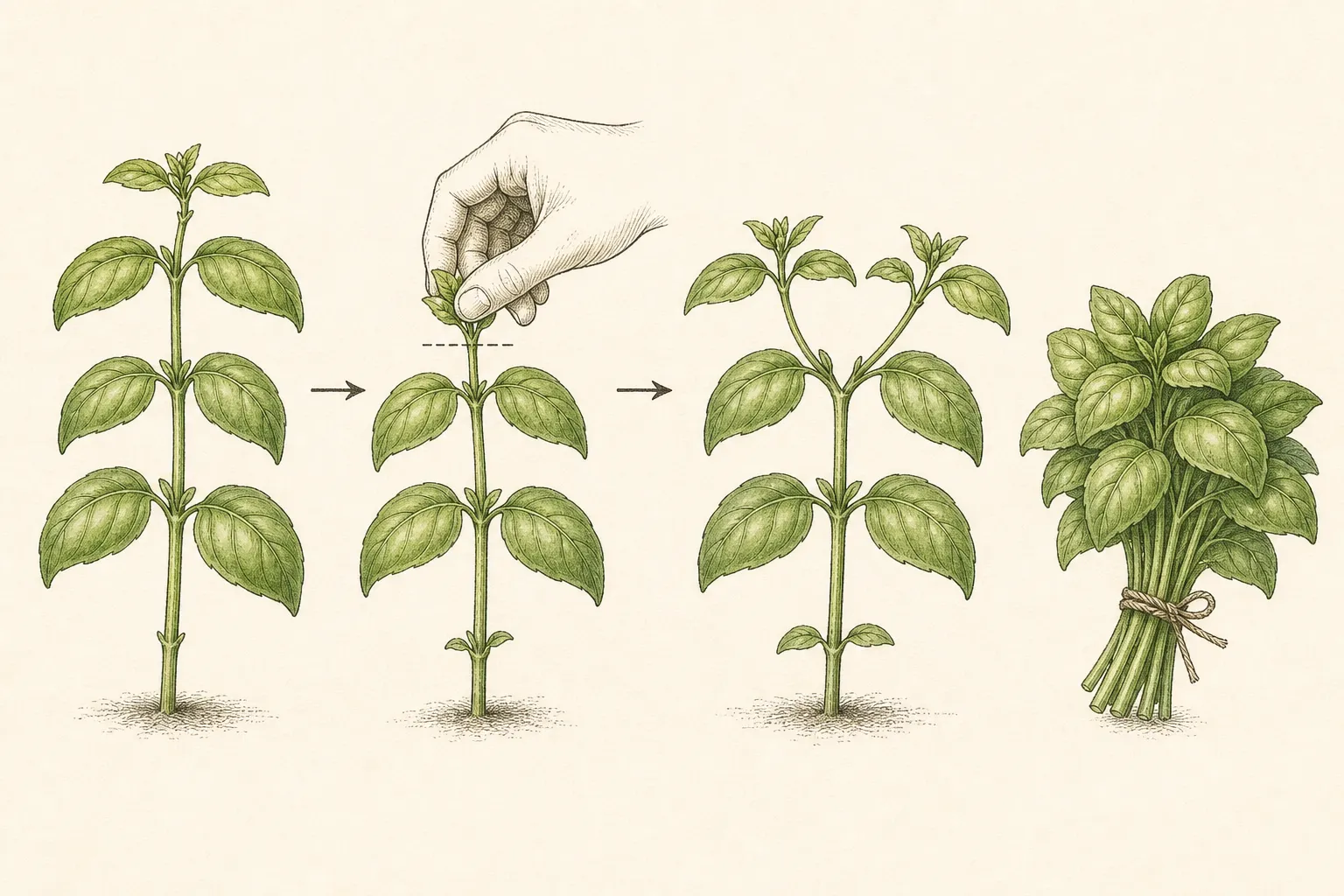
If a stem has already flowered and become tough, trace it below the spike to the first strong leafy node. Removing only the little flowers may leave a long bare stalk that quickly initiates more buds; cutting to a useful node restores the canopy. On a weak stem with few leaves, make a shallower cut. The goal is living branching tissue, not identical stem lengths.
Use flower removal as a choice, not a reflex
Removing flower spikes is useful when the main goal is tender foliage over a long season. Basil shifts resources toward flowers and seed as stems mature, and regular pinching keeps more shoots vegetative. Yet a flowering stem is not evidence that the whole plant has become unusable overnight. Leaves may become smaller or stronger flavored, but selective cutting can continue while healthy side shoots develop.
A garden can also keep a few basil flowers for bees or for seed, particularly away from the primary harvest plants. Decide which role each plant will serve. On a foliage plant, remove spikes when buds become recognizable. On a pollinator or seed plant, allow chosen stems to mature and stop pretending that every flower must be erased. Separating those roles avoids repeatedly cutting a plant you actually wanted to observe or save.
Do not count on saved seed to reproduce every purchased cultivar. Open-pollinated basil can cross with compatible basil flowering nearby, while hybrids may not come true. If preserving a named plant matters, take vegetative cuttings while growth is healthy and respect any plant-patent restrictions. Flower management and propagation are related decisions, not interchangeable promises.
Help the plant rebuild after a larger cut
Water according to the root zone, not because scissors were used. If the mix is dry below the surface, water thoroughly and let excess drain; if it is already moist, another soaking only reduces oxygen. A large harvest temporarily lowers water use because less leaf area remains. Check the pot rather than continuing the old schedule by habit.
Give the remaining leaves strong light appropriate to the cultivar, but avoid moving a shade-grown plant abruptly into intense afternoon sun after reducing its canopy. New side shoots should become visible at the retained nodes. If they stretch pale and far apart, light is insufficient; if leaf margins scorch and the container overheats, the root zone and exposure need adjustment. Pinching cannot correct either extreme by itself.
Fertilizer is not an emergency dressing for every cut. Container basil may need regular nutrition because watering leaches the mix, while a bed with adequate fertility may not. Follow a label and local guidance, and reduce the urge to force soft growth with excess nitrogen. A compact plant with steady new leaves is a better recovery signal than a brief surge of weak, watery stems.
Keep the harvest usable after the cut
Harvest after dew has dried and before the plant is heat-wilted. Leaves gathered in a cool part of the day lose less water during handling. Keep the sprigs out of direct sun and do not crush them into a warm, sealed bag. Sort out damaged or diseased tissue at the plant so it never enters the clean harvest bundle.
For near-term use, place stem ends in a glass with a small amount of clean water, much as you would hold cut flowers, and keep the basil at room temperature away from strong sun. Many basils suffer chilling injury in a cold refrigerator. Refresh the water and remove leaves below the water line. Wash shortly before use rather than storing wet foliage that bruises and darkens more readily.
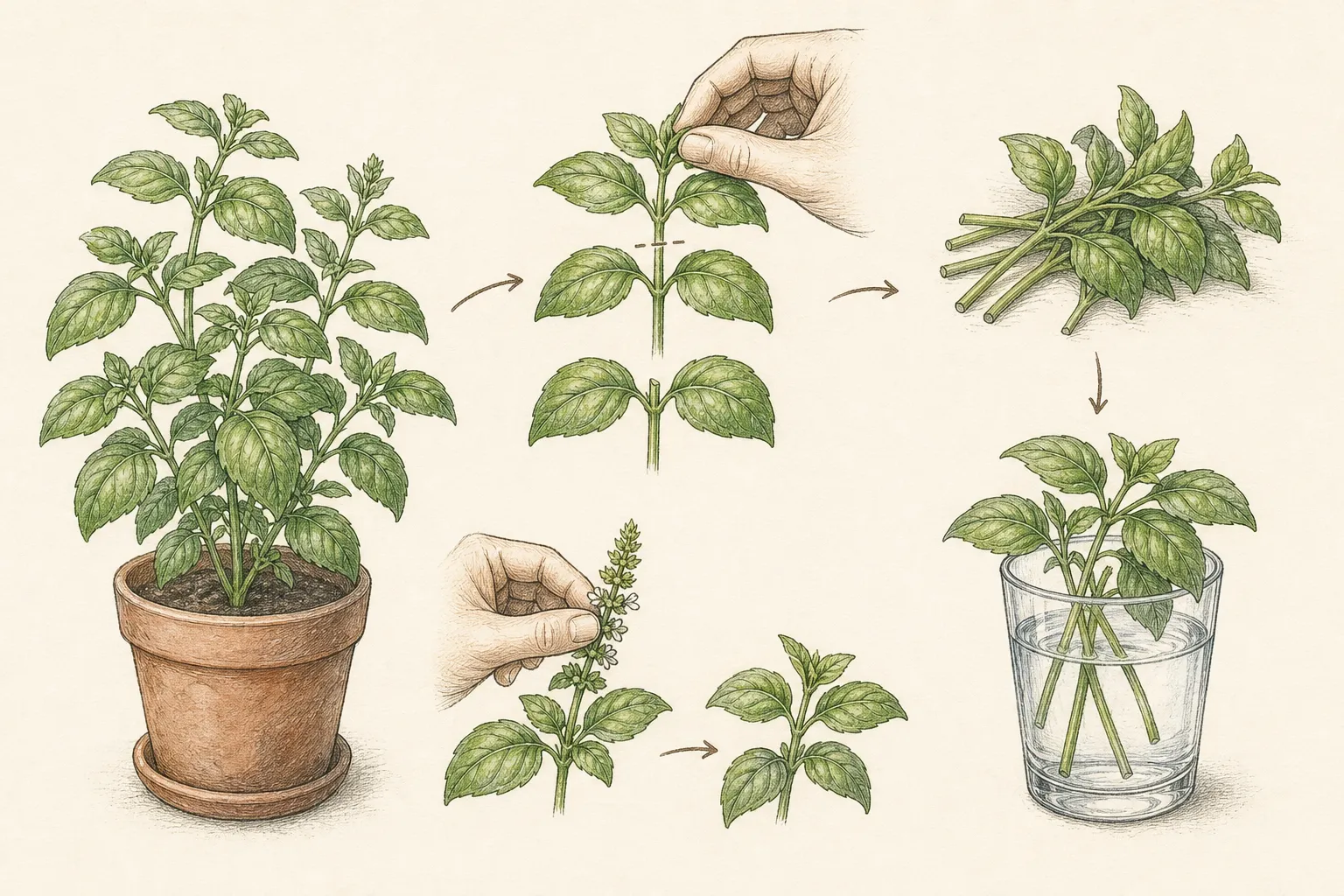
For a longer interval, freezing generally preserves culinary use better than trying to keep fresh leaves indefinitely. The texture will change, so freeze basil for cooked dishes, sauces, or purées rather than a future salad garnish. Drying is possible, but flavor character changes. Choose the storage method for the intended dish, and let the living plant continue producing the next fresh harvest.
Separate a shaping cut from a rescue cut
Routine pinching works on a vigorous stem before its proportions have become awkward. A rescue cut addresses a plant that is already tall, sparse, flowering, or leaning beyond the container. The two jobs should not be confused. A healthy tip can be removed just above a close pair of leaves to multiply shoots. A leggy stem may have long bare internodes and only a few usable nodes, so the cut must preserve whatever leafy junction can still support recovery.
Inspect every main stem before reducing a neglected plant. Mark the lowest strong pair of leaves and the younger buds at their bases. If all foliage sits near the top, do not cut the entire plant to a fashionable compact height in one session. Shorten the best supplied stems first and wait for visible side growth. The remaining taller stems continue photosynthesis while the lower buds establish, after which the second part of the canopy can be reduced.
A stem that is blackened, collapsed, or diseased needs diagnosis rather than shaping. Remove clearly affected tissue with clean tools and keep it out of the harvest. Check drainage, root condition, temperature, and recurring leaf symptoms before asking pruning to solve the decline. Pinching changes branch architecture; it does not cure root rot, downy mildew, cold injury, or chronic insufficient light. A good cut begins with the correct problem.
Maintain several plants as a harvest system
A cook who needs a large weekly quantity should not repeatedly strip one small plant. Grow enough basil to rotate substantial cuts. Harvest the first plant above strong nodes, use the second while those buds extend, and return only when the first has rebuilt useful leaf area. Rotation makes each cut less severe and produces better stems than alternating between neglect and near-total removal.
Containers in the same rotation may dry at different rates after harvest. The freshly reduced plant has less leaf area and can use water more slowly, while the uncut plant continues transpiring through a full canopy. Lift or probe each pot before watering. Giving the entire row an identical drink on an automatic schedule can leave the recovering plant wet precisely when its demand has fallen.
Replace aging plants deliberately when branching quality declines. Basil is generally grown as a warm-season annual, and repeated pinching cannot keep one plant perpetually juvenile. Root a healthy tip or sow a successor before the old canopy becomes woody and flower-dominated. Overlap the generations long enough to maintain harvest, then compost sound old plants or discard diseased material according to local guidance. Succession is part of continuous basil quality, not evidence that pruning failed.
Know when to replace the plant
Pinching has reached its limit when healthy leafy nodes are scarce, stems remain woody below every usable cut, or repeated regrowth is weak despite suitable light, moisture, drainage, and nutrition. Do not keep shortening an exhausted framework because the calendar says basil should still be productive. Start a successor from seed or a sound nonflowering cutting, overlap the plants until the younger one branches, and retire the old plant before poor-quality leaves become the normal harvest.
Disease changes that decision. Do not propagate from a plant with unexplained spotting, stem collapse, distorted new growth, or a recurring decline shared by nearby basil. Isolate it from the harvest rotation, compare symptoms with local diagnostic guidance, and clean tools before using them elsewhere. A cutting copies living tissue; it does not reset the health of the source plant. Succession only improves the system when the starting material is vigorous.
Steps
- Level
- easy
- Time
- 10 to 20 minutes for routine harvest and shaping
- Tools
- Clean scissors or fine snips, Small harvest basket, Glass for short-term holding
- Materials
- Clean water, Paper or cloth towel for dry handling
- 1Inspect vigor before cutting
Harvest from actively growing basil with firm stems and healthy leaves. Delay a large cut on a newly transplanted, heat-wilted, waterlogged, or diseased plant. Correct the root-zone or health problem first so pruning is not asked to repair an unrelated stress.
- 2Trace the stem to paired leaves
Follow each selected tip down to a strong pair of leaves with visible buds in both axils. Make the cut just above that node, preserving the leaves and buds. Avoid leaf-by-leaf stripping that leaves a long bare stem without an organized branch point.
- 3Balance cuts around the canopy
Take tall stems and flowering shoots first, then rotate around the plant. Keep several sets of leaves on every retained stem and limit a routine harvest to about one-third of the leafy canopy, adjusting downward for small or recently rooted plants.
- 4Choose the role of flowering stems
Remove emerging spikes on plants maintained for repeated leaf harvest. Leave selected flowers only where pollinator value or seed is an intentional goal. Cut unwanted spikes back to a leafy node rather than plucking flowers from a long bare stalk.
- 5Check moisture before aftercare
Water only if the root zone is dry enough to need it, then soak the mix and let it drain. Keep appropriate light on the retained leaves and watch the axillary buds for fresh shoots before making another substantial harvest.
- 6Hold sprigs without chilling
Keep cut basil shaded, set the stem ends in clean water for short-term room-temperature holding, and wash shortly before use. Freeze portions intended for cooked dishes when fresh use will be delayed rather than storing bruised wet leaves for too long.
- 7Stage the recovery of a leggy plant
Find the lowest strong leafy node on each stem. Reduce only the best supplied portion of the canopy first, leaving enough healthy foliage to power new buds. Wait for visible branching before shortening the remaining tall stems. Stop and diagnose any blackened, collapsed, or persistently spotted tissue instead of treating it as a shaping problem.
- 8Rotate harvest among several plants
Take a substantial cut from one vigorous plant, then harvest another while the first rebuilds. Check the moisture of each container independently because water use falls after leaf area is removed. Start successor cuttings or seed before older plants become woody so continuous harvest does not depend on repeatedly stripping one declining specimen.
- 9Retire weak stock deliberately
Replace basil when sound leafy nodes are scarce and regrowth stays weak after light, water, drainage, and nutrition are corrected. Begin a healthy successor before the old plant is exhausted. Never take propagation material from unexplained spotted, distorted, or collapsing growth, and clean the cutting tool before moving to another plant or edible kitchen harvest safely.
- 10Keep one uncut comparison stem
Retain one healthy marked stem briefly to compare flowering, leaf size, and branching with the pinched canopy.
Related reading
Sources
- Basil. University of Illinois Extension. Source record · Accessed 2026-08-19.
- Herb Garden Plants: Basil. Penn State Extension. Source record · Accessed 2026-08-19.
- Harvesting and storing home garden vegetables. University of Minnesota Extension. Source record · Accessed 2026-08-19.