Plant problems · daffodil leaves no flowers
Diagnose Daffodils with Leaves but No Flowers
Separate shallow planting, crowding, shade, early foliage removal, weak bulbs and weather injury before moving or feeding a nonflowering daffodil clump.
Published Last updated
In this guide
- Define the symptom precisely
- Read the pattern across the clump
- Reconstruct last year’s foliage care
- Check light and competition
- Investigate depth and crowding at the right season
- Test soil before feeding
- Cultivar, climate, canopy change, fertility, planting depth, and bulb age can each alter flowering.
- Diagnosis
Define the symptom precisely
Record whether the clump produced no buds, buds that failed, or flowers that opened and collapsed. These are different pathways. Schedule the work when foliage is active and the clump can be mapped before dormancy. Confirm the choice by inspecting leaf density, bulb depth, crowding, previous foliage care, current light and whether flower buds were visibly damaged. The safe finish is reached when one evidenced cause guides the next planting, division or care decision.
Compare one clump across several seasons if records exist. A single weather year is weak evidence for chronic failure.
Map leaf vigor, count and distribution before changing care. Sparse weak leaves and dense lush leaves point in different directions. In this case, success means one evidenced cause guides the next planting, division or care decision. Let the next inspection test whether one evidenced cause guides the next planting, division or care decision; the workday shows only the starting condition.
First separate “no flowers” from “no visible flower yet.” Compare the clump with the same cultivar nearby and account for early, mid-, or late bloom timing. Dense green leaves with no buds point toward stored-energy, light, crowding, depth, or fertility issues. Buds that formed and then browned point toward frost or disease. Sparse weak leaves suggest a broader bulb or root-zone decline. Mark the clump while foliage is visible so later inspection does not disturb an unrelated dormant planting.
Flower initiation is decided before the spring when failure becomes visible. The leaves and bulb use the previous growing season to rebuild reserves and form the next bud, so current green foliage cannot immediately repair a missing flower. This lag explains why a corrected mowing boundary or brighter site may need a full cycle before bloom returns. Keep one unaffected comparison clump if possible and record flower count, leaf density, and yellowing date. Improvement is a later biological response, not a same-day cosmetic change.
Read the pattern across the clump
Crowded bulbs often make a dense fan with diminishing flower count. A few flowering edges can reveal younger productive offsets.
Uniform tall foliage leaning toward light suggests canopy shade. Check conditions during the leaf’s active weeks, not summer alone. Compare leaf density, bulb depth, crowding, foliage history, active-season light, and visibly damaged buds across the clump. Keep green leaves intact and defer lifting until natural yellowing.
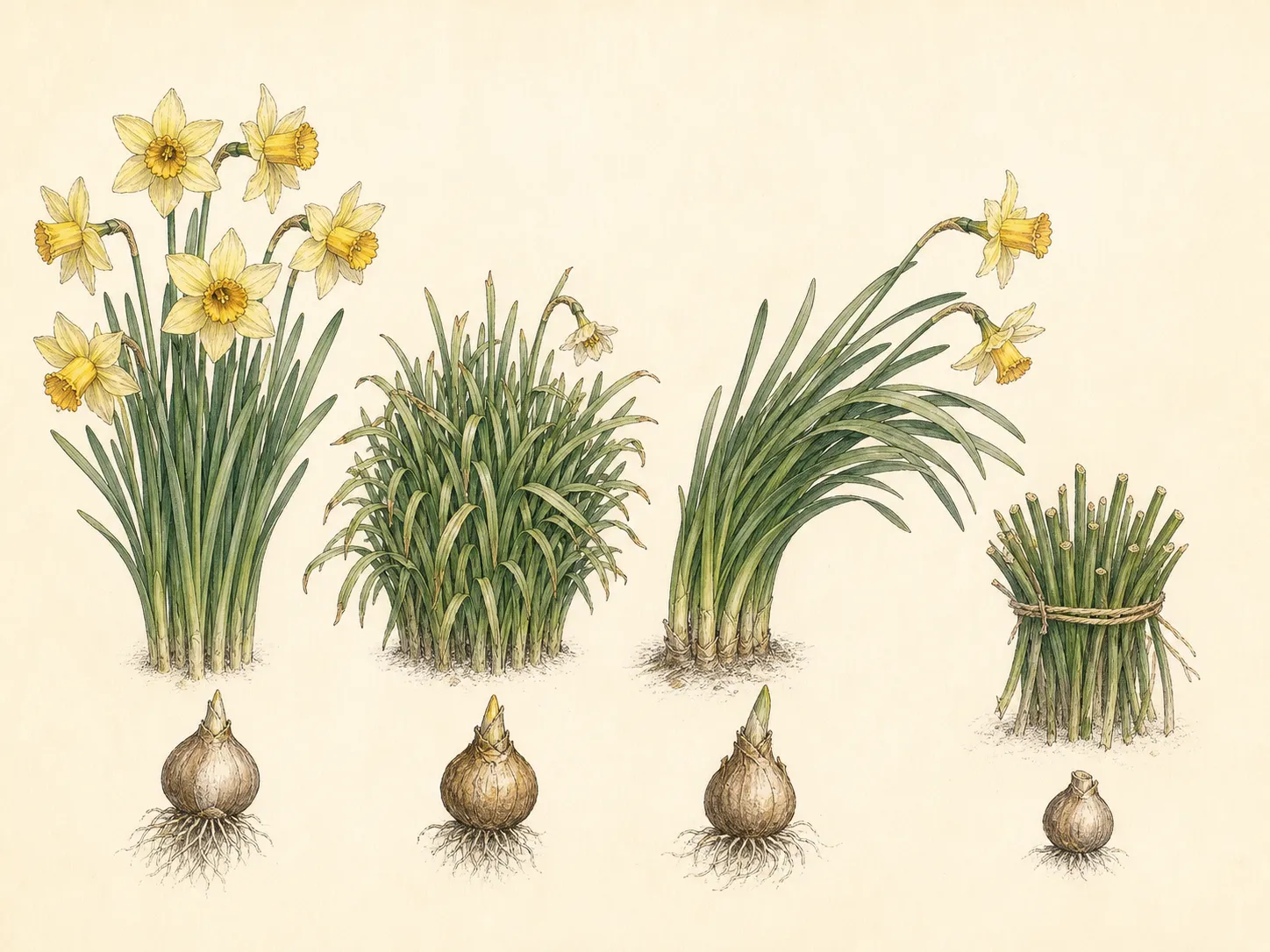
One damaged sector may align with compaction, runoff or recent digging. Whole-bed fertilizer cannot fix a local physical injury. The finished work must allow one evidenced cause guides the next planting, division or care decision. Weather and new growth can clarify leaf density, bulb depth, crowding, previous foliage care, current light and whether flower buds were visibly damaged during a measured pause.
Pattern narrows the cause. Flowers confined to the outer ring of an old clump support crowding because edge bulbs have more space and resources. A bright edge flowering better than the shaded interior suggests light. One mowing strip failing beside an unmown group implicates foliage removal. Isolated distorted plants fit disease or poor bulbs better than a uniform site problem. Photograph the pattern before any division and compare it with drainage, tree roots, lawn fertilizer, and last season's maintenance boundary.
Age alone does not prove crowding. Some daffodil groups persist for years, while others multiply quickly and exhaust space. Edge-only flowers, many small offsets, and tightly packed bulbs together make the case. Uniform nonflowering across young widely spaced bulbs points elsewhere. Follow the boundary into adjacent lawn or groundcover and check whether roots or fertilizer cross it. The strongest diagnosis explains both where flowers remain and where they disappeared, not simply the oldest-looking part of the bed.
Compare the clump over at least two points in spring. Count visible buds before bloom, then note which flowers actually open and which leaves persist after flowering. A single late-flowering cultivar can look blind when judged against an early neighbor. Mixed clumps make that confusion more likely, so retain labels when bulbs are divided. If a few flowers return after improved foliage care, continue the correction for another cycle before lifting everything. A stable increase in flower count is stronger evidence than unusually tall leaves produced during one wet spring.
Reconstruct last year’s foliage care
Green daffodil leaves replenish the bulb after flowering. Early cutting, braiding or mowing can reduce the next display. Separate seasonal timing from cosmetic urgency. The useful window is when foliage is active and the clump can be mapped before dormancy.
Ask when leaves yellowed naturally and whether irrigation stopped abruptly. Photos help separate memory from actual timing. Compare that setting with leaf density, bulb depth, crowding, previous foliage care, current light and whether flower buds were visibly damaged.
Deadheading flowers is optional for appearance, but removing leaves is a different operation. Keep functional foliage exposed to light. Stop once one evidenced cause guides the next planting, division or care decision.
During active foliage growth, retain every green leaf and reserve bulb lifting for the dormant inspection window.
Daffodil leaves rebuild the bulb after flowering. Iowa State describes a four-to-six-week period when foliage manufactures food and transfers it underground; leaves must remain until they die naturally. Braiding, tying, or mowing reduces light interception even when some green tissue remains. Reconstruct last year's cutting date from photographs or lawn records. If early removal is likely, the corrective action is future leaf retention, not immediate fertilizer. Later-emerging perennials can screen yellowing leaves without preventing photosynthesis.
If contractors or shared maintenance crews service the bed, mark the no-mow period visibly. A written boundary is more reliable than expecting each person to recognize daffodil foliage after flowers disappear.
Check light and competition
Measure direct light while leaves are active and before deciduous canopy closes. Buildings and new shrubs can change the window. Evaluate light while the leaves are actively rebuilding the bulbs, not only during flowering before trees leaf out. Keep green foliage intact while comparing shade, crowding, planting depth, and past maintenance.
Look for roots of woody plants and aggressive perennials around the clump. Competition may reduce moisture and nutrients. Record leaf density, bulb depth, crowding, previous foliage care, current light and whether flower buds were visibly damaged before the work begins.
Avoid excavating tree roots to rescue bulbs. Relocation during the proper bulb-moving window may be the safer design choice. Cultivar, climate, canopy change, fertility, planting depth, and bulb age can each alter flowering.
Measure sunlight while the leaves are active and the deciduous canopy has developed, not only when flowers would normally open. Iowa State recommends moving declining clumps to a location with at least six hours of direct sun. Tree and shrub growth can close a once-suitable window over several years, while roots add competition for water and nutrients. Protect large branches and tree roots; move the dormant bulbs when adequate light cannot be created safely. Mark the clump and move it during the appropriate dormant period if compatible light cannot be restored safely.
Light measurements should include duration as well as brightness. A short beam between buildings may look sunny in a photograph but contribute little to the six-hour target. Repeat observations across several clear days and note when the tree canopy closes. If only one sector receives adequate light, move bulbs after dormancy, and keep them out of the same shaded sector.
Investigate depth and crowding at the right season
Mark nonflowering clumps now and wait until foliage naturally declines before lifting. Active roots and leaves deserve protection. Mark the nonflowering clump in spring and postpone lifting until foliage yellows naturally. Edge flowering, bulb density, and actual depth can then be compared without sacrificing the current photosynthetic period.
Use the original soil line and measured bulb position to assess shallow or deep planting. Species guidance provides the reference. Use leaf density, bulb depth, crowding, previous foliage care, current light and whether flower buds were visibly damaged to decide whether the task is corrective, preventive, or unnecessary. That distinction controls timing and scale.
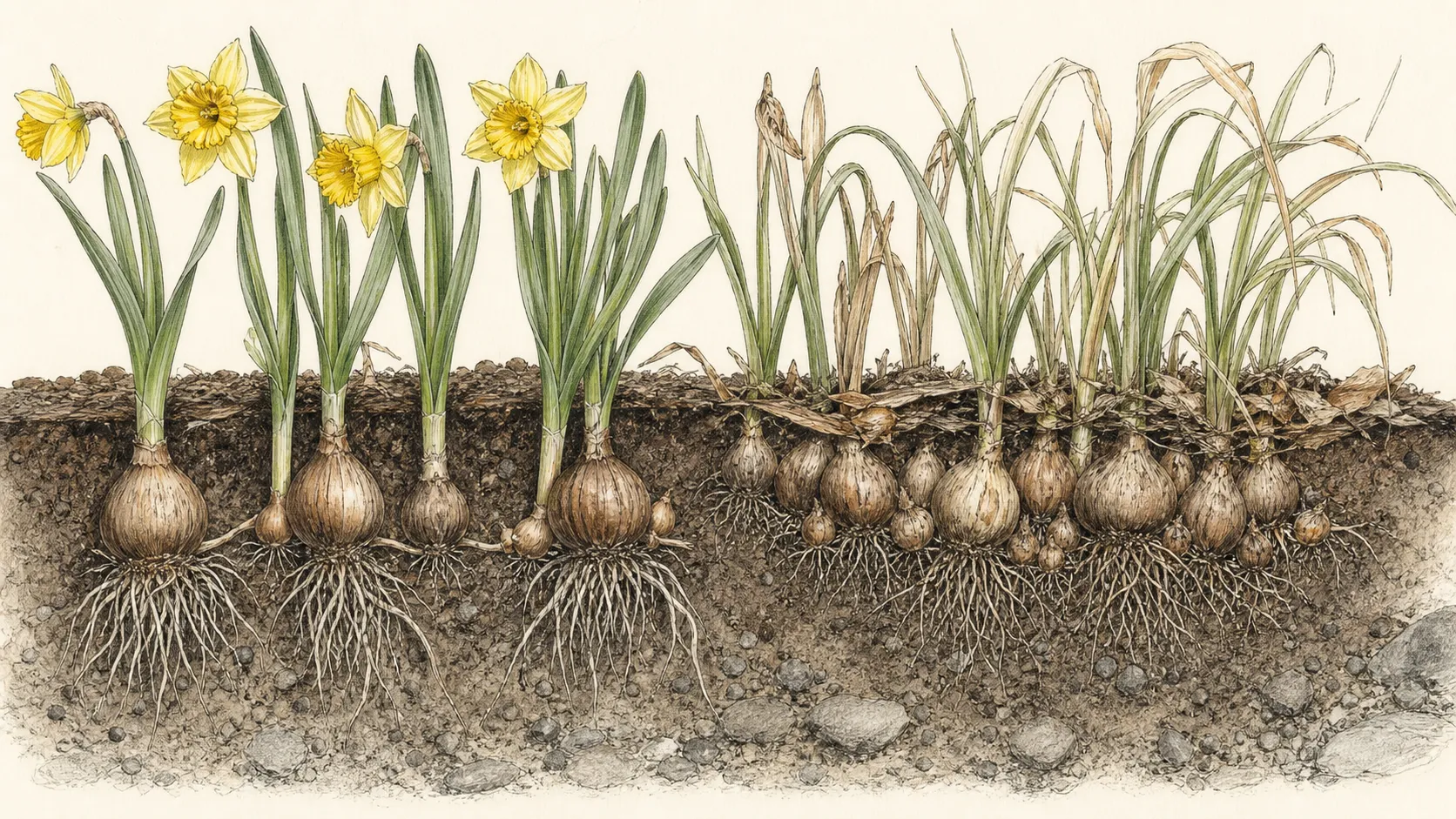
Separate sound offsets during an appropriate dormant window and replant at documented depth. Discard soft or diseased bulbs. Separate only firm bulbs and return them at a depth supported for their size and soil. Soft bulbs, progressive distortion, or rot belong in a diagnostic pathway, and stay out of redistributed planting stock.
Depth and crowding should be examined after foliage yellows. Lift a small representative part of the marked clump and measure the bulb's position from finished soil. Iowa State gives about three times bulb height and commonly 6–8 inches for daffodils; soil texture and local guidance can refine that value. Separate firm offsets, discard soft bulbs, and replant immediately at suitable spacing. Deep mulch added over years can effectively deepen bulbs even when their original planting was correct.
When lifting a sample, note the vertical sequence of mulch, original soil, bulb, and roots. Years of topdressing can place a once-correct bulb much deeper below the finished surface. Conversely, erosion or animal disturbance can leave bulbs shallow and prone to temperature swings. Replant firm bulbs in a broad area of compatible soil, not a rich isolated hole. Keep cultivar groups labeled because miniature and large trumpet daffodils differ in bulb size, and planting depth is interpreted from that size.
Test soil before feeding
Strong leaves with no flowers first direct attention to light, foliage history, depth, and crowding. Excess nitrogen can favor foliage.
Use a laboratory soil test when nutrient or pH correction is contemplated. Follow regional recommendations and avoid guesswork.
Correct drainage and compaction before nutrient additions. Bulbs decline when roots remain saturated regardless of fertilizer. Include leaf density, bulb depth, crowding, previous foliage care, current light and whether flower buds were visibly damaged.
Feed only when a soil test or specific nutrient evidence supports it. Daffodils often grow well without routine fertilizer, and high nitrogen can produce abundant leaves with few flowers, especially beside a fertilized lawn. A soil test can identify pH or nutrient limitations and prevent speculative amendment. Check drainage at the same time because wet soil promotes bulb decline that fertilizer cannot reverse. If leaves are strong and green, prioritize light, foliage history, depth, crowding, cultivar maturity, and weather before treating the problem as hunger.
A soil test is most useful before planting or when several unrelated plants share a nutrient symptom. Apply any recommended nutrient across the root area at the stated rate and timing, keeping granular material off leaves. Use adequate light and intact foliage as the primary bloom inputs. Daffodils beside a fertilized lawn may already receive excess nitrogen. If leaves are lush and the bulbs firm, extra fertilizer can reinforce the leaf-heavy pattern, not restore flowers.
Keep lawn fertilizer spreaders outside the bulb bed and sweep granules from foliage. This prevents an accidental nitrogen input from confusing the next season's diagnosis.
Cultivar, climate, canopy change, fertility, planting depth, and bulb age can each alter flowering.
Late frost can injure emerging buds while leaves survive. Look for browned flower tissue or an event record. Track leaf density, bulb depth, crowding, previous foliage care, current light and whether flower buds were visibly damaged.
Recently planted, undersized or long-stored bulbs may need a full growth cycle before a strong display. Verify purchase quality.
Virused or rotting bulbs may show distorted, streaked or collapsing foliage. Seek diagnosis and dispose of confirmed diseased stock according to local diagnostic guidance.
Late freeze can destroy flower tissue while leaves survive, so match browned buds to weather dates. Newly planted, undersized, or poorly stored bulbs may need time or may lack a viable flower bud. Progressive streaking, distortion, soft bulbs, or rot requires diagnosis and removal of affected stock, not division. Preserve all healthy foliage after a frost because it can still replenish the bulb. Record the evidenced cause and assess the next spring; most cultural corrections act through a full bulb-growth cycle.
Bulb quality begins before planting. Firm, heavy bulbs with intact basal plates are more likely to contain viable buds than soft, desiccated, or badly damaged stock. Storage that is too warm or prolonged can reduce performance. After a failed display, inspect only representative bulbs at dormancy and keep healthy foliage on the rest. For progressive rot or unusual streaking, use clean tools and avoid moving soil or bulbs to another bed until a diagnostic service identifies the problem.
Begin with leaf, light, and pattern records; reserve lifting for the dormant inspection stage. During leaf growth, count buds, map flowering edges, record light after canopy closure, and protect every green leaf. At natural yellowing, inspect only enough bulbs to measure depth, crowding, firmness, and drainage. Use a soil test only when site-wide evidence suggests fertility or pH. Then choose one principal correction: preserve foliage, move to more light, divide a congested clump, reset depth, or remove diagnosed diseased bulbs. Record the change and wait through the next bulb-recharge cycle before adding another treatment.
Diagnosis
Dense healthy leaves appear but few or no buds emerge across an aging clump. When a dense old clump flowers mainly at its edge, internal crowding is more likely than a weather event. Deep planting can also produce leaves while delaying or suppressing bloom.
- Check
- Mark the clump, compare flowering at the edges, and inspect bulb density and depth only after foliage yellows naturally. Compare the center and edge of the marked clump, then lift a small representative area only after natural leaf decline. Measure depth and note the number and firmness of offsets.
- Cause
- Offset crowding, shallow planting or depleted individual bulbs reduced flower initiation while leaves continued. Offsets have filled the available soil, bulbs sit at an unsuitable depth, or individual bulbs are too small to initiate flowers. These conditions can coexist in an old unmanaged clump.
- Action
- Divide sound bulbs in the proper window, replant at documented depth and spacing, and keep future foliage intact. After foliage yellows, divide firm bulbs and replant immediately at the depth recommended for their size; Iowa State gives roughly three bulb heights and commonly 6–8 inches for daffodils.
Leaves are long, soft and angled toward available light while flowering has declined as nearby canopy expanded. Track sunlight through the four-to-six-week post-bloom leaf period. A canopy that closes over the clump can reduce bulb recharge even though early spring light looked adequate.
- Check
- Measure direct light during the active leaf period and map new shrub, tree or building shade plus root competition. Record direct sun at several points during active leaf growth, including after nearby trees and shrubs leaf out. Compare a shaded clump with the same cultivar in a brighter position if available.
- Cause
- Insufficient active-season light or competition limited the carbohydrate reserve needed for reliable flowering. Too little post-bloom light or strong root competition limited carbohydrates returned to the bulbs. High-nitrogen lawn fertilizer can compound the leaf-heavy response.
- Action
- Open the canopy only through appropriate woody-plant practice or move the bulbs to compatible light without damaging tree roots. Move bulbs during dormancy to a site with at least six hours of active-season light, or reduce competing shade only through appropriate tree and shrub care. Protect major woody roots.
The clump was cut, tied or mown while leaves were still green in the previous season. Leaves cut, braided, or mown before yellowing lose photosynthetic area. The consequence often appears the following spring as healthy-looking foliage with weak or absent bloom.
- Check
- Recover dated photographs or maintenance records and compare leaf-removal timing with natural yellowing in undisturbed clumps. Check photographs, mowing dates, or neighboring uncut foliage to establish when leaves were removed. Natural yellowing, not a fixed calendar date, marks the safe end of leaf function.
- Cause
- Premature foliage removal shortened photosynthesis and weakened the bulb for the next spring cycle. Premature foliage removal interrupted the four-to-six-week recharge period described by Iowa State. Repeated early mowing can weaken the display over several seasons.
- Action
- Allow leaves to yellow naturally, keep them unbraided and visible, and change the maintenance map so the area is not mown early. Leave future foliage loose and green until it yellows naturally. Change mowing boundaries and use later-emerging companions to screen leaves, not tying or cutting them.
Buds formed but browned, collapsed or failed after a late freeze, or foliage now appears distorted and unhealthy. Freeze injury usually follows a dated cold event and damages buds or open flowers, while disease may distort leaves, discolor bulbs, or progress beyond the original weather window.
- Check
- Match damage to weather dates, open representative buds, and submit distorted or rotting material for diagnosis. Match symptoms to the freeze date and cut open a few failed buds. Submit soft bulbs or persistently distorted foliage to an Extension diagnostic service before naming a disease.
- Cause
- Freeze injury killed flower tissue, or a disease or poor-quality bulb impaired development. A late freeze killed flower tissue without necessarily harming the leaves, or bulb rot, virus, poor stock, or another disorder prevented normal bud development.
- Action
- Accept a weather-lost display while preserving healthy foliage; diagnose progressive distortion or rot and replace only affected stock. Accept a single frost-lost bloom while preserving green leaves for next year. Remove only diagnosed rotten or diseased bulbs and correct drainage before installing sound replacements.
Sources
- How to Grow Bulbs. Royal Horticultural Society. Source record · Accessed 2026-08-30.
- Caring for Spring Blooming Plants. University of Minnesota Extension. Source record · Accessed 2026-08-30.
- Why Won't My Daffodils Bloom?. Iowa State University Extension and Outreach. Source record · Accessed 2026-08-30.
- Daffodils: A Symbol of Renewal and Hope. University of Illinois Extension. Source record · Accessed 2026-08-30.