Grow · container watering
Watering Container Rosemary by Soil and Pot-Weight Cues
Use upper-mix moisture and pot weight to decide when container rosemary needs water, then wet the root ball fully and empty the runoff.
Published Last updated
In this guide
- Separate the dry interval from the watering event
- Use dry mix and a lighter pot as a combined watering cue
- Calibrate pot weight after a complete drainage cycle
- Probe the occupied mix, not the decorative surface
- Apply water slowly enough to learn how the mix accepts it
- Let heat and wind increase surveillance
- Use foliage as a prompt, then verify below
- Escalate abnormal drainage to a container or root check
- Steps
Separate the dry interval from the watering event
Water container rosemary when the upper 1–2 inches of potting mix are dry and the pot has clearly lightened since its last thorough watering. Then wet the root ball evenly until excess exits the drainage holes and empty the runoff. This two-part rule keeps a dry interval between waterings while making each approved watering complete.
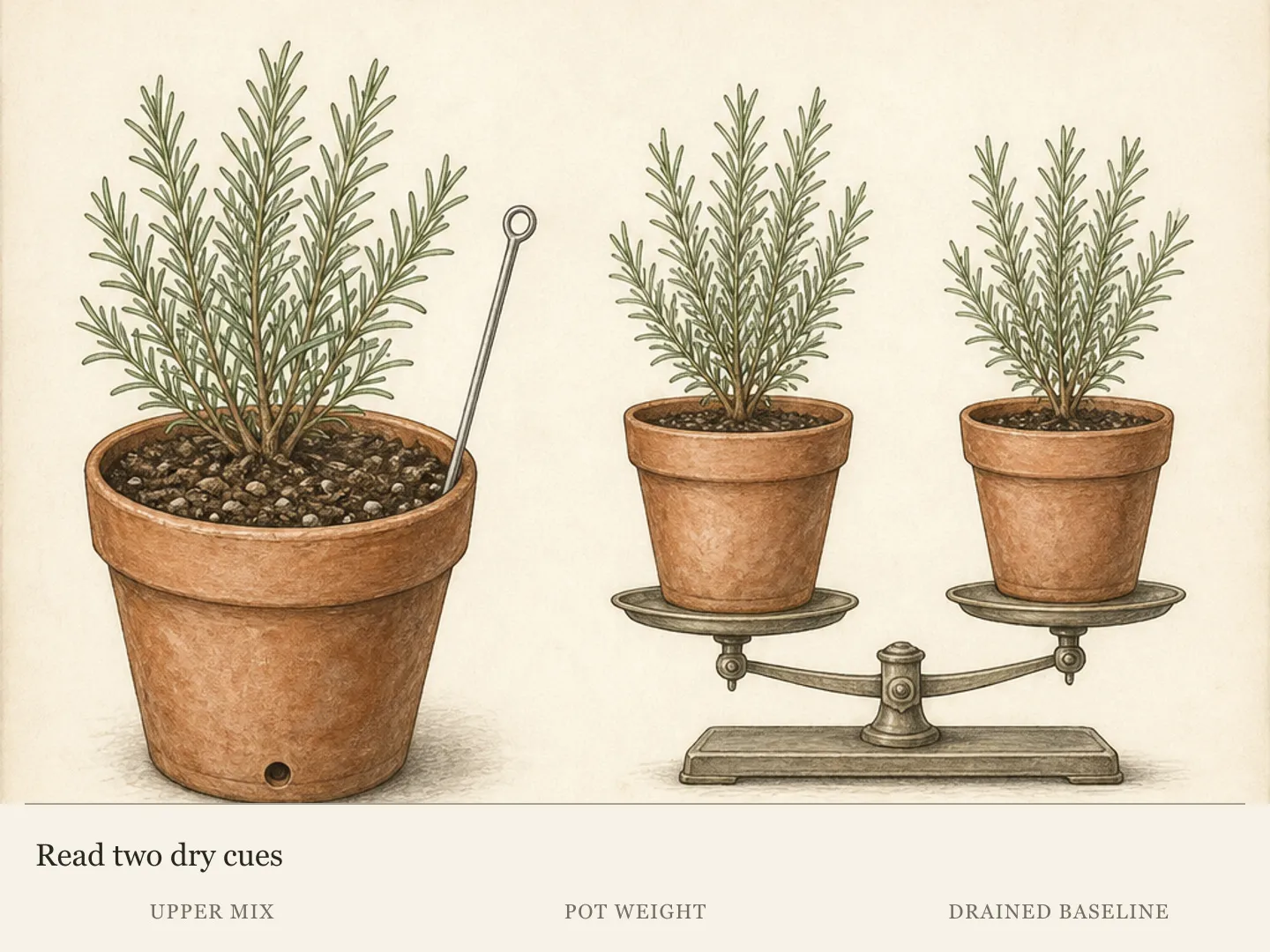
Rosemary's preference for well-drained, dry-side conditions describes what happens between waterings. It does not call for tiny sips that wet only the surface or one side of the root ball. Waiting and thorough application perform different jobs: the wait prevents continuously wet roots, while the complete event reconnects dry areas of the container with water and proves that an exit remains open.
Both observations should agree before routine watering begins. A dry-looking surface above damp mix is not enough, and a pot that feels lighter after a windy day still deserves a root-zone check. Press below the surface away from the stem, then compare the container with its known freshly drained weight. Agreement between dry upper mix and a lighter pot gives a stronger decision than either clue alone.
The interval is expected to change. Sun, heat, wind, pot volume, and container material influence how fast a pot loses water. A fixed weekday schedule hides those changes by asking the calendar to predict the root zone. Use weather to decide when to inspect again, and let the soil and weight cues decide whether that inspection becomes a watering.
This distinction prevents opposite mistakes with the same schedule. During rapid drying, waiting for the appointed day can leave the occupied mix dry even though an earlier check would have authorized water. When the container loses water more slowly, arriving with the can on schedule can restart the wet phase before the upper mix and pot weight have changed enough. The adaptable part is the attention you give the pot; the stable part is the decision sequence. Inspect, compare, water completely when both cues agree, drain, and then wait for a new dry interval.
Use dry mix and a lighter pot as a combined watering cue
Compare the upper mix with the pot's fully drained weight baseline before watering. When both support the decision, wet the root ball evenly and empty collected runoff. A wilted plant in a still-heavy wet pot needs investigation instead of another pour. Reset the comparison after each thorough watering and move the next inspection with weather and exposure.
Calibrate pot weight after a complete drainage cycle
Pot weight becomes useful only after you establish what the same container feels like when thoroughly watered and fully drained. Apply water across the mix, wait until dripping stops, empty the saucer, and lift one edge of a manageable pot. Feel the upper mix at the same time. Together, those observations define the wet baseline for this rosemary, root ball, medium, and container.
The baseline is comparative, not a target number. Another pot may contain a different material, volume, root mass, or mix, so its heavy and light states cannot calibrate this one. Repeat the same motion from the same supported position. Over several cycles, the shift away from the drained weight becomes easier to recognize without converting the check into a measurement exercise.
Large or awkward containers should remain supported. A slight tilt at a stable rim can provide a useful comparison when lifting the whole pot would strain the gardener or threaten the plant. Pair that limited movement with the 1–2-inch mix check. If the container cannot be moved safely at all, rely on the soil observation and the known behavior of water through its drainage route.
Recalibrate whenever the physical system changes. Repotting, a change of container, or a substantial change in mix creates a new wet weight and a new relationship between surface feel and moisture below. The previous baseline belongs to the previous arrangement. Complete one thorough watering, let it drain, and record the new state before using weight to make later decisions.
Probe the occupied mix, not the decorative surface
Press a finger 1–2 inches into the mix away from the rosemary stem. The topmost particles can dry quickly under sun and wind while the layer beneath still holds moisture, so surface color and texture alone can trigger an early watering. The deeper check should sample the medium where roots occupy the container without disturbing the crown.
Check more than one place when the pot has an exposed side or an uneven watering history. One edge may dry faster, while the sheltered side remains damp. The decision concerns the root ball as a whole; a single dusty corner does not authorize soaking a still-wet container. Pair the readings with the pot's weight and recent drainage behavior.
Mix pulling away from the wall and a markedly light pot support a dry reading, especially when the foliage shows crisp wilt. Those clues still lead to the same complete method rather than a series of emergency splashes. Apply water slowly enough for the medium to accept it, observe whether it penetrates across the surface, and verify drainage at the base.
A damp upper layer and a pot that remains heavy call for waiting even if a few leaves look stressed. Rosemary roots can decline when excess water and poor drainage keep them wet. Examine the saucer, cachepot, and drainage holes before interpreting the foliage. The plant may need a container or root assessment, while another immediate watering would only extend the unresolved condition.
Apply water slowly enough to learn how the mix accepts it
Direct a gentle stream at the potting mix around the plant base. Spread the application across the surface so one fast channel does not receive the whole volume, and keep a forceful stream away from the stem. The flow should be slow enough that the medium can absorb water without washing a hollow into the surface.
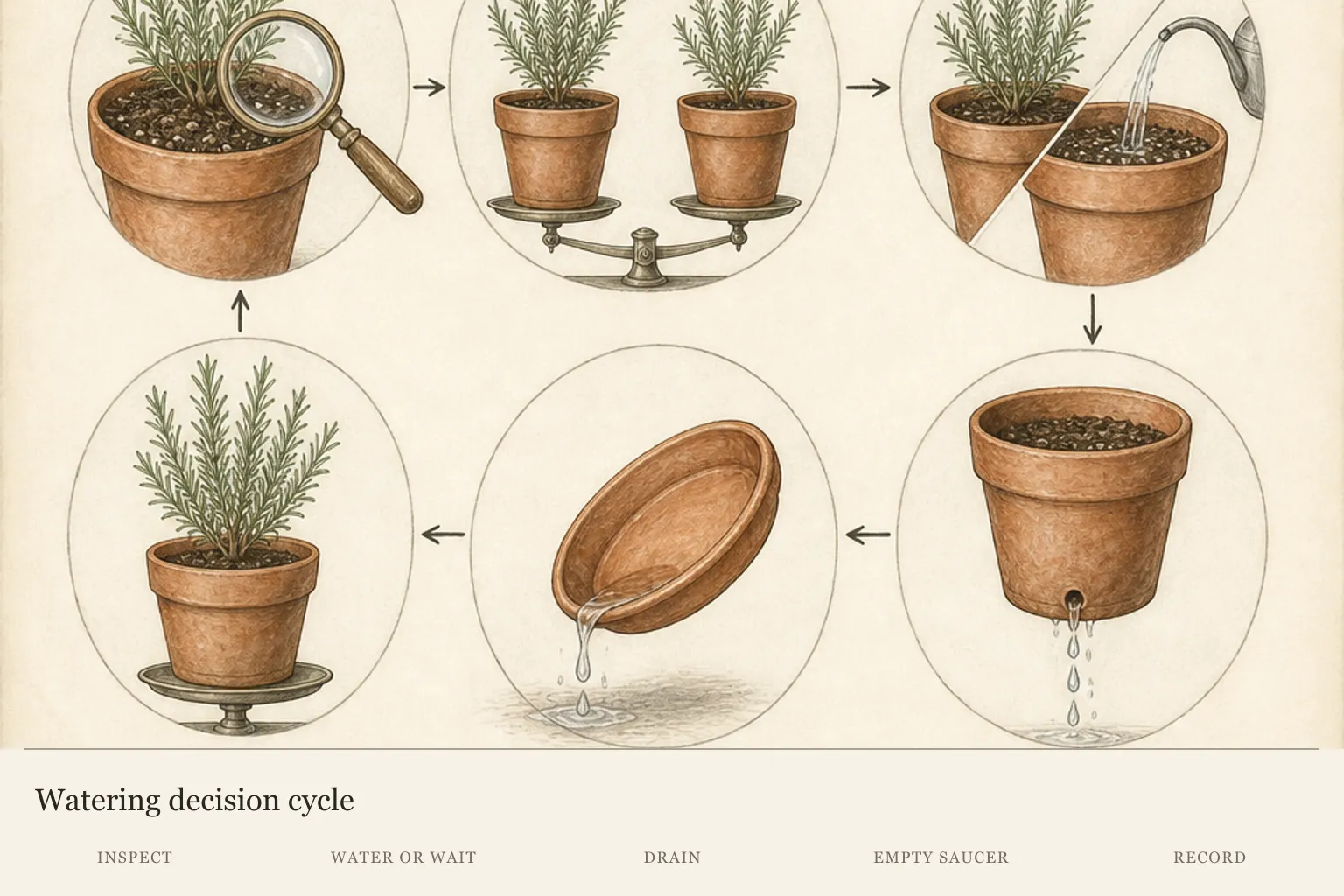
If water begins running across the top or exits almost immediately, pause. Let the first application enter the mix, then resume gently across the areas that have not accepted it. Persistent instant runoff is information: water may be following a limited path while much of the root ball remains unchanged. Continue only while you can observe the medium taking up water and an open drainage route below.
The watering event is complete when water has moved through the container and excess emerges from the drainage holes. Drainage proves that an exit is available; it does not show by itself that every dry pocket rewetted evenly. Look back at the surface, note whether the mix accepted water across the pot, and compare the drained weight with the established baseline.
Let the container finish dripping before returning it to a saucer or decorative outer pot. Empty collected runoff promptly so the base and roots do not remain submerged. A saucer protects a surface during drainage, but retained water converts a well-drained watering into a standing reservoir after the gardener walks away.
Let heat and wind increase surveillance
Containers can dry much faster than in-ground beds during extreme heat, and exposed rosemary may need more frequent inspection. Increase the frequency of the upper-mix and pot-weight checks as hot or windy conditions develop. That shorter inspection interval does not establish automatic daily watering; each check still has to find a dry upper layer and a meaningfully lighter pot.
Morning is a useful time to inspect and water because a confirmed dry plant can enter peak heat with a rewetted root ball. It is a planning preference, not a reason to postpone a rosemary that is already dry and wilting later in the day. Once the root-zone evidence confirms need, water then, complete the drainage cycle, and remove runoff.
A small container cycling from thoroughly wet to critically dry too quickly may be moved temporarily out of severe afternoon exposure during the heat event. The adjustment reduces immediate demand while preserving the watering method. It does not redefine rosemary as a shade plant or replace its ordinary full-sun growing condition once the extreme exposure passes.
Heat also makes the wet baseline more valuable. After a complete morning watering and drainage, note the pot's weight. A later check can distinguish a genuine rapid loss from foliage that still looks stressed while the root ball remains moist. That comparison prevents heat anxiety from turning into repeated top-ups around already wet roots.
Use foliage as a prompt, then verify below
Crisp wilt, mix pulled from the pot wall, and a very light container point toward insufficient water when they occur together. Probe the occupied mix before acting, because foliage shows the result of stress but not its cause. If the upper 1–2 inches are dry and the pot has lightened, proceed with a slow, complete watering and watch whether the medium accepts it.
Yellowing or leaf drop while the mix remains wet points away from another immediate irrigation. Check for trapped runoff, blocked holes, and a container that has stayed heavy since its last watering. Excess water and poor drainage can contribute to rosemary root decline, so a wet-root pattern needs the wet condition corrected and assessed, not hidden beneath another fresh application.
Dry roots and damaged wet roots can both leave foliage looking stressed. That overlap is why leaf color and posture never stand alone in this method. Root-zone moisture, weight, and drainage behavior carry the decision; leaves determine when to investigate and whether the condition is improving after the strongest observed cause has been addressed.
Mark the relationship between a symptom and the watering cycle. Note whether the foliage changed before the pot became light, while the mix stayed damp, or after a confirmed dry interval. The sequence helps separate a recurring container problem from an isolated missed watering without adding fertilizer, changing exposure, and altering irrigation all at once.
Escalate abnormal drainage to a container or root check
A healthy watering cycle has an observable beginning and end: dry cues agree, the mix accepts a gentle application, water exits the holes, runoff is removed, and the pot later becomes lighter. When one link repeatedly fails, increasing the frequency does not repair the cycle. Identify the failed link before the next watering.
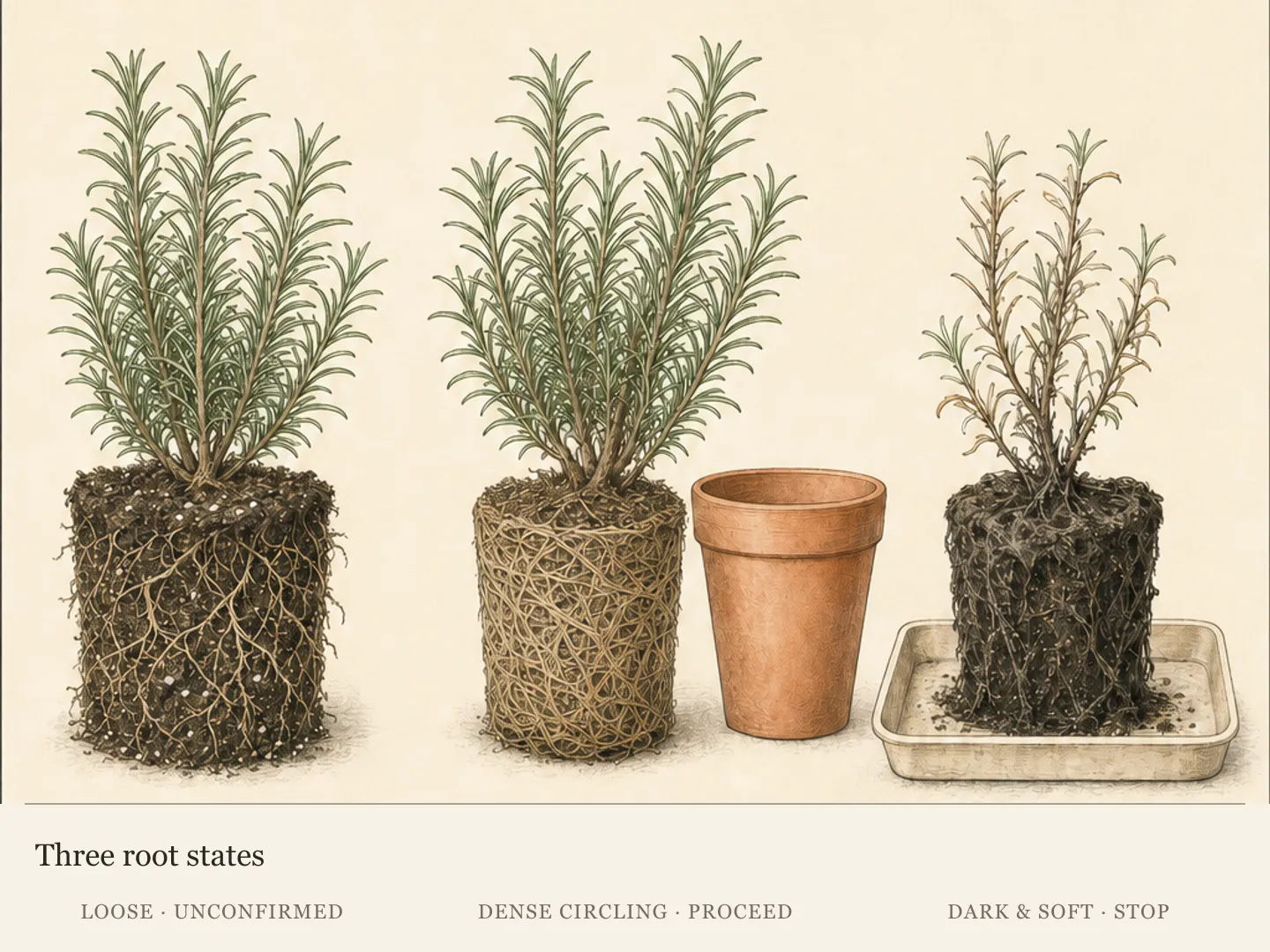
Persistent instant runoff can mean water is bypassing parts of dry mix. Pause and apply again slowly across the surface, then compare the drained weight and the feel of the medium. If the pot never returns to its wet baseline or large dry areas remain, the container and root ball need closer assessment beyond repeated top applications.
A blocked drainage hole, hidden water in a cachepot, or a container that stays wet far longer than usual points in the opposite direction. Remove standing runoff and stop adding water while the root zone is still wet. Inspect the drainage path and pot condition. Rosemary's requirement for well-drained conditions makes this a structural issue, not a request for a smaller extra sip.
The method succeeds when each irrigation supplies the full root ball and each interval allows observable drying. Keep a simple mental or written record of the dry cues, the way the mix accepted water, the appearance of drainage, and the later weight change. Those checkpoints adapt automatically as weather and container conditions change, while a fixed schedule repeats the same instruction even when the pot is telling a different story.
Steps
- Level
- easy
- Time
- A few minutes per moisture check and watering
- Tools
- Watering can or hose with a gentle flow
- Materials
- Established rosemary in a draining container
- 1Check the upper mix
Press a finger 1–2 inches into the potting mix away from the stem, sampling another side if exposure is uneven. Continue only when the occupied upper layer feels dry, not merely the decorative surface. If the mix remains damp, inspect the saucer and drainage path and wait. If it has pulled from the wall or feels dry below the surface, move to the independent weight comparison.
- 2Compare the pot's weight
Tilt or lift a manageable edge from a stable position and compare it with the same container's freshly watered, fully drained baseline. A noticeably lighter pot supports the dry-soil reading. Keep large or awkward containers supported and use only a slight safe movement. If the pot still feels heavy, postpone watering and investigate any foliage symptom without assuming that dry-looking leaves prove dry roots.
- 3Water gently at the base
When both dry cues agree, apply a slow stream to the potting mix around the rosemary base. Move the stream across the surface and keep force away from the stem. Pause if water races over the top or disappears through one channel, allowing the first application to enter. Resume over the remaining surface so the root ball has a chance to rewet evenly.
- 4Continue through drainage
Continue the gentle application until excess emerges from the drainage holes. Watch how the mix accepts water as well as the appearance of runoff; immediate drainage through one path does not prove that every dry area changed. Finish when the surface has been watered evenly and an open exit is confirmed. Let the pot drip until the main flow has stopped.
- 5Empty collected runoff
Empty the saucer or decorative cachepot after the container finishes dripping. Check that the pot base and drainage holes remain above any residual water. Return the rosemary to its growing position only after the reservoir is clear. If runoff cannot be removed without repeatedly disturbing the plant, correct the container arrangement before the next cycle so free drainage remains a working feature.
- 6Move the next inspection with the weather
Check sooner during extreme heat, drying wind, or rapid container water loss, preferably early enough to identify a dry root ball before peak stress. Keep the watering decision unchanged: dry upper mix and lighter pot must still agree. Water immediately when a stressed plant is confirmed dry, even outside the preferred morning window. During severe afternoon exposure, a small pot may move temporarily to protection while the heat event passes.
- 7Investigate a conflicting symptom
When foliage looks stressed, repeat the mix and weight checks before changing the interval. Crisp wilt with pulled-away mix and a very light pot supports a complete watering. Yellowing or leaf loss while the pot remains heavy and wet calls for waiting, removal of trapped runoff, and inspection of the drainage path. If water repeatedly exits instantly or the container stays wet far longer than usual, stop routine top-ups and assess the pot and roots.
- 8Record the next baseline
Feel the newly watered upper mix and note the fully drained pot's weight. Confirm that water entered across the surface and that the drainage holes functioned. Use this wet state for the next comparison. Hot or windy weather moves the next inspection earlier, while the decision to water still waits for dry mix and lighter weight. Keep the same comparison point and supported lifting motion so changes reflect the container's moisture, not a different test. Escalate persistent instant runoff or unusually prolonged wetness to a container and root assessment.
Plants in this guide
Related reading

Sources
- Rosemary. University of Illinois Extension. Source record · Accessed 2026-08-15.
- Container gardening basics. Oregon State University Extension Service. Source record · Accessed 2026-08-15.
- How to protect yourself and your plants during extreme heat. Oregon State University Extension Service. Source record · Accessed 2026-08-15.