Grow · prune smoke bush foliage or flowers
Prune Smoke Bush for Airy Flowers or Oversized Foliage
Choose between preserving mature flowering wood and stooling a vigorous smoke bush for bold leaves before making the first spring cut.
Published Last updated
In this guide
- Use the biological cue for smoke bush pruning
- Read the site and the whole plant together
- Set a visible finish line before beginning
- Prepare the work while every part is still identifiable
- Carry out the central operation in a controlled sequence
- Protect roots, crowns, and new growth after the work
- Diagnose a weak response before adding another treatment
- Leave a record for the next seasonal decision
- Steps
Use the biological cue for smoke bush pruning
Choose the summer effect before the first cut. A smoke bush kept for its translucent panicles needs a branched, mature framework, while a specimen grown chiefly for broad, intensely colored leaves can be cut to a low stool. Those outcomes use the same roots but create different architecture, so a compromise haircut usually weakens both designs.
RHS guidance places hard pruning for a compact leaf display in late winter or early spring. North Carolina State gives 6 to 8 inches above ground as a rejuvenation reference and states that this treatment sacrifices flowers for that year. Reserve it for an established, vigorous shrub with a sound crown; a recent transplant, a plant with branch dieback, or one struggling in saturated soil first needs recovery or diagnosis.
A flower-led plant keeps enough older branching to carry the airy outline. North Carolina State specifically advises retaining part of the old-stem framework when flowers matter. The pruning pass then removes dead wood and selected congestion while leaving the main spread intact, even when the result is less compact than a stooled plant.
One detail in the North Carolina State profile prevents an oversimplified old-wood/new-wood rule: the smoky structures develop on current-season growth, yet a 6- to 8-inch rejuvenation cut is expected to sacrifice that year’s display. Use the published treatment outcome as the decision point. Retained mature arms supply the framework for a flower-led shrub; a complete low cut commits the season to replacement shoots and foliage. A gardener who needs both effects should assign them to separate plants, or keep one shrub flowering while a second vigorous specimen is managed as a stool.
Make the choice while the shrub is dormant and its stem origins remain visible. Swollen buds can help separate living tips from winter injury, but long new shoots make basal work harder to control. Where identity, vigor, or the cause of wilt remains uncertain, confine the session to clearly dead or broken wood and settle the flower-versus-foliage decision after a full growing season.
Read the site and the whole plant together
Trace every main stem from the crown and note its age, health, direction, and contribution to the outline. Rough older bark, finer young shoots, dead tips, rubbing junctions, and last summer’s panicle stalks make the history legible. View the shrub against the background that reveals the smoke effect, then inspect from the service side to find cuts that can be reached without crushing neighboring perennials.
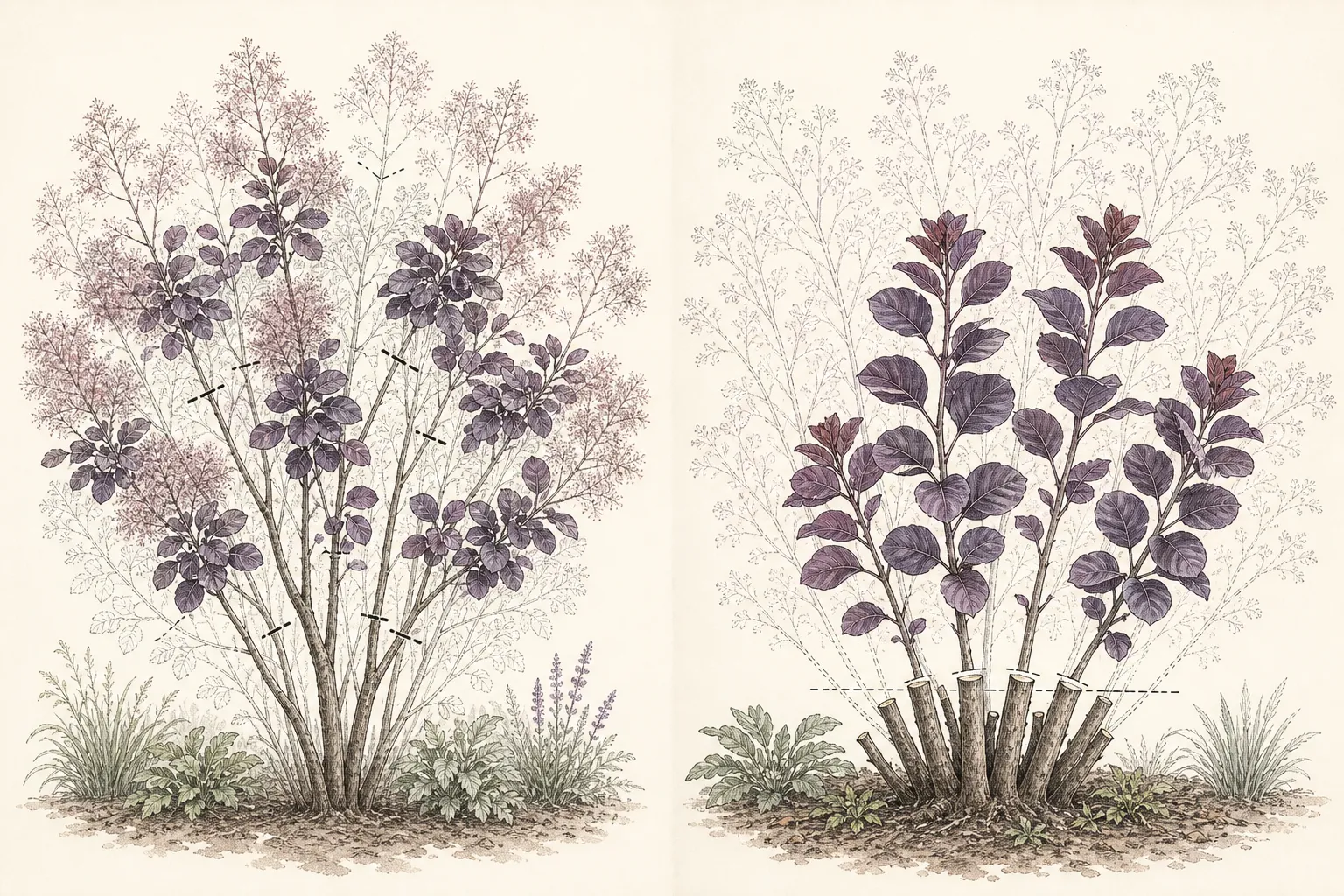
Check the cultivar before treating size as a pruning defect. The RHS lists compact selections such as ‘Young Lady’ at roughly 1 to 1.5 metres and large cultivars such as ‘Royal Purple’ at 4 to 8 metres. A large genotype repeatedly cut away from a window or narrow walk remains a siting problem; selective thinning cannot turn its mature spread into that of a compact selection.
Read sun and soil alongside the stems. Purple-leaved forms color best in full sun, whereas deep shade can reduce both foliage color and flowering; Cotinus also performs poorly in waterlogged ground. A thin shaded side may reflect the site, while scattered wilt on otherwise adequate soil raises a different diagnostic question. Map those patterns before assigning every weak branch to age.
Use one sound, uncut branch as a reference while evaluating the rest of the crown. Record its bud spacing, bark color, last year’s extension, and panicle remnants, then compare suspect stems at the same distance from the base. A branch with short extension on the shaded side may still be healthy; a suddenly wilted branch among equally lit neighbors is more concerning. This internal comparison helps preserve functioning framework and gives a diagnostic lab a meaningful healthy-versus-affected sample if Verticillium or another vascular problem is suspected.
Set a visible finish line before beginning
For a flowering specimen, mark the mature stems that will remain and the few removals that will open crossings or dead pockets. The completed crown should still read as an upright, loose, spreading shrub, the natural habit described by Illinois Extension. Unequal branch lengths are acceptable when they carry a balanced veil of panicles and keep the selected view open.
For a foliage stool, establish one low cut height before work and identify every stem included in that system. The goal is a coherent basal framework that sends up vigorous juvenile shoots, not a tier of random stubs beneath older flowering branches. Photograph the crown with the height marker visible so a second person can finish to the same decision.
Cancel a hard reset when the base lacks healthy buds, several branches show unexplained wilt, or the root zone stays saturated. On a flower-led plant, pause once additional thinning would remove the principal arms that create width and backlit panicle coverage. These thresholds protect useful wood and keep disease evidence available for a local diagnostic service.
Prepare the work while every part is still identifiable
Tie a weatherproof tag to a retained stem with the cultivar and chosen display written on it. Take one full-outline photograph and one crown photograph, then mark retained flowering arms with loose tape or set a measured guide beside a planned foliage stool. The marks prevent a useful old branch from becoming collateral damage as cut stems accumulate.
Sharpen and clean bypass pruners, loppers, and the pruning saw. Match each stem to a tool that closes through the wood with controlled pressure; forcing small blades twists the cut and can tear bark at the crown. A saw path needs enough clearance for the blade to travel without striking a neighboring stem or the soil.
Move pots and low ornaments, cover delicate companion crowns, and spread a tarp on the side where canes will leave the bed. Release long branches singly and guide the heavy basal end first. This order keeps springy tops out of faces, preserves basal buds, and prevents sap-wet debris from scraping across groundcover.
Cotinus belongs to the cashew family and its resinous sap can irritate skin. Put on gloves, sleeves, and eye protection before exposing fresh wood, and establish a wash point for hands and tools. Anyone with poison-ivy sensitivity should keep direct handling to a minimum and delegate debris bundling when practical.
Carry out the central operation in a controlled sequence
On a flower-led shrub, begin with dead and broken wood, following each piece to sound tissue or its point of origin. Next choose between rubbing stems and remove only the member that contributes less to the airy framework. Finish with one or two congestion cuts if needed, checking the silhouette after each removal so the panicle-bearing arms remain distributed across the crown.
On a vigorous foliage plant, work around the base and cut every designated stem to the measured low framework. The 6- to 8-inch reference in the North Carolina State profile gives a practical inspection point above the crown. Make clean cuts with enough separation to avoid bruising adjacent buds, and keep soil and mulch below the fresh stem ends.
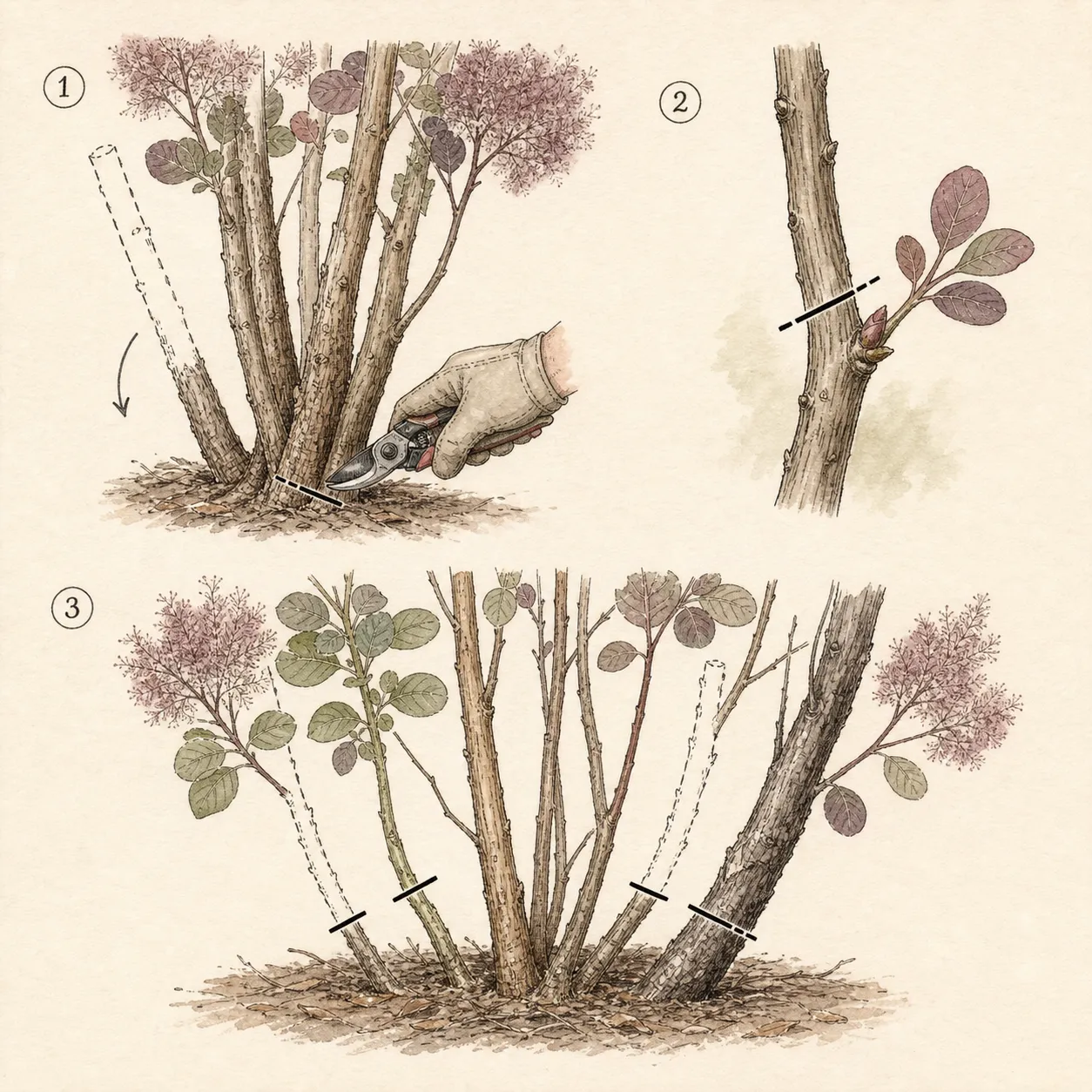
Read the result before clearing the tarp. A flowering treatment should contain mature branched arms with open lanes between them; a stool should present one consistent basal system ready to produce young shoots. Random mid-stem headings, torn bark, or an accidentally retained tall cane signal a cut-plan error that should be corrected while the stem map is still visible.
Protect roots, crowns, and new growth after the work
Remove small twig debris from the crown and restore a shallow mulch layer over the root zone, leaving the stem bases exposed. Cotinus prefers well-drained ground; water when the soil is genuinely drying during establishment or drought, then allow air to return to the root zone. Persistent puddling points to a site problem that pruning cannot solve.
A low stool needs its basal buds checked after late cold and again as spring turns dry. Blackened shoot tips may be followed by live growth farther down, so let bud movement show the surviving boundary before making a second cut. Keep the original cut height visible and protect emerging shoots from feet, hoses, and nearby maintenance.
The retained framework on a flowering shrub needs less handling. Replace only a branch that breaks or declares dieback, and leave developing panicles intact. Normal foliage color, extension growth, and even moisture are better recovery evidence than a rapid burst produced by extra fertilizer.
Diagnose a weak response before adding another treatment
Evaluate a foliage stool by the number and distribution of basal shoots, their extension, and the size and color of the new leaves. Short shoots across the entire crown suggest limited vigor or root-zone stress. Strong shoots on one side and failure on the other direct attention to drainage, shade, crown damage, or winter exposure on that portion of the shrub.
Evaluate a flowering framework when the summer display should be visible. Leafy growth with sparse panicles can follow excessive removal of mature branches, deep shade, or a season of poor vigor. A fully stooled plant is expected to miss that display, so absence of flowers there confirms the chosen tradeoff instead of diagnosing failure.
Sudden wilt of a branch deserves a separate response. Illinois Extension lists Verticillium wilt among possible Cotinus problems, and North Carolina State also notes susceptibility. Leave healthy comparison branches, sanitize cutting tools after sampling suspect wood, and seek a local diagnosis before expanding removal through the crown.
Mixed tall and low stems often produce the least legible result: water shoots compete with old congested wood, while neither panicle coverage nor oversized foliage appears consistently. At the next dormant season, choose one system from the observed response. A declining crown may require recovery or replacement instead of another hard pruning cycle.
Separate leaf color from leaf size when judging a stooled cultivar. Pale or greenish foliage on a purple selection can reflect shade, while small leaves and short shoots across a sunny crown point toward limited vigor. Record both traits with the hours of direct sun and soil moisture at the time of inspection. For a golden cultivar, compare exposed and sheltered leaves for scorch as well as color. These observations identify whether the pruning system produced the promised juvenile display or whether light, water, and cultivar behavior are dominating the result.
Leave a record for the next seasonal decision
Write down the cultivar, the display chosen, the date, and either the stool height or the number of mature arms removed and retained. Photograph the crown from the same marked position immediately after pruning. This record explains why a deliberately low plant lacks flowers or why an asymmetrical flowering framework was left intact.
Return at panicle season and record shoot length, representative leaf width, color in the site’s actual light, panicle coverage, and any wilt. A second photograph should include the whole shrub and its neighboring shade or paving. Those measurements distinguish a successful tradeoff from a pruning treatment that merely made the plant smaller for a few weeks.
Use the summer result to set the next dormant appointment. Vigorous foliage shoots can justify repeating the same low system; good panicle distribution may need only deadwood removal; weak growth calls for soil, moisture, or disease investigation. Keep the selected objective stable long enough to judge it, changing course only when plant health or the garden role has genuinely changed.
Steps
- Level
- moderate
- Time
- One focused session, followed by scheduled checks
- Tools
- Bypass pruners, Loppers, Pruning saw, Gloves
- Materials
- Tarp for cut stems, Mulch only if the root zone needs renewal
- 1Choose flowers or oversized leaves
Before bud break, write either ‘panicles’ or ‘large leaves’ on the plant tag. A panicle specimen keeps mature branching and receives selective thinning. A leaf specimen can use a low stool only when the crown is established, vigorous, and free of unexplained dieback or chronic waterlogging.
- 2Read vigor and cultivar scale
Confirm the cultivar and its mature spread, then inspect drainage, sun, basal buds, winter injury, and the pattern of any wilt. Photograph both the whole outline and the crown. Mark retained flowering arms or place a measured height guide beside the stems chosen for stooling.
- 3Clear access and size the tools
Cover low companions, spread a tarp on the removal side, and match bypass pruners, loppers, or a saw to each stem. Put on gloves, sleeves, and eye protection before fresh sap is exposed. Release dead branches individually and keep every marked live stem visible.
- 4Make one coherent treatment
For flowers, remove dead, rubbing, and a limited number of congested stems at their origin while preserving the branched canopy. For leaves, bring the designated framework to the planned 6- to 8-inch reference from North Carolina State. Inspect the crown for torn bark and stray mid-stem headings before debris hides the cuts.
- 5Protect the basal response
Carry cut canes away on the tarp, clear twigs from the crown, and restore shallow mulch beyond the stem bases. Check soil moisture during late cold and the first dry spell. Shield new basal shoots from feet and hoses, and let bud movement reveal living tips before recutting frost damage.
- 6Judge the selected display
At panicle season, record flower coverage on retained arms or measure representative leaf width and shoot length on a stool. Map weak or wilted sectors separately from healthy growth. Repeat the system only when its intended display appeared and the crown remained sound; otherwise investigate site stress or disease first.
Sources
- Cotinus. Royal Horticultural Society. Source record · Accessed 2026-08-30.
- Smokebush. North Carolina State Extension. Source record · Accessed 2026-08-30.
- Smoke Tree. University of Illinois Extension. Source record · Accessed 2026-08-30.
- Tree of the Month: Cotinus. Arnold Arboretum of Harvard University. Source record · Accessed 2026-08-30.