Grow · hardy aster spring division
Divide Hardy Asters in Spring Before the Shoots Lengthen
Lift an aging fall aster while shoots are short, keep vigorous rooted outer pieces, and rebuild a spaced flowering group without carrying weeds through it.
Published Last updated
In this guide
Confirm the aster and the reason to divide
Recover botanical identity because aster relatives differ in habit and regional behavior. Confirm the botanical or cultivar identity before division. Schedule the work when fall-flowering asters are emerging but foliage remains compact and weather supports establishment. Confirm the choice by inspecting short shoots, crown density, dead center, root vigor, weeds within the clump and moisture at replanting depth. The safe finish is reached when vigorous rooted divisions sit at original grade with room to reach documented mature spread.
Look for a hollow center, declining flower, crowding or boundary escape. A healthy young clump can remain intact.
Check current invasive guidance and garden ownership before sharing divisions. Spreading material needs a bounded destination. In this case, success means vigorous rooted divisions sit at original grade with room to reach documented mature spread. Let the next inspection test whether vigorous rooted divisions sit at original grade with room to reach documented mature spread; the workday shows only the starting condition.
The common name aster now covers several genera and many cultivars with different spread, height, and disease behavior. Keep the label and confirm the clump before division. A healthy, well-spaced plant does not require disturbance merely because a calendar suggests it. Useful reasons include a dead center, falling flower count, crowding, movement beyond the bed, or the need for known divisions. A progressive wilt, abnormal discoloration, or persistent weed tangled through the crown requires diagnosis and sanitation before propagation.
Disease history changes whether a clump should be multiplied. Powdery mildew on late-season foliage can reflect cultivar susceptibility, crowding, or site conditions; a division carries the same genetics into the new bed. Select clean vigorous outer sectors and improve light and spacing, but treat division as spacing improvement, not a cure for genetic susceptibility. Aster yellows, persistent wilt, or abnormal proliferation requires diagnosis and disposal guidance. Keep symptom photographs with the label so a shared plant does not carry an unexplained problem into another garden.
Use vigorous rooted pieces and retain their names
Check the aster's identity, regional timing and need for division before lifting. Select vigorous rooted pieces for prepared spaces at the plant's mature width, preserving their original planting depth. During recovery, distinguish a moisture or stability problem from ordinary establishment. Keep labels through flowering so future division and spread decisions stay attached to the correct plant.
Choose short-shoot weather
Divide fall bloomers as spring shoots emerge and remain easy to handle. Long stems lose water and break.
Wait until soil crumbles and forecast heat is modest. Saturated soil compacts around the crown. Assess shoot height, crown density, the dead center, root vigor, embedded weeds, and moisture at replanting depth. Move only vigorous identified divisions into moist, draining soil; discard weak, diseased, or weed-infested sections.
Prepare receiving holes and labels first. Exposed fibrous roots dry quickly in wind. The finished work must allow vigorous rooted divisions sit at original grade with room to reach documented mature spread. Weather and new growth can clarify short shoots, crown density, dead center, root vigor, weeds within the clump and moisture at replanting depth during a measured pause.
Recheck choose short-shoot weather after the first settling rain or growth flush. Changes in short shoots, crown density, dead center, root vigor, weeds within the clump and moisture at replanting depth reveal whether the correction is holding or the original site constraint is still active.
Spring suits many fall-flowering asters because shoots are short, temperatures are cool, and roots can re-establish before summer bloom. The soil should crumble from a fork, not polish or smear. Water a dry clump the previous day and delay work in saturated ground. Have receiving holes, water, labels, and mulch ready before lifting so divisions do not lie exposed. In a hot or drought-prone region, a local Extension window may be narrower than the broad spring recommendation.
Wind can dry lifted fibrous roots even on a cool day. Postpone division during a drying gale or prepare a shaded damp covering for the few minutes between lift and replanting.
Lift the whole decision area
Cut around the clump beyond its visible crown and lever from several sides. Preserve outer roots. Separate seasonal timing from cosmetic urgency. The useful window is when fall-flowering asters are emerging but foliage remains compact and weather supports establishment.
Place the lifted mass in shade and inspect weeds, rhizomes and crown sectors. Lift the full crown before selecting division lines. Compare that setting with short shoots, crown density, dead center, root vigor, weeds within the clump and moisture at replanting depth.
Keep known neighboring crowns separate. Aster roots can knit around bulbs and perennials. Stop once vigorous rooted divisions sit at original grade with room to reach documented mature spread.
Lift beyond the visible shoots to preserve the full root system. Insert a fork beyond the crown, loosen from several sides, and lift the root mass as a whole before deciding where to split it. This wider excavation preserves fibrous roots on the vigorous outer ring and exposes bindweed, tree roots, or neighboring perennials that have entered the clump. Keep removed soil separate from confirmed perennial weeds. Shade the lifted crown and protect roots from drying wind while it is examined.
Split by crown quality
Crown quality is a diagnosis, not a size contest. A dry hollow center with vigorous rooted growth around it is ordinary aging that division can correct. Soft tissue, odor, dark vascular discoloration, or distorted shoots points to disease or another disorder and should be diagnosed before material is multiplied. Healthy central tissue can remain even in an old clump. Compare several sectors so one winter-damaged shoot does not define the entire crown.
Division size trades quantity for recovery speed. A larger sector with several shoots and a proportional root mass has more stored resources and dries more slowly after replanting. Tiny fragments produce more plants but demand tighter moisture control and may miss the next flowering season. Choose a size that the prepared receiving site can support through summer before making any cuts.
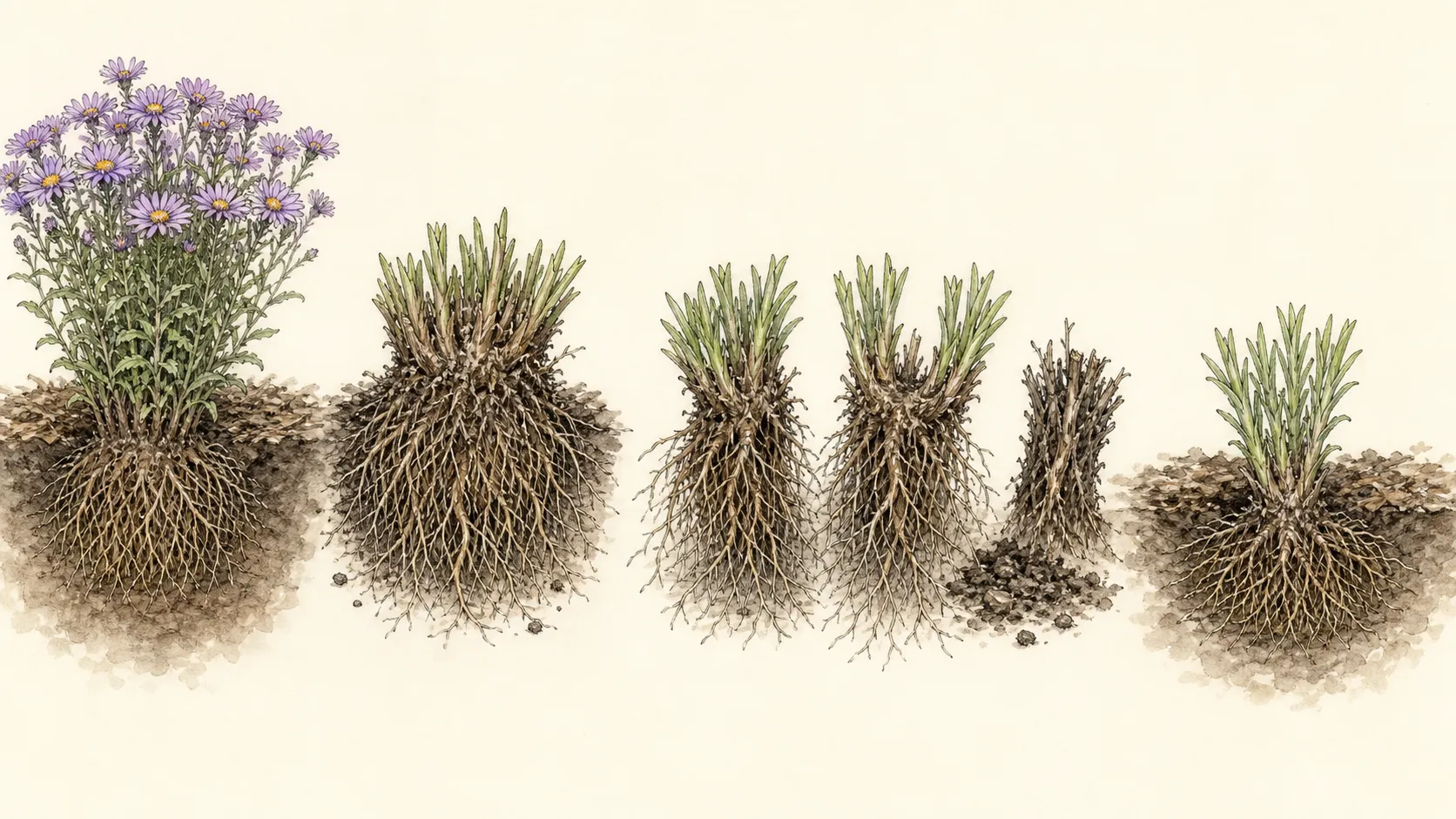
Weeds and unexplained symptoms travel with divisions. Trace bindweed, ground elder, or another perennial competitor through the root mass and keep infested sectors out of shared stock. Preserve cultivar labels and disease notes with every retained piece. Clean cuts should expose firm normal tissue; recurring softness after a cut is a reason to stop. Fertilizer and wound dressings do not convert compromised crown tissue into a sound division.
A crown that breaks into many tiny pieces may have been cut too late, allowed to dry, or weakened before lifting. Keep larger rooted sectors when tissue is brittle and shorten the inspection period. If every sector lacks vigorous roots or carries the same discoloration, return no material to the border until a diagnostic service distinguishes ordinary age from disease.
Replant for mature spread
Use the named plant’s mature width and habit to set centers. Temporary gaps are part of establishment. Set each division at its previous crown depth and space it for the named aster's mature width. Open soil between young divisions is establishment room, not a defect to close with extra pieces.
Set divisions at their previous crown depth and spread roots into compatible soil. Buried shoots rot. Use short shoots, crown density, dead center, root vigor, weeds within the clump and moisture at replanting depth to decide whether the task is corrective, preventive, or unnecessary. That distinction controls timing and scale.
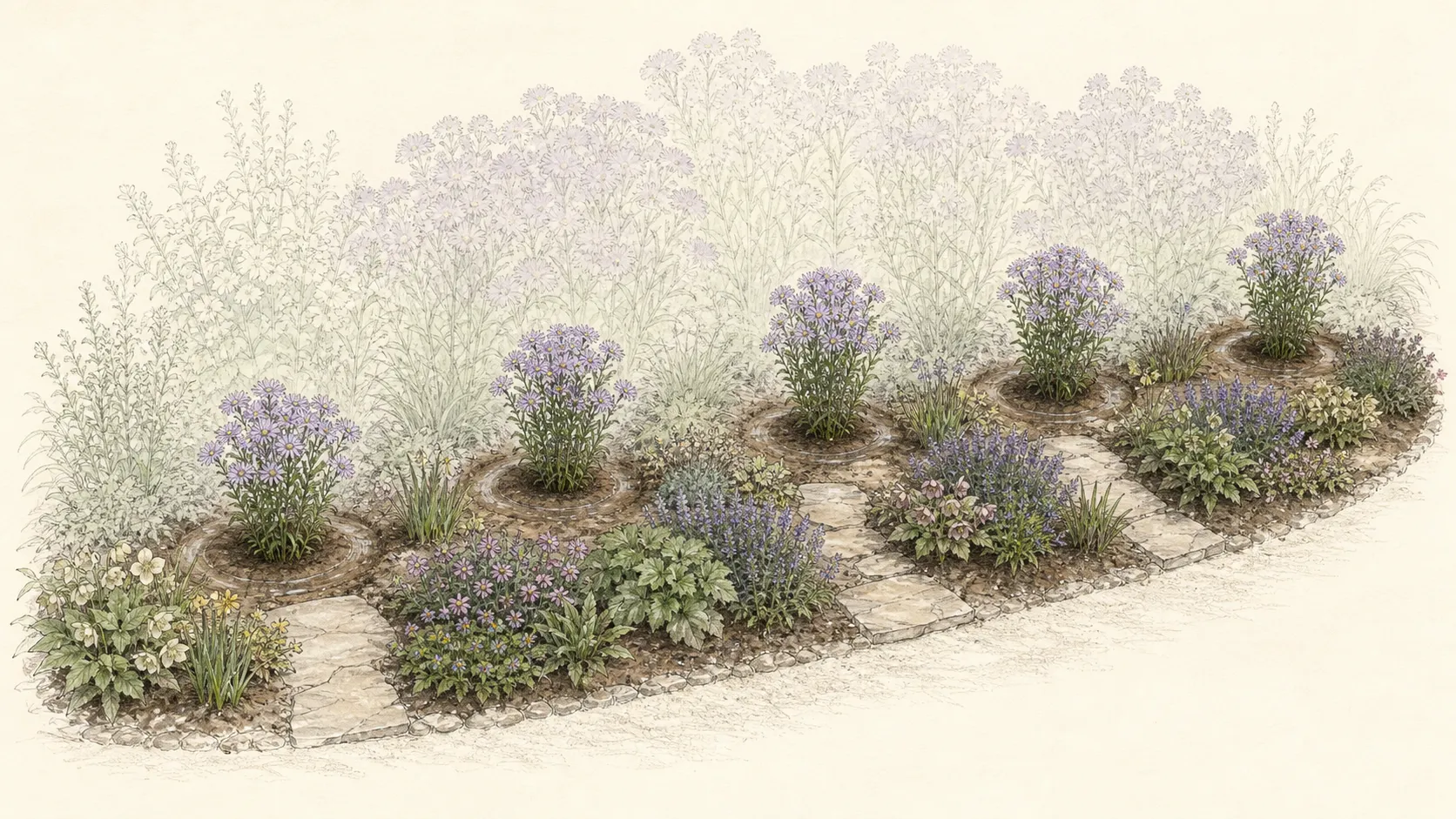
Firm gently, water to settle, and keep mulch away from crowns. Mark the group until growth fills out. Water once to settle fine soil around the roots, then keep the replanting zone evenly moist while shoots resume. Redistribute only crown sections free from persistent weeds, soft decay, and progressive unexplained symptoms.
Return the crown to the same relationship with the finished soil surface. Roots should spread into the surrounding soil, not curl inside a narrow amended pocket. Mature width determines centers: New England aster cultivars, compact hybrids, and spreading woodland asters cannot share one spacing number. Temporary bare soil is expected while divisions rebuild. A thin mulch outside the crown reduces evaporation and annual weeds without burying emerging shoots.
Cultivar dimensions vary widely. A compact border aster may mature near two feet while a species-type New England aster can form a much larger upright clump. Use the nursery or institutional profile for the exact plant and leave room for air at flowering height, not just at the crown. If the label is lost, give divisions conservative spacing and observe one full season before filling gaps. A support ring can be installed early for tall types, but crowding is not a substitute for support.
Edit the border around the new group
Remove perennial weeds and misplaced aster fragments before they reroot. Share only healthy, weed-free, accurately labeled divisions.
Keep lower companions outside the aster crown but close enough to cover the temporary soil gap. Respect both mature spreads.
Preserve a narrow reach-in route for staking or later thinning. Dense fall growth still needs access. Include short shoots, crown density, dead center, root vigor, weeds within the clump and moisture at replanting depth.
Division affects the whole border, not only the lifted plant. Protect spring bulbs, neighboring crowns, and access paths while setting the new group. Remove only the number of divisions the measured space can hold and find a destination before offering extras to another gardener. Retain botanical and cultivar names with every shared piece. Where an aster spreads by rhizomes or self-sowing, define its edge now and leave a route for later editing, and use the planned edge for later editing.
Support recovery through summer
Water from root-zone moisture through establishment and dry periods. Constant wetness weakens many asters. Track short shoots, crown density, dead center, root vigor, weeds within the clump and moisture at replanting depth.
Watch for wilting, crown rot and distorted growth before sharing more plants. Diagnose progressive symptoms.
Record division size, spacing and flower performance. The next interval should be based on vigor, not a fixed cycle.
New divisions need even moisture while cut roots resume growth, then progressively longer intervals as leaves remain firm. Normal root recovery requires moisture and time, not a high-nitrogen rescue feed. Watch for crown heaving, wilt, mildew, lodging, and uneven survival through the first summer, and correct the evidenced cause. Aster bloom and final width later in the year are part of the division assessment. Record which pieces flowered normally before deciding that the spring operation succeeded.
Recovery and the flowering calendar overlap. Spring-divided asters should rebuild roots and stems through summer before setting their late display. Drought during that period can stunt growth, while constant wetness can damage cut roots. Check moisture at root depth and water deeply when needed. Delay pinching or staking decisions until vigorous growth is clear, and follow cultivar-specific guidance. If a division fails, inspect roots and crown before replacing it; the receiving site's drainage or depth may have caused the loss.
Before leaving the replanted group, count divisions and map their centers. Check after one week for heaving or wilt, through early summer for root-zone moisture and mildew, and at flowering for final height, lodging, and bloom. Replace a failed division only after inspecting crown depth and roots. If several fail in one sector, correct that sector's drainage or competition before replanting. Retain the cultivar name with the healthiest parent or division. This staged review shows whether division restored vigor while keeping the new spacing and disease airflow that justified the work.
Steps
- Level
- moderate
- Time
- 45–90 minutes per clump
- Tools
- spade, garden fork, soil knife, watering can
- Materials
- labels, mulch kept clear of crowns
- 1Identify and map
Confirm the plant, outline the desired final group and decide why division is needed. Prepare labeled receiving positions. Confirm the botanical or cultivar name because asters differ in mature width, spread, and susceptibility to mildew. Mark which vigorous outer sectors will be retained and prepare every receiving hole before lifting.
- 2Wait for workable soil
Choose cool spring conditions while shoots are short and soil crumbles. Water a dry parent clump beforehand if necessary. Fall-flowering asters are commonly divided in spring while shoots are short. Soil should crumble, not smear; if the clump is dry, water it the previous day so roots lift with less breakage.
- 3Lift broadly
Cut beyond the crown and lever from several sides, preserving the outer root system and separating neighboring plants. Insert a fork beyond the visible shoots and loosen from several sides before levering upward. A broad lift preserves the fibrous outer roots and reduces accidental cutting of neighboring crowns.
- 4Select vigorous pieces
Keep rooted sectors with several sound shoots, remove confirmed dead centers and weeds, and minimize cutting. Use hands, two forks, or a clean knife according to crown density. Retain divisions with multiple sound shoots and roots; remove the dead center, perennial weeds, and any soft or discolored tissue.
- 5Set at original depth
Spread roots in compatible soil, keep crowns at grade, firm gently and water to close fine voids. Replant at the original crown level, spreading roots into native soil, and spread them through a broad receiving hole. Firm lightly and water until the soil settles around roots without leaving the crown submerged.
- 6Space for maturity
Use the named aster’s documented width and growth habit, leaving access and temporary open ground between divisions. Use the documented mature spread of the named aster, not the small division, to choose centers. Leave a maintenance route and enough air movement to reduce crowding as the clumps rebuild.
- 7Monitor the first season
Manage moisture from evidence, inspect for decline or unwanted spread, and record flowering plus final width. Check moisture frequently during the first weeks, then taper as new leaves remain firm. Record survival, mildew, lodging, flowering, and actual width before deciding whether the new spacing worked.
Sources
- How and When to Divide Perennials. University of Minnesota Extension. Source record · Accessed 2026-08-30.
- How to Grow Asters. Royal Horticultural Society. Source record · Accessed 2026-08-30.
- When Is the Best Time to Divide Asters?. Iowa State University Extension and Outreach. Source record · Accessed 2026-08-30.